Wrocław on Two Wheels – Dwarfs, Bridges and a Hotel Without Sharp Corners
Years had passed since I last set foot in Poland, so when DoubleTree by Hilton hosted us, I couldn’t pass it up. Wrocław immediately pulled me in with its labyrinth of canals, historic red brick, and restless energy. With this piece, I am opening a Polish jewel box that completely rewrites expectations.
Wrocław, a city best discovered slowly – and from more than one angle
I arrived in Wrocław late in the evening. By the end of the journey, I had only one wish left: to reach the hotel as quickly as possible, take a shower and suspend diplomatic relations with the outside world for a few hours. My phone, however, had run out of battery, so I could not order a taxi. Then the drivers waiting outside the station told me that they did not accept cards. Naturally, I had no cash. There I stood, tired, without a working phone, Polish złoty or a useful idea, while the comfortable bed at the DoubleTree by Hilton Wrocław waited somewhere in the city. Then a taxi driver approached me and told me to get in. I explained that I only had a bank card. He replied that it was fine. At the hotel, when I tried to pay, he told me that his taxi did not accept cards either. I was already beginning to think he would drive me back to where we had started, but instead he simply waved the matter away.
“- Then this ride is free.”
He would not accept anything. He had simply driven me to the hotel because he could see that I needed help.
So much for Polish hospitality. And so much for how quickly a city can make a good first impression: all Wrocław needed was one unknown taxi driver and about ten minutes.
A city with more than one name and more than one life
Wrocław is a city whose history refuses to fit into a single national narrative. Over the centuries it belonged to the Polish Piasts, the Bohemian Crown, the Habsburg Monarchy, Prussia and Germany. For centuries much of the world knew it as Breslau; after 1945 it became the Polish city of Wrocław.
The end of the Second World War did not merely change the name on the map. The siege of Breslau left much of the city in ruins. The German population was displaced, while new Polish residents arrived, many of them from territories in the east that Poland had lost after the war. They inherited a damaged city with a past that was not originally theirs, and then began the long work of making it home.
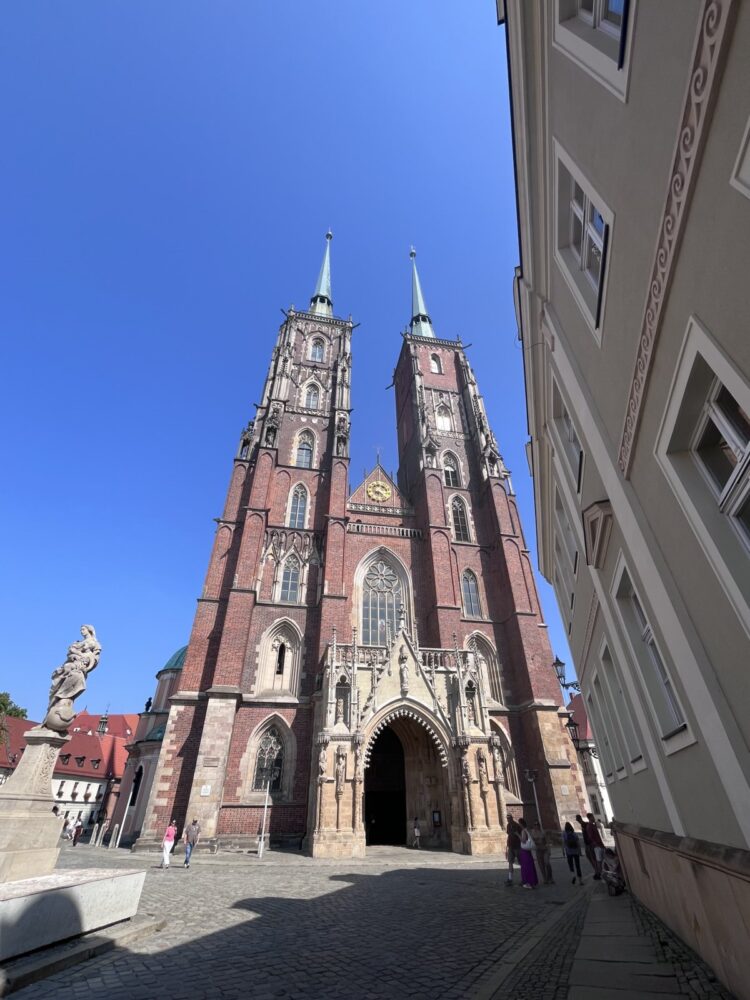
The Cathedral of St John the Baptist dominates the skyline of Ostrów Tumski
That layered history remains visible. Gothic brick churches stand beside Baroque façades, Prussian buildings and contemporary architecture. Wrocław does not conceal the seams between its different lives; it has learned to wear them rather well.
A hotel that has no intention of blending into the background
The DoubleTree by Hilton Wrocław occupies part of the OVO Wrocław complex, a building whose pale, curved façade looks rather like an enormous pebble that has been carefully smoothed. Sharp corners are difficult to find. In a city dominated by towers, gables and red brick, the building is unmistakably contemporary without behaving as though it has arrived to correct everything around it.
Its location makes it a practical base for exploring the city. The Market Square is roughly a ten-minute walk away, while Ostrów Tumski and the National Museum are also close. This means that returning to the hotel during the day is a realistic option, not an expedition requiring provisions and emotional preparation.
The hotel’s marketing director welcomed us personally and later took the time to ask whether everything was all right and whether we were satisfied with our stay. It may sound like a small gesture, but this is precisely the kind of attention that makes a guest feel like more than a room number in a booking system.
With the hotel bicycles, Wrocław became wonderfully easy to explore
The most useful service for me, however, was the bicycle. Wrocław is a city that reveals itself particularly well on two wheels: distances shrink, the river keeps reappearing, and it becomes easy to move from busy squares to quiet islands and church courtyards.
Exploring the city of bridges on two wheels
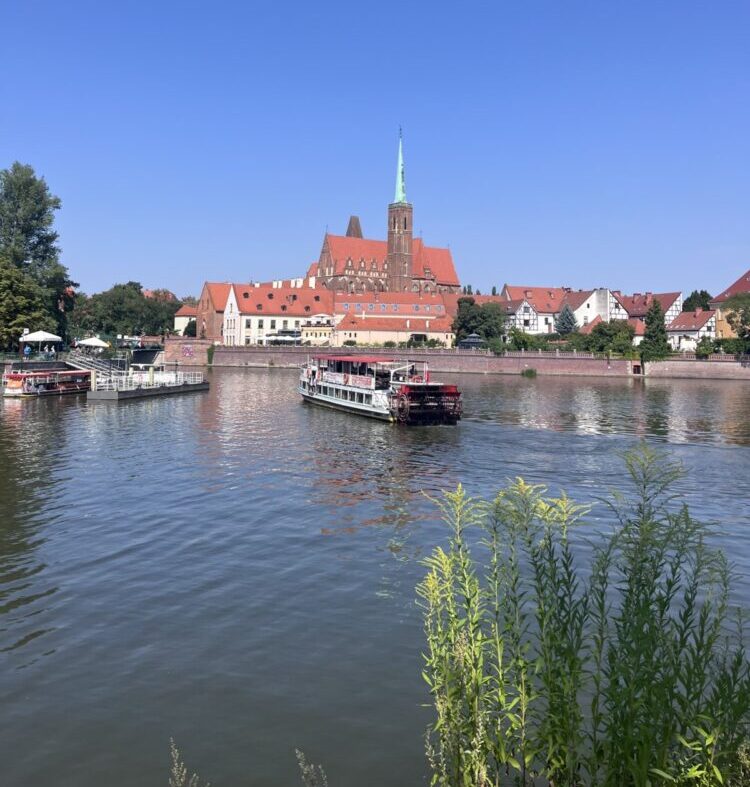
The Oder is not simply a river running through Wrocław; it divides, reconnects and organises the city. Islands, footbridges and larger bridges create a map that looks complicated on paper but feels surprisingly natural from a bicycle saddle. One moment I was riding beside the water, the next I was crossing it, and shortly afterwards I was standing on another bank wondering whether I had changed direction or whether the city had quietly rearranged itself.
Cycling also changes the rhythm of sightseeing. I could stop when a façade, a tower or a view caught my attention, without turning every short distance into a transport decision. Getting slightly lost was inevitable, but in Wrocław that usually leads to another bridge, another square or a small bronze resident waiting at pavement level.
The Rynek, where every building wants a starring role
Wrocław’s medieval Market Square, the Rynek, is the kind of place where restraint has never been part of the architectural brief. Colourful town houses line the square, each façade competing politely but confidently for attention. At the centre stands the Old Town Hall, a Gothic building so richly detailed that one visit is not enough to take it all in.
The square is not preserved behind museum glass. Café terraces, restaurants, residents and visitors keep it in constant motion. It is possible to study centuries of architecture here, but it is equally possible to sit down with a coffee and watch the city conduct its daily business around it.
In the evening, the Rynek shows an entirely different face. Terraces and historic façades light up, and after rain the illuminated Town Hall is doubled on the wet cobblestones. Even late at night the square remains full of families, friends and couples out for a walk. During the day we photograph the buildings; in the evening we try to capture the atmosphere.
The dwarfs are more than a tourist attraction
At first sight, Wrocław’s bronze dwarfs look like a particularly successful piece of tourism marketing. There are hundreds of them: reading, working, travelling, pushing, pulling or simply sitting in places where visitors nearly trip over them while looking at something grander.
Their story, however, begins with political resistance. In the 1980s, the anti-communist Orange Alternative movement used absurdity and humour as tools of protest. Dwarf figures appeared on walls where the authorities had painted over opposition slogans. The first public dwarf monument, Papa Krasnal, was installed in 2001 in memory of the movement, and the small figures subsequently spread throughout the city.
Searching for them quickly becomes addictive
Adults who would normally dismiss treasure hunts as childish can suddenly be found staring intently at gutters, doorways and the feet of monuments. The dwarfs provide comic relief, but their origins also say something important about Wrocław: humour here has historical weight.
Ostrów Tumski, the oldest face of the city
Ostrów Tumski is traditionally called Cathedral Island, although it has not technically been an island since a branch of the Oder was filled in during the nineteenth century. The name survived, and so did the feeling of entering a district set slightly apart from the rest of the city.
The area was not built around a single church. Different sacred buildings from different periods stand close together. Among them are the late Romanesque Church of St Giles and the small Church of St Martin, a surviving reminder of the former castle of the Silesian Piast dukes. By bicycle it takes only minutes to move between them, but the district itself encourages a slower pace: red-brick walls, narrow streets, towers and quiet courtyards follow one another.
The twin towers of the Cathedral of St John the Baptist dominate the skyline from a distance. Its present appearance is the result of centuries of construction and reconstruction. During the siege of Breslau in the spring of 1945, around seventy percent of the cathedral was destroyed. The roof, parts of the nave vault, the organ, paintings and other furnishings were lost.
The rebuilding continued for years, and the spires visible today returned to the towers only in the 1990s. Standing in front of the immense Gothic building, little of that devastation can now be sensed. Perhaps that is precisely what shows how patiently and consistently Wrocław rebuilt itself.
At dusk, another old tradition returns to the streets: a lamplighter walks through Ostrów Tumski and lights the gas lamps by hand. It is an unusually theatrical daily ritual, although the cobblestones make sure that anyone watching while walking receives an immediate reminder to look down occasionally.
My favourite: ice cream in a church garden
Every city gives me one small place that becomes my personal favourite. In Wrocław, I found it by accident during one of the hottest parts of the day. Riding along the river, I went through a small gate and discovered a church. In its garden stood a tiny container serving locally made artisan ice cream.
The ice cream was divine, but the setting made it even better. I sat down beneath a tree in the shade, surrounded by the quiet garden, with simple chairs and small outdoor seats scattered around. Outside, the city was shimmering in the heat; inside the gate, everything felt cool, friendly and wonderfully human.
I loved the idea that a little ice-cream shop had been welcomed into a church garden and that anyone could walk in, sit down and stay for a while. We returned the next day, partly for another ice cream and partly because the place itself had become such a pleasant memory. Grand monuments may explain a city, but sometimes a scoop of ice cream under a tree is what makes you feel at home in it.
Back at the hotel
After a full day of sightseeing, very different hotel qualities become important from those that mattered on arrival. At the DoubleTree by Hilton Wrocław, the first was the size of the room. It was genuinely spacious: there was no need to manoeuvre around the suitcase, approach the bed sideways or calculate which piece of furniture I might collide with next. There was room to arrive, unpack and settle in properly.
The toiletries in the bathroom were another pleasant detail. Not every traveller would mention them first, but for a woman they do matter. After a long day, the scent and quality of the products can determine whether a shower remains a necessary operation or becomes part of the relaxation.
The toiletries in the bathroom were another pleasant detail
After cycling, I swam in the indoor pool and then relaxed in the sauna. There are few better ways to finish a day in the city than spending hours pedalling among bridges and historic buildings, then entering the water and no longer needing to know where the next sight is.
Perfect relax after the big excursion
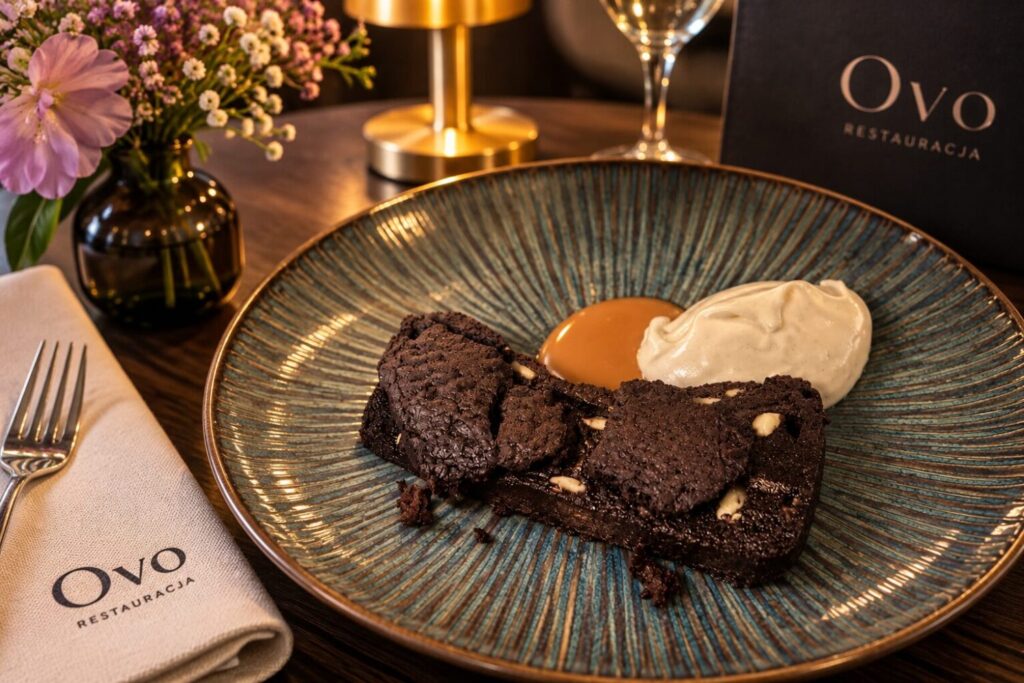
Our invitation included dinner at the OVO Bar & Restaurant. The restaurant is not rigidly separated from the hotel: it is an open, elegant but relaxed space, accessible from the public plaza and popular with local guests as well as hotel residents. Its kitchen combines contemporary Polish and European cooking with Mediterranean influences and uses seasonal, local ingredients.
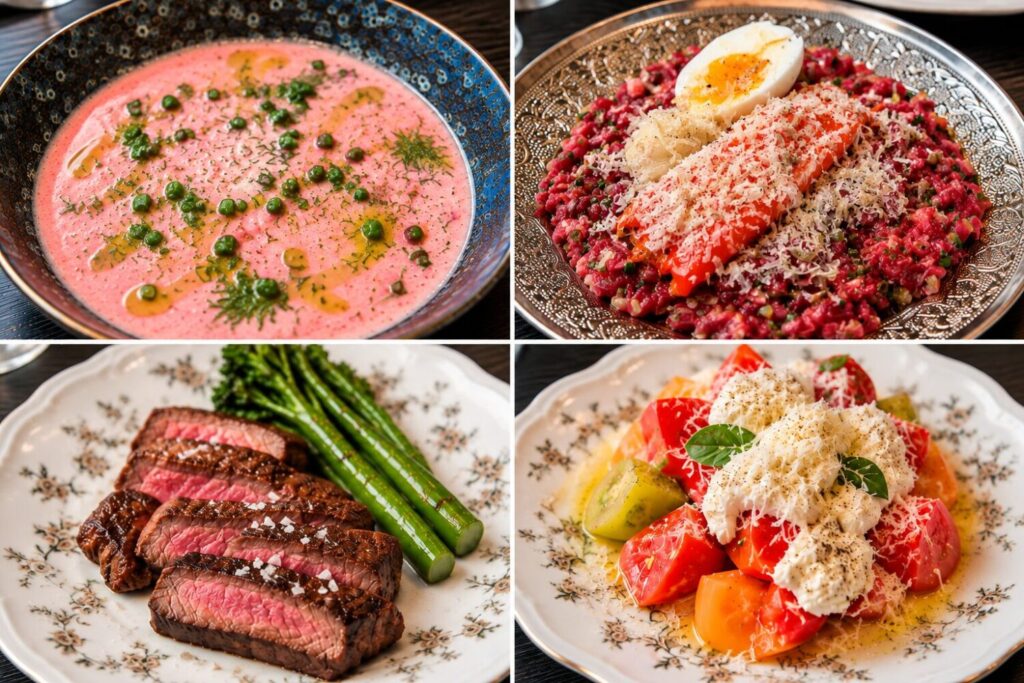
Dinner was almost a small exhibition in colour. We began with a salad of tomatoes in different shades with soft, creamy cheese, followed by a cold pink soup finished with fresh herbs.
Colorful food
Beef tartare arrived with egg and roasted red pepper, while the charcoal-grilled beef was served pink in the centre with green vegetables. An intensely chocolate dessert with cream and caramel completed the meal, accompanied by a passion-fruit cocktail.
Flavor bomb
The plates were beautiful and playful without becoming self-conscious displays. Beneath the modern presentation, the flavours remained clear and recognisable. This was the kind of dinner at which one photographs first and eats second, although the second operation usually proceeds considerably faster.
Breakfast was generous and genuinely varied. Alongside the familiar international hotel selection, there were plenty of opportunities to taste Polish flavours. It may sound like a minor point, but it reflects an important attitude: the hotel does not try to serve exactly the same morning everywhere. It makes sure that guests can encounter something of the country from the breakfast table onwards.
One characteristic Polish breakfast ingredient is twaróg, a fresh, gently tangy curd cheese often mixed with radishes, chives or spring onions and spread on sourdough bread. Traditional savoury breakfasts also commonly include smoked cold cuts, different sausages and pickled vegetables. Polish cuisine is not famous for sending anyone away from the table after two decorative lettuce leaves; it prefers to make certain that lunch does not become an emergency.
Egg dishes were prepared to order at the live-cooking station. Instead of choosing something cooked long in advance and kept warm, guests could say exactly what they wanted. The open kitchen also revealed what a hotel buffet normally keeps out of sight: breakfast does not simply appear; it is being made continuously.
Sustainability that goes beyond a well-worded promise
Sustainability is now mentioned by almost every hotel, although it is not always easy to see what the word changes in practice. At the DoubleTree by Hilton Wrocław, one of the most visible solutions was also one of the simplest: water refill stations in the corridors.
A reusable bottle was provided in the room, so guests could refill it whenever they needed water instead of opening another disposable plastic bottle. It required no sacrifice and no complicated instructions. The sustainable option was simply made convenient.
That matters because a hotel accommodates a large number of guests throughout the year. One avoided plastic bottle may seem insignificant; repeated room by room and day by day, it is not. The most effective environmental measures are often the ones that quietly become part of the guest’s routine.
Wrocław is not flawless – and that is precisely why it is lovable
Some cities offer one perfect image of themselves. Wrocław does not. Here a Gothic church is followed by a contemporary building, while a bronze dwarf emerges beside a tragic chapter of history. The past is not stage scenery, and the humour is not superficial: both belong to the city’s identity.
The DoubleTree by Hilton Wrocław provided a modern and comfortable base for this discovery. It was close to everything that had brought me to Wrocław, while the bicycle gave me the freedom not merely to tick sights off a list, but to move through the city’s different layers.
In the end, Wrocław was not about one single attraction. The riverbank, the church towers, the Rynek at night, the dwarfs appearing everywhere and the city seen from a bicycle combined to create the light yet deeply historical atmosphere that makes a return visit tempting. Wrocław does not try too hard to impress. It simply allows you to fall in love with it along the way.
The editor’s recommendation
We recommend the DoubleTree by Hilton Wrocław to travellers looking for a comfortable, pleasant and well-located hotel without giving up distinctive architecture or personal attention. The spacious room, the varied breakfast with local flavours, the pool and sauna, the bicycles available to guests and the carefully considered sustainability measures all made exploring the city easier and more enjoyable.
We stayed at the hotel as invited guests; this recommendation is based on our own experience. The DoubleTree by Hilton Wrocław was not merely a comfortable place to sleep, but part of the journey itself – and that is exactly what a good city hotel should be.
Hotel: DoubleTree by Hilton Wrocław
Restaurant: OVO Bar & Restaurant

 The Cathedral of St John the Baptist dominates the skyline of Ostrów Tumski
That layered history remains visible. Gothic brick churches stand beside Baroque façades, Prussian buildings and contemporary architecture. Wrocław does not conceal the seams between its different lives; it has learned to wear them rather well.
The Cathedral of St John the Baptist dominates the skyline of Ostrów Tumski
That layered history remains visible. Gothic brick churches stand beside Baroque façades, Prussian buildings and contemporary architecture. Wrocław does not conceal the seams between its different lives; it has learned to wear them rather well.
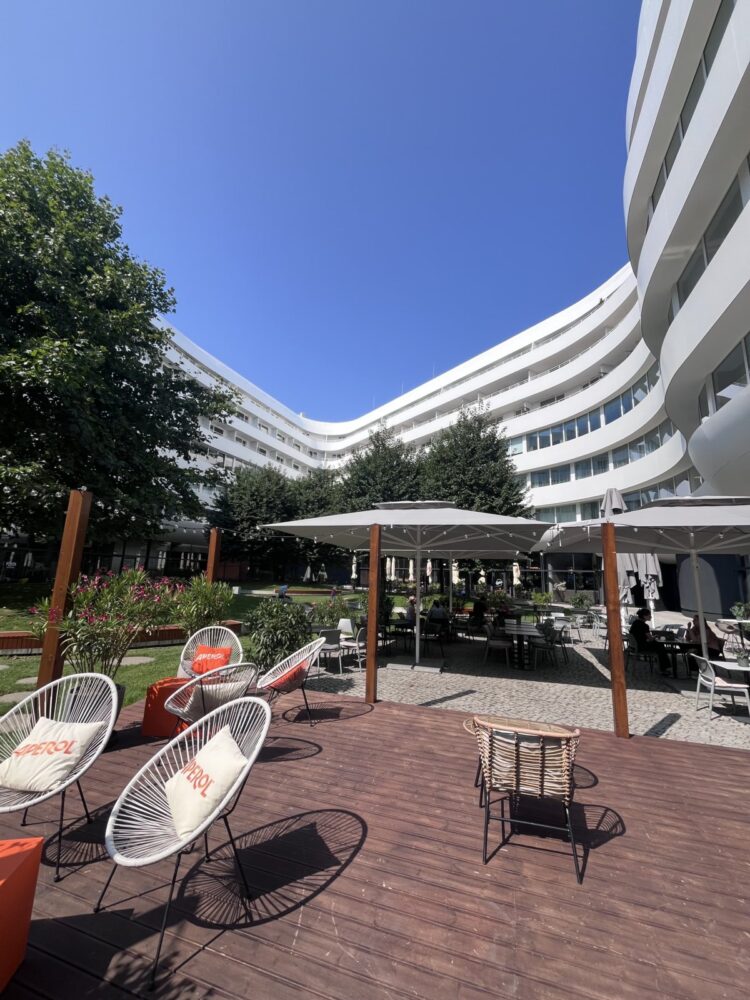 Its location makes it a practical base for exploring the city. The Market Square is roughly a ten-minute walk away, while Ostrów Tumski and the National Museum are also close. This means that returning to the hotel during the day is a realistic option, not an expedition requiring provisions and emotional preparation.
The hotel’s marketing director welcomed us personally and later took the time to ask whether everything was all right and whether we were satisfied with our stay. It may sound like a small gesture, but this is precisely the kind of attention that makes a guest feel like more than a room number in a booking system.
Its location makes it a practical base for exploring the city. The Market Square is roughly a ten-minute walk away, while Ostrów Tumski and the National Museum are also close. This means that returning to the hotel during the day is a realistic option, not an expedition requiring provisions and emotional preparation.
The hotel’s marketing director welcomed us personally and later took the time to ask whether everything was all right and whether we were satisfied with our stay. It may sound like a small gesture, but this is precisely the kind of attention that makes a guest feel like more than a room number in a booking system.
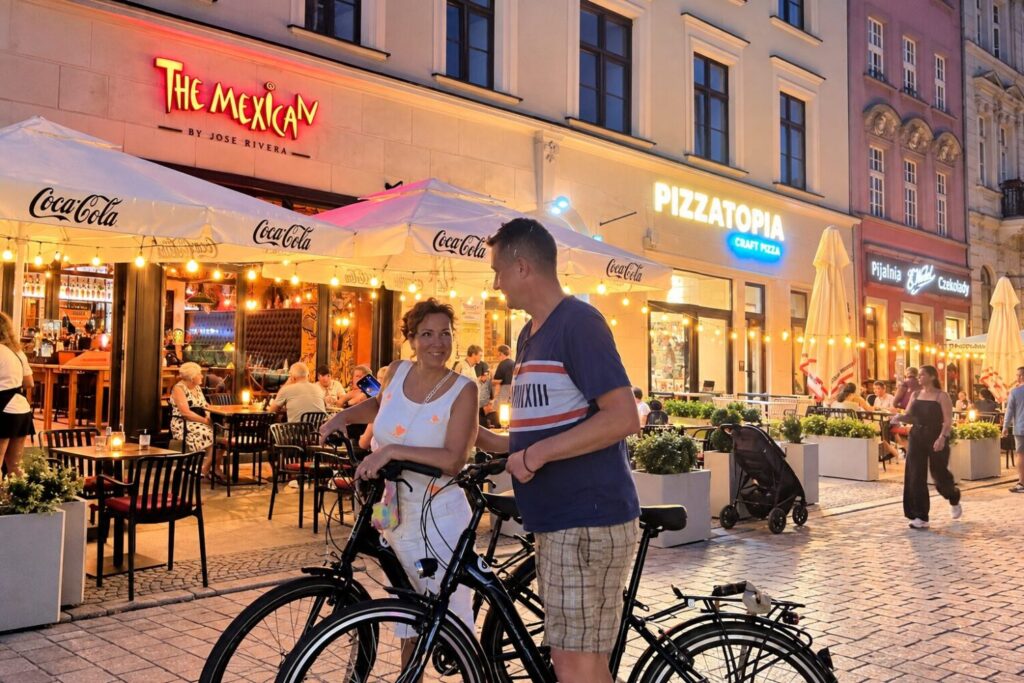 With the hotel bicycles, Wrocław became wonderfully easy to explore
The most useful service for me, however, was the bicycle. Wrocław is a city that reveals itself particularly well on two wheels: distances shrink, the river keeps reappearing, and it becomes easy to move from busy squares to quiet islands and church courtyards.
With the hotel bicycles, Wrocław became wonderfully easy to explore
The most useful service for me, however, was the bicycle. Wrocław is a city that reveals itself particularly well on two wheels: distances shrink, the river keeps reappearing, and it becomes easy to move from busy squares to quiet islands and church courtyards.
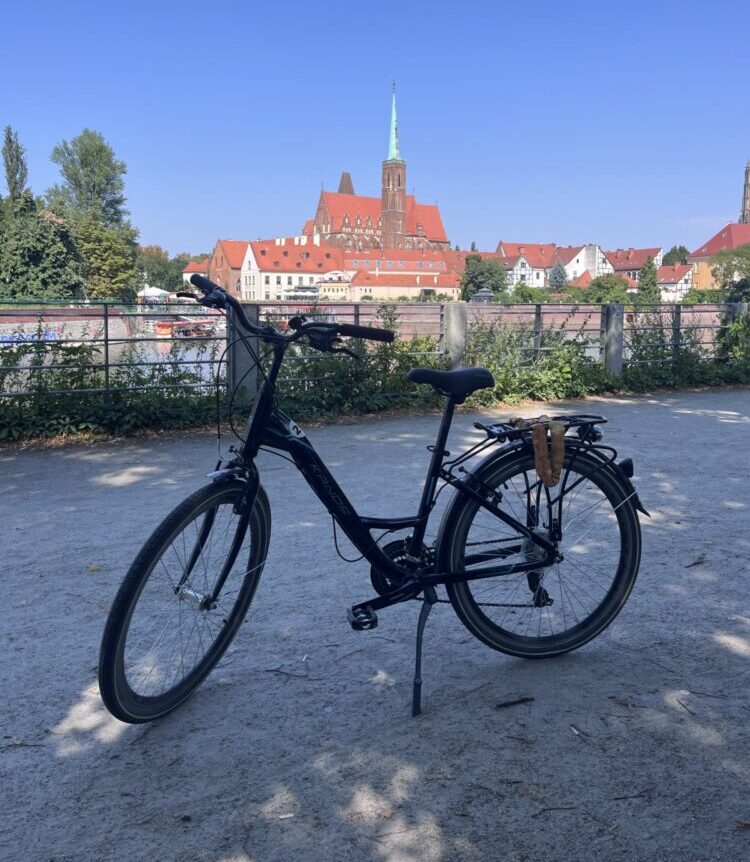 Cycling also changes the rhythm of sightseeing. I could stop when a façade, a tower or a view caught my attention, without turning every short distance into a transport decision. Getting slightly lost was inevitable, but in Wrocław that usually leads to another bridge, another square or a small bronze resident waiting at pavement level.
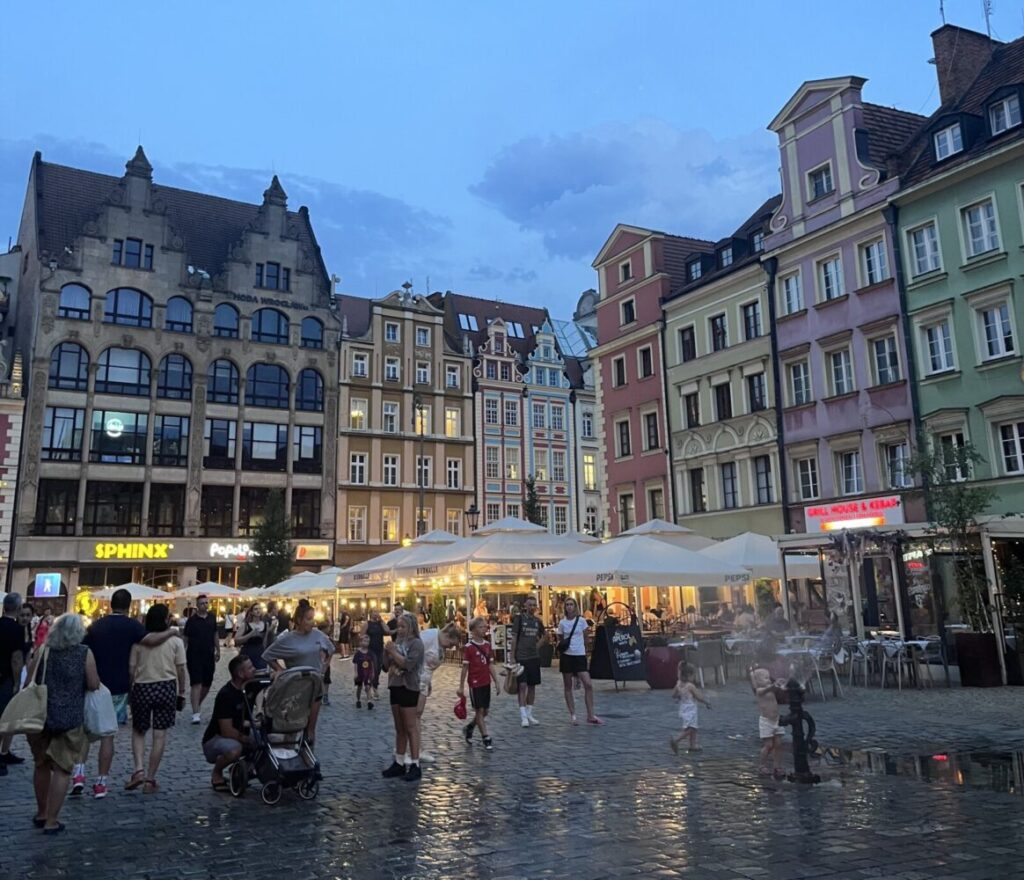 The square is not preserved behind museum glass. Café terraces, restaurants, residents and visitors keep it in constant motion. It is possible to study centuries of architecture here, but it is equally possible to sit down with a coffee and watch the city conduct its daily business around it.
In the evening, the Rynek shows an entirely different face. Terraces and historic façades light up, and after rain the illuminated Town Hall is doubled on the wet cobblestones. Even late at night the square remains full of families, friends and couples out for a walk. During the day we photograph the buildings; in the evening we try to capture the atmosphere.
The square is not preserved behind museum glass. Café terraces, restaurants, residents and visitors keep it in constant motion. It is possible to study centuries of architecture here, but it is equally possible to sit down with a coffee and watch the city conduct its daily business around it.
In the evening, the Rynek shows an entirely different face. Terraces and historic façades light up, and after rain the illuminated Town Hall is doubled on the wet cobblestones. Even late at night the square remains full of families, friends and couples out for a walk. During the day we photograph the buildings; in the evening we try to capture the atmosphere.
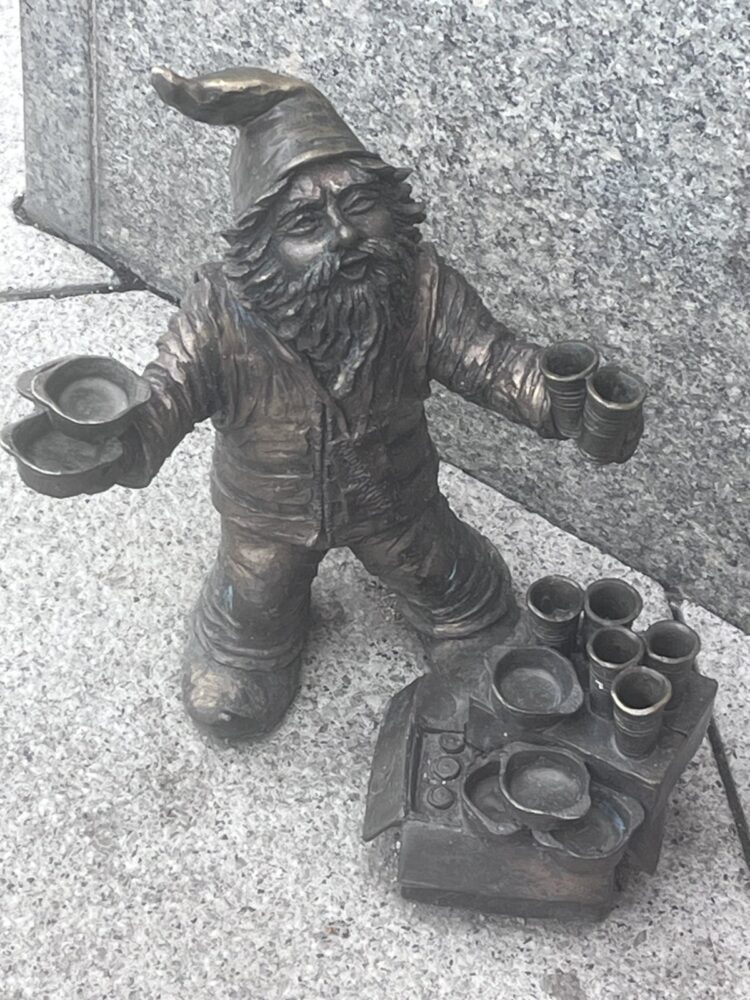 Searching for them quickly becomes addictive
Adults who would normally dismiss treasure hunts as childish can suddenly be found staring intently at gutters, doorways and the feet of monuments. The dwarfs provide comic relief, but their origins also say something important about Wrocław: humour here has historical weight.
Searching for them quickly becomes addictive
Adults who would normally dismiss treasure hunts as childish can suddenly be found staring intently at gutters, doorways and the feet of monuments. The dwarfs provide comic relief, but their origins also say something important about Wrocław: humour here has historical weight.
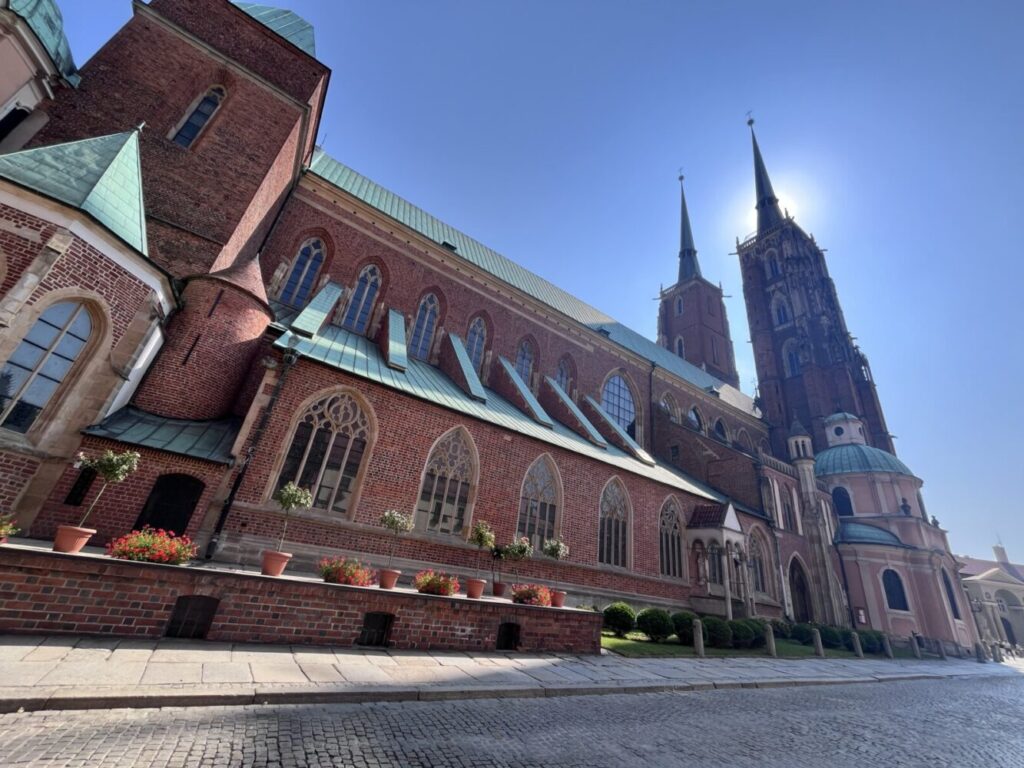 The twin towers of the Cathedral of St John the Baptist dominate the skyline from a distance. Its present appearance is the result of centuries of construction and reconstruction. During the siege of Breslau in the spring of 1945, around seventy percent of the cathedral was destroyed. The roof, parts of the nave vault, the organ, paintings and other furnishings were lost.
The rebuilding continued for years, and the spires visible today returned to the towers only in the 1990s. Standing in front of the immense Gothic building, little of that devastation can now be sensed. Perhaps that is precisely what shows how patiently and consistently Wrocław rebuilt itself.
At dusk, another old tradition returns to the streets: a lamplighter walks through Ostrów Tumski and lights the gas lamps by hand. It is an unusually theatrical daily ritual, although the cobblestones make sure that anyone watching while walking receives an immediate reminder to look down occasionally.
The twin towers of the Cathedral of St John the Baptist dominate the skyline from a distance. Its present appearance is the result of centuries of construction and reconstruction. During the siege of Breslau in the spring of 1945, around seventy percent of the cathedral was destroyed. The roof, parts of the nave vault, the organ, paintings and other furnishings were lost.
The rebuilding continued for years, and the spires visible today returned to the towers only in the 1990s. Standing in front of the immense Gothic building, little of that devastation can now be sensed. Perhaps that is precisely what shows how patiently and consistently Wrocław rebuilt itself.
At dusk, another old tradition returns to the streets: a lamplighter walks through Ostrów Tumski and lights the gas lamps by hand. It is an unusually theatrical daily ritual, although the cobblestones make sure that anyone watching while walking receives an immediate reminder to look down occasionally.
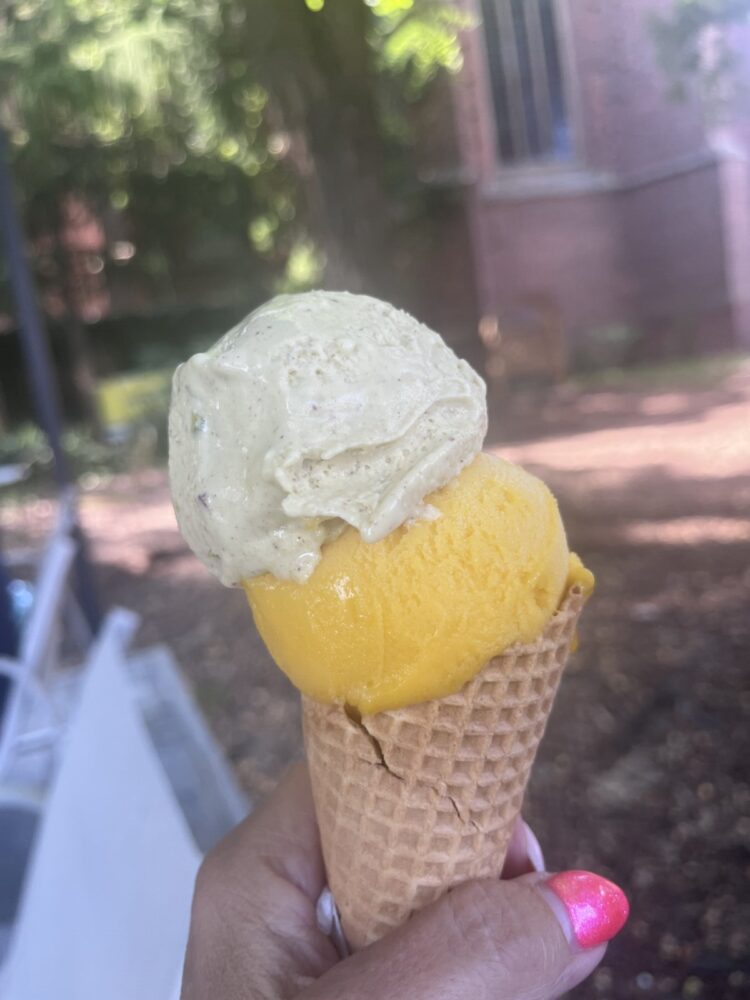 I loved the idea that a little ice-cream shop had been welcomed into a church garden and that anyone could walk in, sit down and stay for a while. We returned the next day, partly for another ice cream and partly because the place itself had become such a pleasant memory. Grand monuments may explain a city, but sometimes a scoop of ice cream under a tree is what makes you feel at home in it.
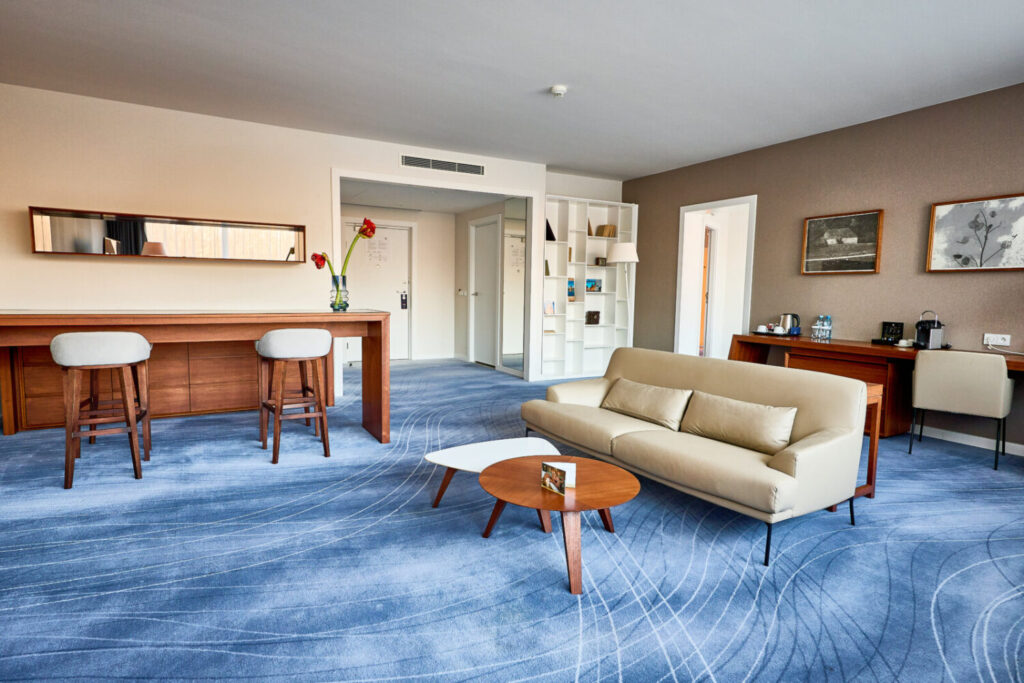 The toiletries in the bathroom were another pleasant detail. Not every traveller would mention them first, but for a woman they do matter. After a long day, the scent and quality of the products can determine whether a shower remains a necessary operation or becomes part of the relaxation.
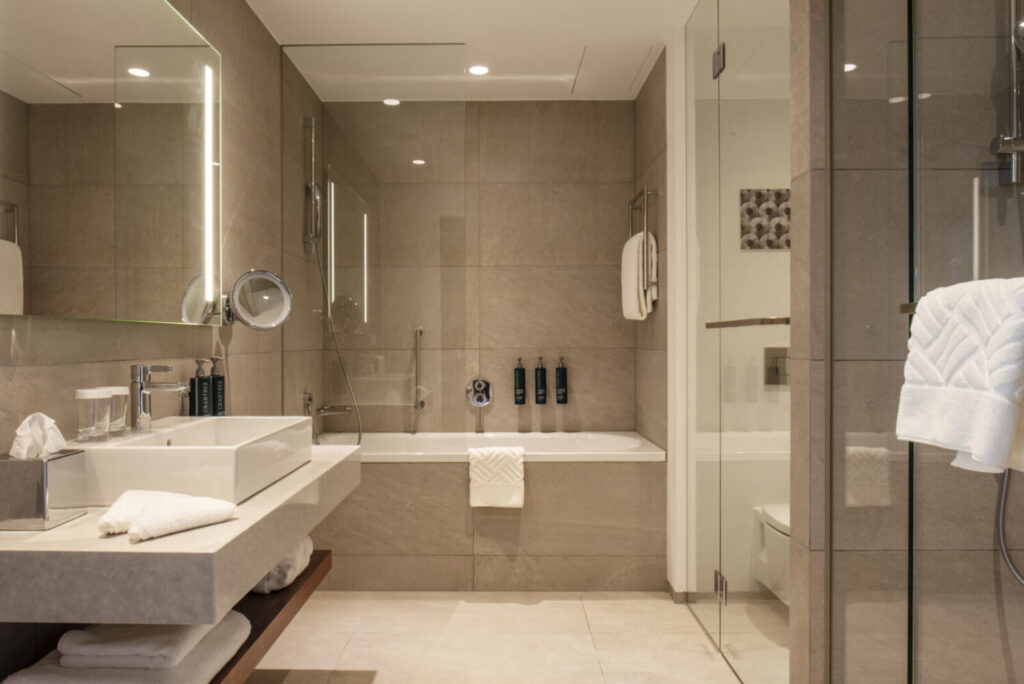 The toiletries in the bathroom were another pleasant detail
After cycling, I swam in the indoor pool and then relaxed in the sauna. There are few better ways to finish a day in the city than spending hours pedalling among bridges and historic buildings, then entering the water and no longer needing to know where the next sight is.
The toiletries in the bathroom were another pleasant detail
After cycling, I swam in the indoor pool and then relaxed in the sauna. There are few better ways to finish a day in the city than spending hours pedalling among bridges and historic buildings, then entering the water and no longer needing to know where the next sight is.
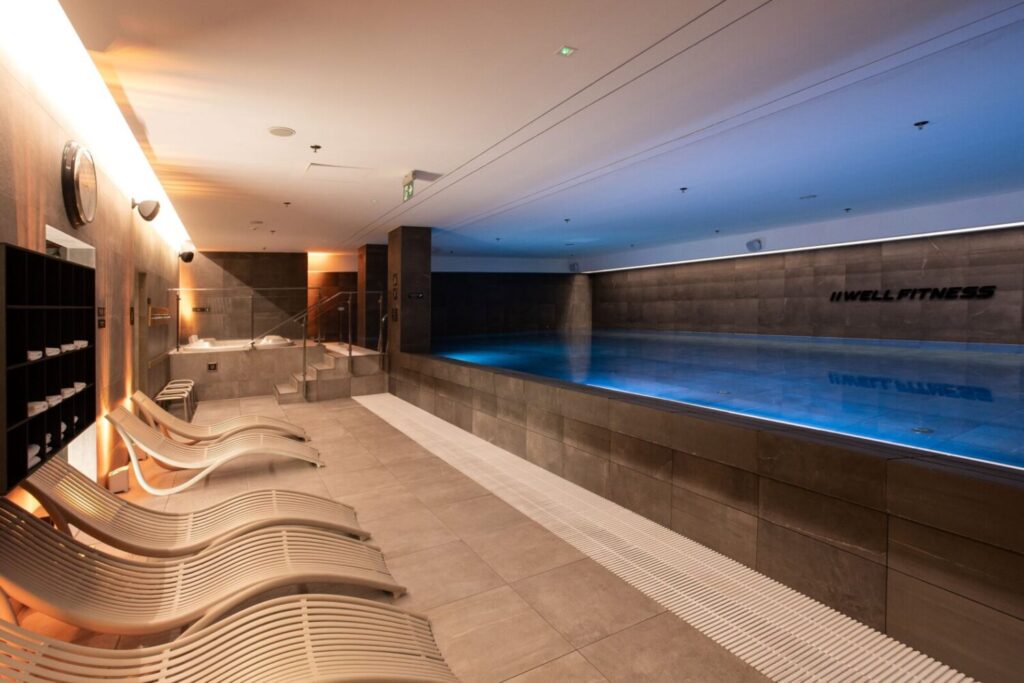 Perfect relax after the big excursion
Our invitation included dinner at the OVO Bar & Restaurant. The restaurant is not rigidly separated from the hotel: it is an open, elegant but relaxed space, accessible from the public plaza and popular with local guests as well as hotel residents. Its kitchen combines contemporary Polish and European cooking with Mediterranean influences and uses seasonal, local ingredients.
Perfect relax after the big excursion
Our invitation included dinner at the OVO Bar & Restaurant. The restaurant is not rigidly separated from the hotel: it is an open, elegant but relaxed space, accessible from the public plaza and popular with local guests as well as hotel residents. Its kitchen combines contemporary Polish and European cooking with Mediterranean influences and uses seasonal, local ingredients.
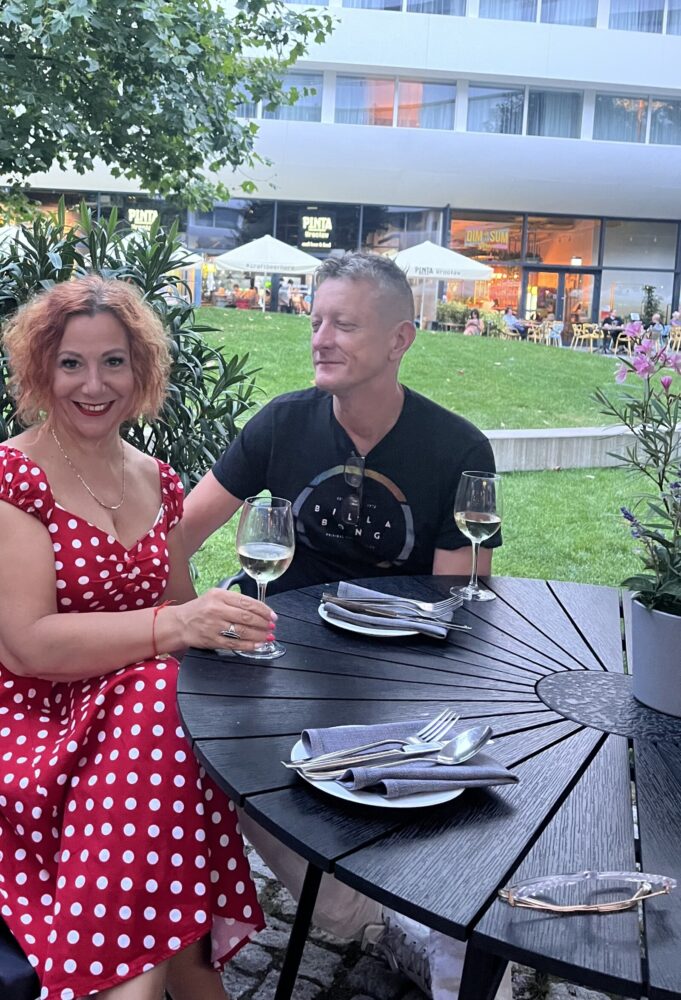 Dinner was almost a small exhibition in colour. We began with a salad of tomatoes in different shades with soft, creamy cheese, followed by a cold pink soup finished with fresh herbs.