
Salento’s unfiltered dolce vita
We all have a pre-packaged image of Italy locked in our minds: turquoise waters, whitewashed walls, ancient olive groves, and that cinematic dolce vita. Then you actually land in Salento, and you realize it’s playing an entirely different game. Here, the sea isn’t just a pretty backdrop for an Instagram story; it’s history, identity, temperament, and raw survival.
Dinner isn’t an item on your itinerary; it’s a sacred ritual. Over the course of a single week, you don’t just tick off sights—you find yourself constantly pulling over for the unexpected. A pastry. A local legend. An impromptu dance.

If you are looking for a generic, sanitized beach holiday, Salento probably shouldn’t be your first choice. But if you want a destination where the coastline is just the opening act of a massive, multi-layered experience, you’ll find nothing better. This corner of Italy is tailor-made for those who want to pack gastronomy, history, artisan crafts, slow-paced towns, and untamed nature into a single suitcase. It’s for people who love ditching the highway, stepping inside a dusty ceramics workshop, chasing century-old recipes, or figuring out why an entire community still gathers year after year to celebrate the exact same spot.
A salentini village, reimagined
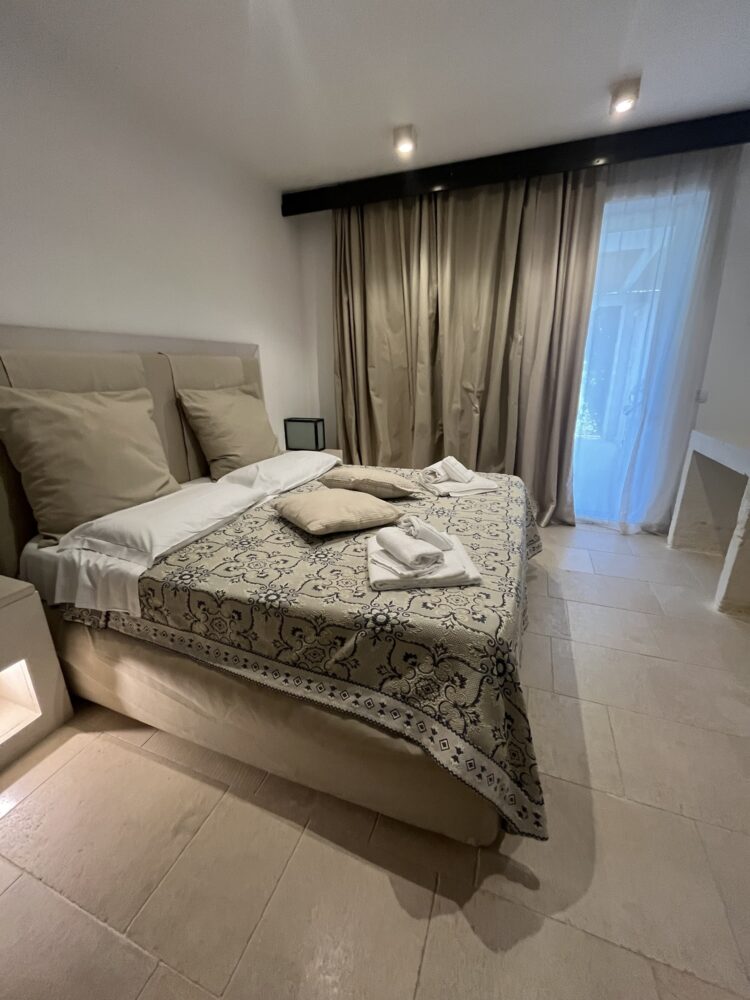
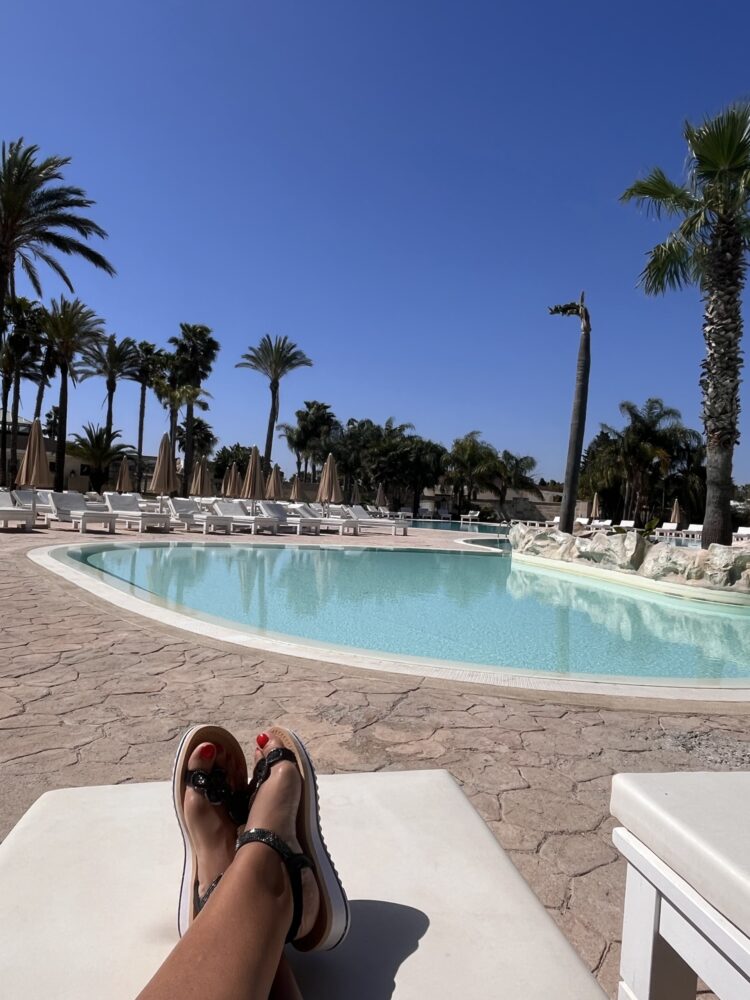
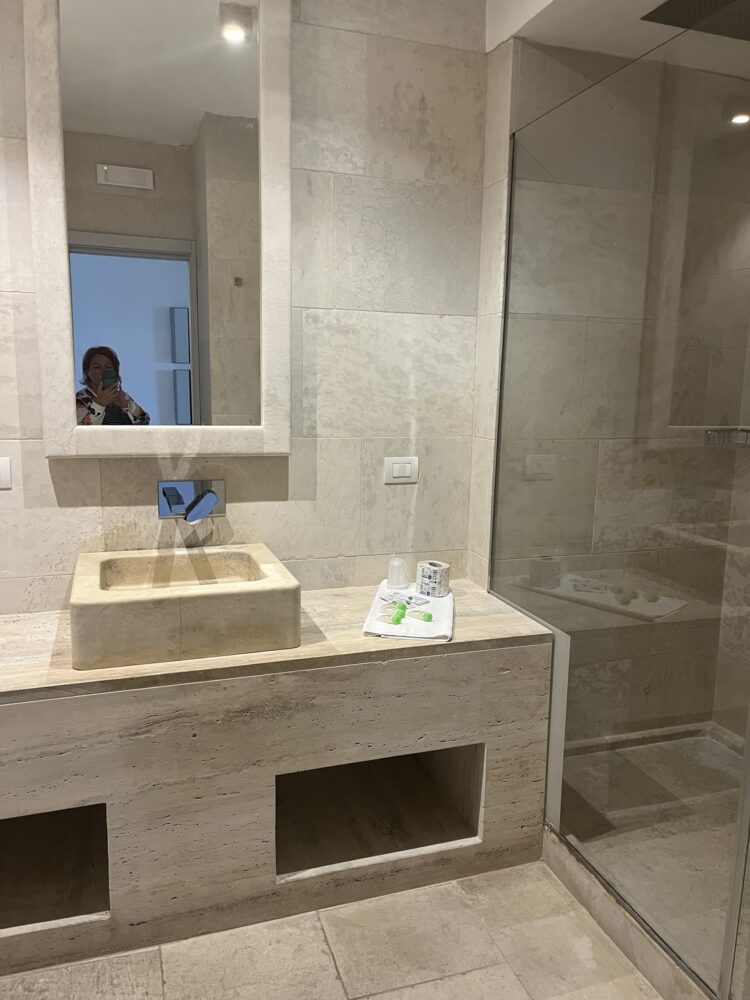
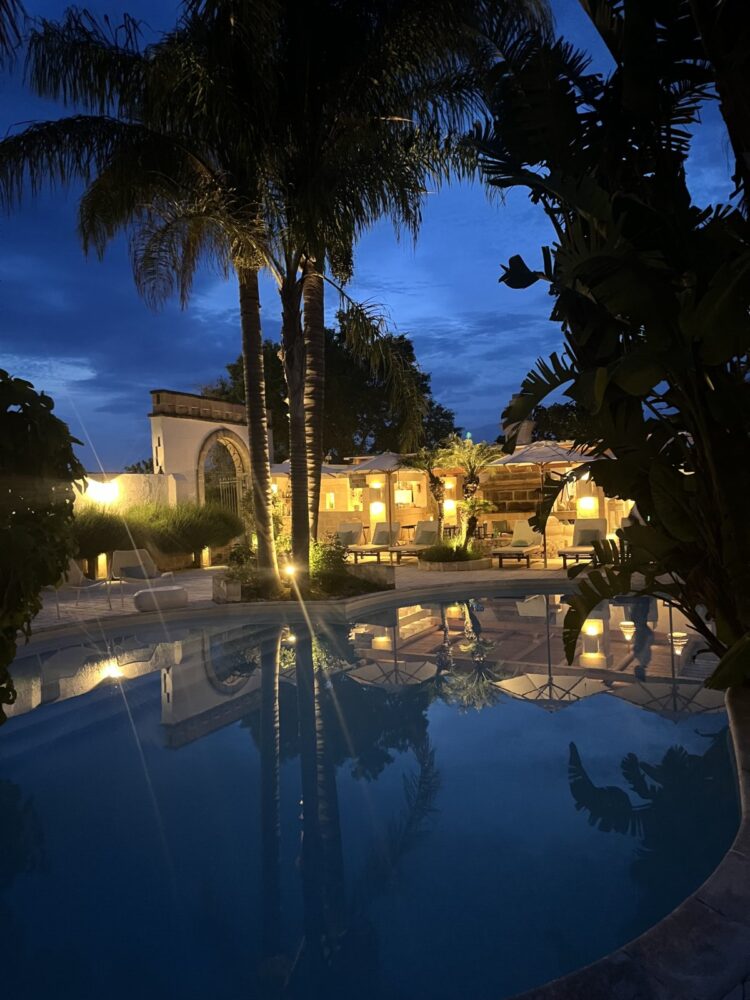
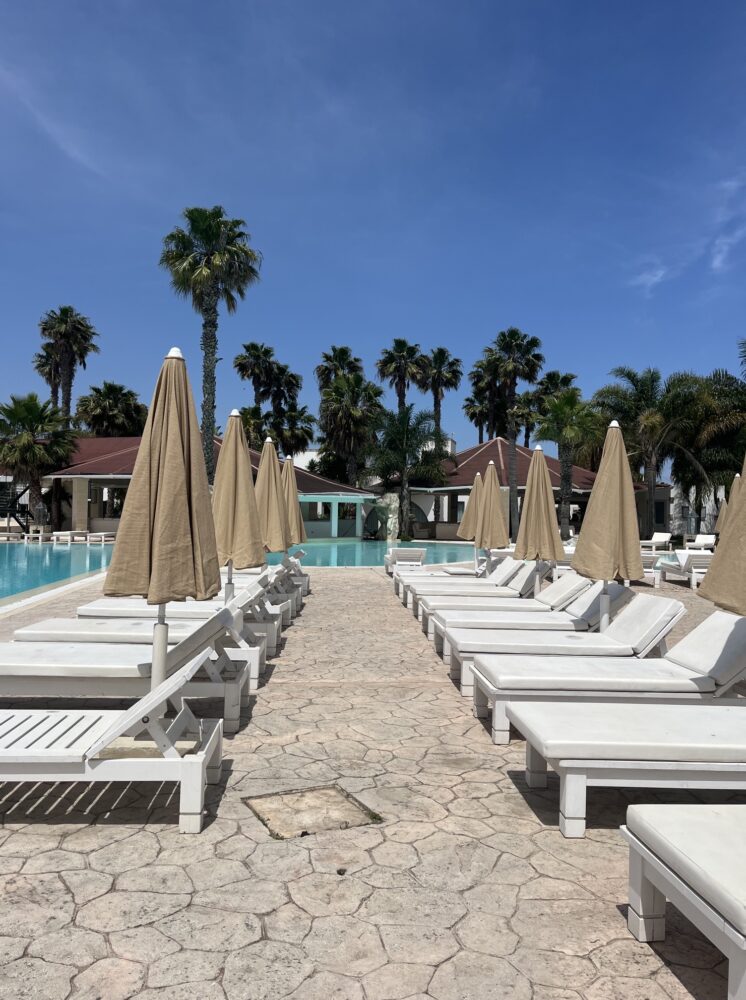
Our ultimate base camp was the Barone di Mare Resort, sitting pretty near Torre dell’Orso on one of the peninsula’s most jaw-dropping coastal stretches. The hotel feels less like a sterile resort and more like a breezy Mediterranean village: swaying palms, stark white architecture, long promenades, quiet courtyards, and that effortless Italian ease that you can’t design in a corporate meeting—you just have to feel it.

Around here, the owners’ family name is legendary. The Mazzottas were visionaries, investing in Salento’s tourism back when very few people believed in the region’s potential. And you can feel that deep-rooted pride. It’s not flashy or over-explained; the place just possesses a genuine rhythm, a past, and a family soul. Let’s see what fits into a week if you truly want to experience the Salentini dolce vita.
An aroma that follows you through the town
In Francavilla Fontana, my first memory isn’t a visual. It’s an aroma. You can’t truly understand this town from a photograph. The moment I arrived, a peculiar, intoxicating sweetness hung in the air. Right in the courtyard of the Imperiali Castle, Gianni Tardio—one of the town’s legendary tradition-keepers—was crafting confetto riccio. This is no ordinary almond candy.

Gianni watches over one of the town’s most famous traditions, working over a vintage copper cauldron.
His movements are rhythmic, almost liturgical. He layers warm sugar glaze over local Puglian almonds until they form those iconic, beautifully irregular, crunchy-yet-soft confections.
You don’t truly capture the essence of travel when someone merely shows you a checklist sight. It happens when you stand in the courtyard of a castle, watching an almond slowly transform into a festive delicacy, and suddenly, the entire character of a city makes perfect sense.
A dialogue between the centuries
From there, we stepped into a completely different world: inside the Imperiali Castle, the exhibition stretching from Baroque to Neo-Baroque, featuring works by Rubens, Bernini, and Igor Mitoraj, which you can check out in more detail, is an absolute must-see.

Francavilla’s history is built around a legend of its own: the town was founded in 1310 after Prince Philip of Anjou discovered a Byzantine Madonna icon in the area and encouraged settlement by offering tax exemptions. This is where the name „Franca Villa”—the free town—comes from.
Today, the Imperiali Castle serves partly as a civic ceremonial space. But as you walk through its halls, it is easy to imagine the evenings when Michele Imperiali hosted his grand receptions.
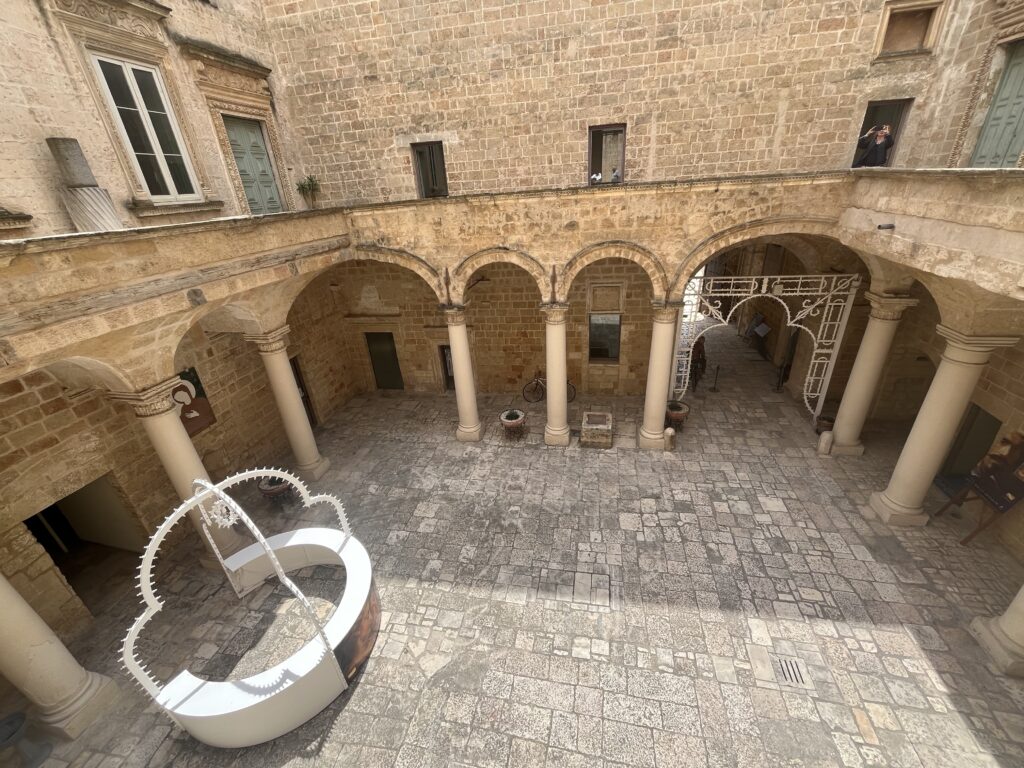
The Fireplace Room completely stole my heart. The monumental fireplace was built to commemorate a double family wedding: two Imperiali brothers marrying two Spinola sisters. The carvings feature pomegranates representing abundance, and winged figures whispering of eternity.

After exploring the castle, we spent the afternoon wandering through the town’s stunning churches and old village alleys.
True salentini hospitality
In Salento, a masseria isn’t just an estate. It’s a lifestyle. It means white stone walls, olive groves, estate wine, slow dinners, and the kind of hospitality that is completely devoid of affectation. Eating is not a necessary pitstop between two itinerary items; it is the event itself.
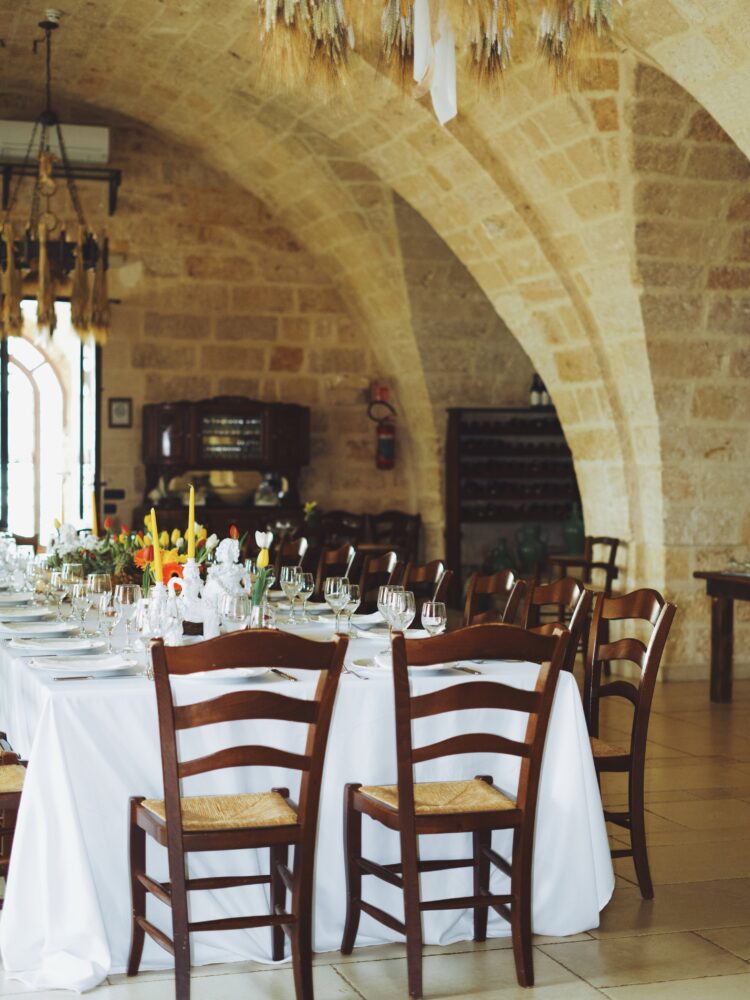
For lunch, Agriturismo Masseria Tredicina welcomed us. It transformed from an old country estate into a guesthouse and restaurant without losing an ounce of that effortless elegance that Italy does better than anyone else. Think rustic wooden tables, immaculate details, and shade-giving trees.

They served us freshly harvested vegetables, local cheeses, rich olive oil, and iconic Puglian dishes. Naturally, I developed a serious obsession with orecchiette—the famous „little ears” pasta, which is perhaps Puglia’s most legendary dish.

The hand-shaped pieces of pasta perfectly demonstrate what defines this cuisine: few ingredients, but absolute, flawless quality.
A dinner where everything comes from the earth
Our evening took us to Masseria Messapia in Mesagne. Here, a relentless parade of small plates kept arriving, true Southern Italian style. Grilled zucchini, smoky eggplant, marinated artichokes, local pecorino, fresh-out-of-the-basket ricotta, crusty bread, and an olive oil so deep-green and viscous it should be classified as a controlled substance.

Next came the homemade pastas and slow-roasted meats. What I love most about the Italians is that they have zero urge to „deconstruct” or reinvent the classics. If a recipe has been flawless for a hundred years, why on earth mess with it?
Ceramics are not just objects, they are time
The next morning, the tempo shifted completely as we headed into Cutrofiano. Salento’s soil is rich with red clay, which locals have been shaping into pure art for generations. This is Salento’s official ceramic town, nestled in the heart of the Grecìa Salentina region—an area where locals still speak Griko, a dialect of Greek origin.

Here, we didn’t just see a museum display; we saw living workshops. We met families who have been doing the exact same work for generations. As we watched a form rise elegantly out of the spinning clay, everything else suddenly became completely irrelevant. There is something deeply comforting when someone can do something with their hands that cannot be learned quickly, cannot be rushed, and cannot be replaced by software.
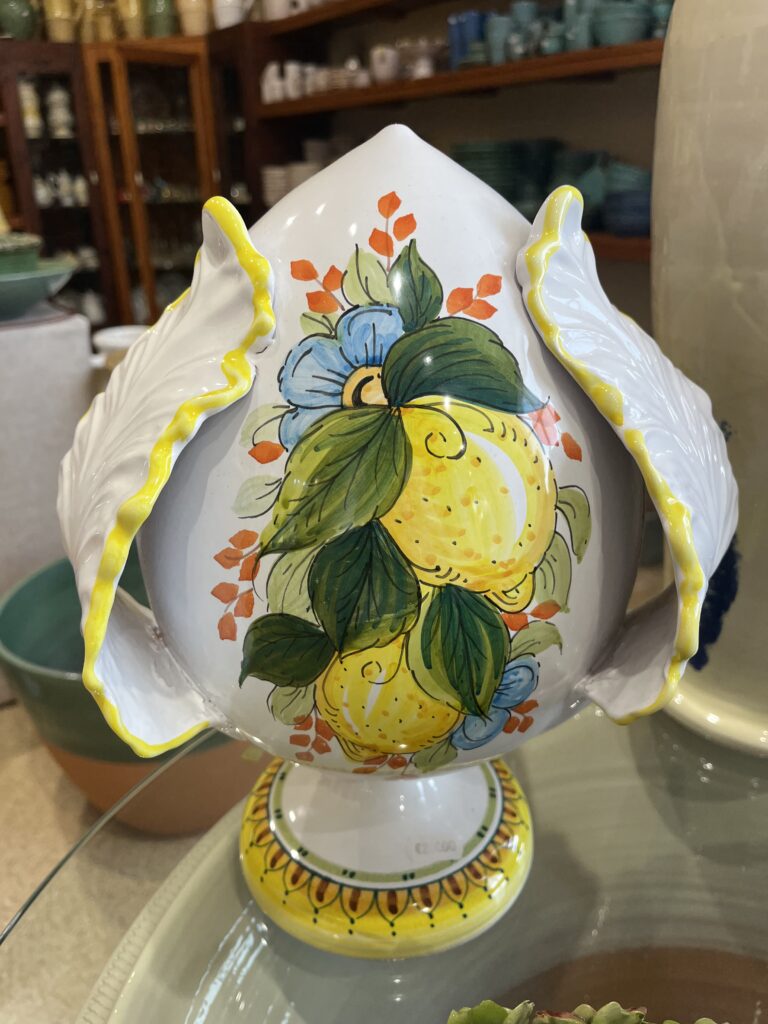
We spent the morning visiting these traditional ceramic factories, witnessing firsthand how this earthly craft is kept alive.
When the garden dictates the menu
For lunch, we headed to the Sirgole – Orto & Cucina restaurant, and from the very first bite, it was clear: the chef’s ego takes a back seat to the garden. The name tells you everything. Garden and kitchen. The chef highlights seasonal ingredients, and the plates are light, fresh, and intensely southern. The modern gastronomy and that sense of homeliness that Italy delivers so naturally share the plate perfectly. Right next to the restaurant, a citrus grove, a pool, and a profound peace welcomed us, making you want to stay until nightfall.
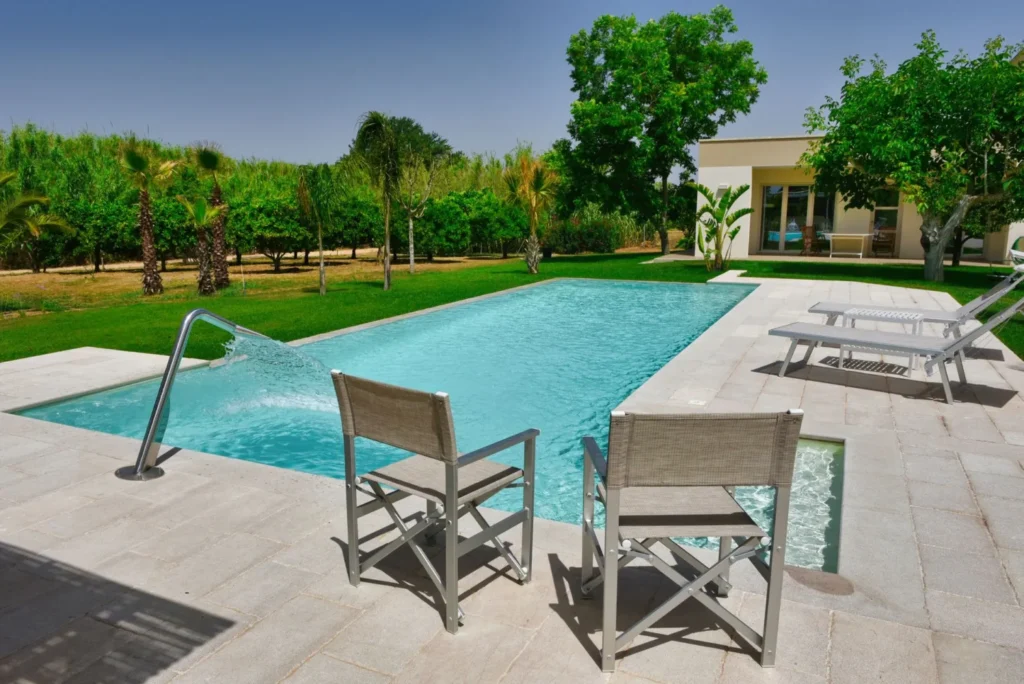
Not because there wasn’t anything else to see elsewhere, but because in places like this, you remember that maybe you don’t always have to move on.
Discovering the history of Cutrofiano
We walked off lunch by exploring the historic center and the castle before spending time in the Museo Civico della Ceramica. Through the museum’s history, you can beautifully peer into both the town’s ancient past and its living present.
Where wine tells the story
Later, at the Cantina Palamà winery, we explored the cave and didn’t just taste wine; we swallowed local lore. Their most famous label is called Metiusco. The name comes from Griko, and it translates to: „I’m off to drink wine.”

In the old days, agricultural workers, upon receiving their first daily wages, would often celebrate together over a glass of wine. That is where the name was born. And somehow, it encapsulates the entire Salentini philosophy: it’s not about the alcohol; it’s about the stolen time spent together.
A dinner at kilometro zero
Our day ended at Kilometro Zero in Cutrofiano for dinner, which was a masterclass in how little you actually need to create an unforgettable meal. The local burrata was creamier than anything I’ve ever tasted, flanked by sweet datterino tomatoes, estate olive oil, and torn basil. The homemade orecchiette arrived in a straightforward tomato sauce, yet it was absolute perfection. It reminded me that the greatest secret of Italian cooking isn’t a complex recipe—it’s the obsessive quality of the ingredient.
Wild, sensual, and striking
It is genuinely hard not to use hyperbole when talking about the sea in Porto Cesareo. Around Punta Prosciutto, the water isn’t just blue—it’s every single shade of blue, all at once. Locals still proudly tell the story of how Mogol and Lucio Battisti wrote the iconic song Acqua azzurra, acqua chiara inspired by the waters they saw right here. But Porto Cesareo is more than just a gorgeous coastline. We headed down to Torre Lapillo, home of the Environmental Education Center, for a guided tour of the stunning nature reserve, taking in the unique wild flora and fauna.
A lunch in the pomegranate fields
For lunch, we had an incredible tasting of typical products over at the Martino pomegranate field in Monteroni di Lecce, a beautifully unexpected setting that perfectly combined local farming with raw hospitality.

A sunset on the water
The afternoon was spent walking along the coast to discover the beaches of Porto Cesareo Nord, waiting for the sky to change. The real magic happened as the sun began to dip, where we took a brief sunset boat trip. While sailing along the coast, listening to stories of divers discovering Roman marble columns and ancient Egyptian artifacts buried in the seabed, anyone looking to discover this region from the water should definitely link up with the Taxi Boat – Cinzia & Lupodimare crew. They are fantastic. The sea here is not decoration; it’s an archive. Instead of papers, it holds shipwrecks, ancient pillars, myths, and the memories of fishing families. We wrapped up this surreal day with a late-night dinner tucked away in the Conti Zecca cave.

An anniversary of remembrance
Our next day was dedicated to participating in the festival honoring the Madonna di Roca in Melendugno. Many times I have been to places where traditions are neatly packaged and displayed as a performance for visitors. In Salento, during this festival, I had a completely different feeling. We weren’t looking in on a local custom as outsiders; rather, I felt that for a few hours, we became part of something that means the exact same thing to locals today as it did centuries ago.
The feast of Madonna di Roca isn’t a festival in the modern, commercial sense—it’s a living piece of cultural memory, a true homecoming. According to the story, when the medieval settlement of Roca was abandoned by its residents following Ottoman attacks, they moved to surrounding villages but never severed their ties. Every year since, they return here with processions, mass, and community celebrations to remember their origins.

Before the celebrations kicked off, we slipped away to the shores of Roca to see the famous Grotta della Poesia (Cave of Poetry).
The cave of poetry
The name is surrounded by several stories. One legend says that a beautiful princess used to come here to swim, inspiring poets to write verses to her. Another explanation claims the name comes from an old Greek word referring to a freshwater spring. The reality is even more fascinating: archaeologists believe this breathtaking natural pool, often called the Mycenae of Salento, was once a marine sanctuary; the rock walls are etched with Messapic, Greek, and Latin inscriptions left behind by ancient mariners praying for safe passage before setting sail.

Roca Vecchia is an archaeological site on the Adriatic coast today, but it was once a significantly fortified settlement. It was a major center during the Messapian era and well-known to Greek and Roman sailors. Archaeologists discovered Mycenaean ceramics on the grounds, proving it was connected to the Greek world more than three thousand years ago. And when you stand there above the emerald-green water, it suddenly doesn’t matter which story is the absolute truth.
Frisella and pizzica
We stopped for a light lunch right on the beach at Torre dell’Orso, with the perfect option to jump into the water for a quick swim. For me, the most beautiful symbol of Salentini traditions didn’t appear during the grand festival, but in this simple seaside meal. We got our hands dirty learning to make frisella—the brilliant, dead-simple Salentini staple made of twice-baked bread, drenched in tomatoes and olive oil. At first glance, a frisella seems like nothing more than a piece of hard, twice-baked bread.

I admit, when I first saw it, I didn’t understand how this could be the iconic dish of an entire region. Then they taught me how to eat it. It is dipped in water for just a second to regain its softness, and then topped with fresh tomatoes, local extra virgin olive oil, oregano, and perhaps capers or tuna. Suddenly, it becomes crystal clear that the essence of Salento’s kitchen is not complexity, but bringing something unforgettable out of a few flawless ingredients.
We caught a little taste of the ultimate beach-club vibes at Lido Cala Marin (a notorious celebrity hideout), and for a sweet finale, we practically raided the incredible spread at Pasticceria Gelateria Dentoni.
Then, the music started. Pizzica.
It is a dance that is hard to understand when watching a video, but once you stand in the center and everyone starts clapping and spinning around you simultaneously, you stop trying to analyze it. You just want to be in it. Many know the pizzica simply as a spectacular folk dance, but its origins are much more complex. Tradition holds that people „poisoned” by the bite of a tarantula spider were cured through music and dance. The frantic rhythm represented a kind of cleansing, a liberation. Today it is an expression of joy, a part of festivals and holidays, but when the drums start pounding and the dancers move while looking deep into each other’s eyes, an ancient spirit remains.
Whether it is ceramics, sweets, dance, or a simple piece of bread: nothing is preserved here just because it is old. It is preserved because it is still a vital part of their lives. We winded down with a dinner aperitivo at our resort, followed by dinner at the Hotel Barone di Mare Village, before heading back out to experience the live music and the towering, glowing, typical Salento light installations.
Where history does not start in a museum
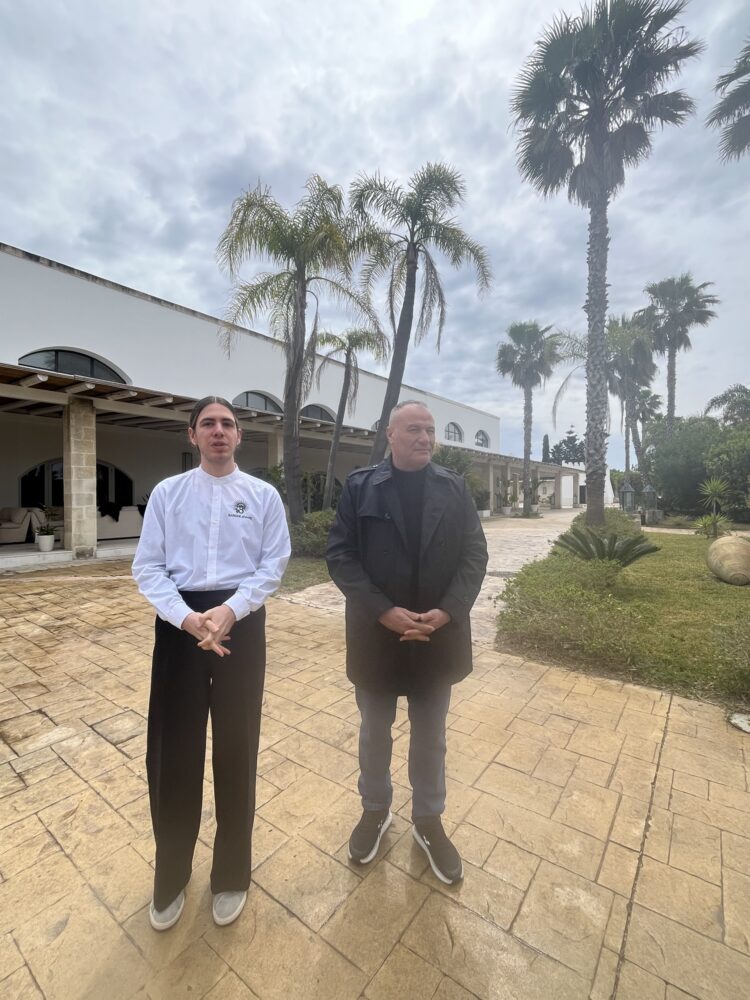
Last day was all about pure relaxation and taking a breather at the resort. We took a personal tour of the Barone di Mare property alongside the owner himself, learning more about the family Mazzotta and their deep ties to the land.


In the afternoon, we headed over to Cavallino to explore its beautiful historic center and the ancient Messapian archaeological site. The Messapians lived here long before the Romans, and their name—meaning „those who live between two seas”—perfectly fits Salento, defined by the Adriatic and the Ionian seas. The remains of the city walls, dating back more than 2,500 years, are still visible today. Walking among them, I wondered how many nations, cultures, and people looked up at this exact same sky centuries ago.
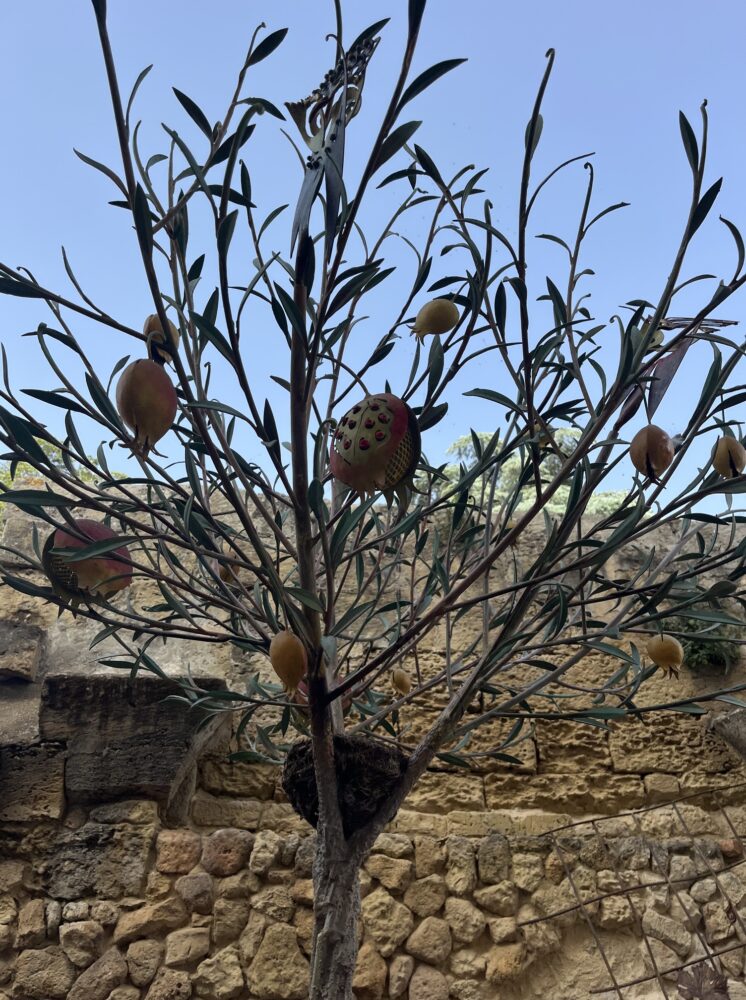
However, it is not just antiquity that is alive in Cavallino. One of my most fascinating encounters was inside Ferruccio and Isaia Zilli’s workshop. We usually imagine blacksmithing as heavy, grueling work, but here, the iron became almost weightless. Pomegranates, olive branches, flowers, and birds were born beneath their hands. Ferruccio Zilli’s blacksmith forge isn’t just a workshop; it’s a raw contemporary art studio translating the Salentini landscape into the language of metal.
The citrus fruits and flowers on the ceramics, the olive branches on the wrought-iron gates, and the few raw ingredients that this earth has provided for centuries in the food. By nightfall, Osteria La Remesa in Cavallino welcomed us with open arms, serving up the absolute best of traditional, no-nonsense Salentini comfort food. The place consciously rejects being modern. It does not reinterpret tradition; it simply prepares dishes the way they have been made for generations. Pittule, orecchiette, tomato sauces, ricotta, and slow-cooked dishes arrived one after another. It wasn’t a show kitchen. It was a reminder that sometimes the simplest things work the best.
The baroque stage
Approaching Lecce, you can feel from afar that you are entering a different world. It is not by chance that the city is called the „Florence of the South” or the capital of Baroque. Having seen many European Baroque cities, it is hard to truly surprise me. Yet, Lecce succeeds. I stood for long minutes in front of the facade of the Santa Croce Basilica, completely still.

So many tiny details, human figures, animals, plant motifs, and carvings cover it that it is impossible to take it all in at once. It’s as if the stonecarvers simply could not stop. And how wonderful that they didn’t. Lecce’s uniqueness lies in the pietra leccese, a soft, pale limestone that is easy to carve and enabled this incredibly rich decorative art. Walking through the city, almost every facade feels like a small sculptural masterpiece.
The Piazza Duomo has a completely different character. It is not a classical main square; it is a stage. Church buildings frame it, and the open square in the center feels like a theatrical set at night. Lecce’s history can be read in layers: Messapian foundations, Roman past, Middle Ages, Baroque—everything builds upon the other. And sometimes, quite literally.
My absolute favorite story belongs to the Museo Faggiano. The owner originally just wanted to fix a plumbing issue in his home. As he started digging, relics from completely different eras began to surface: Messapian tombs, Roman remains, and medieval chambers. The family eventually turned the home into a museum.
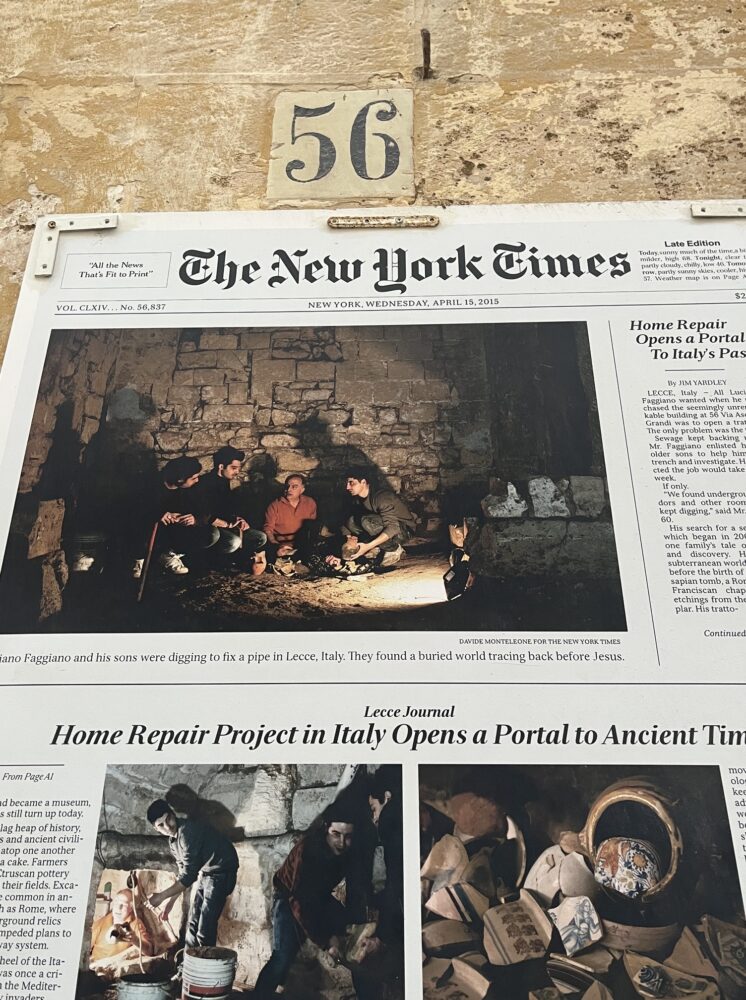
In Italy, perhaps nothing characterizes the relationship between past and present better than a simple apartment renovation turning into a major archaeological discovery.
Fine elegance and porto selvaggio
And just when I thought Salento had shown every one of its faces, along came Nardò. Walking among the Baroque palaces of Piazza Salandra, the balconies of noble houses, the narrow streets, and carefully restored facades, I kept thinking how little is said about this city compared to much more famous southern Italian destinations. Locals proudly tell stories of how many French artists, chefs, and entrepreneurs have discovered Nardò over recent decades. They bought old palaces, opened restaurants and charming guesthouses, and created a unique, slightly international, yet thoroughly southern Italian atmosphere. Nardò does not shout. It doesn’t feel the need to prove its beauty at every turn. Perhaps that is why it was one of the greatest surprises of the trip. The nearby Porto Selvaggio reminded me that Salento’s beauty does not only lie in picture-perfect sandy beaches. Its name means „wild port.” And it truly possesses a raw beauty. It is not the kind of coast where sunbeds and beach clubs line up side by side. Instead, pine forests, stone walls, walking paths, and sudden panoramic views take turns. Below lies the deep blue of the Ionian Sea, surrounded by pines and rocks—a landscape whose beauty is far more understated. Here stands the Torre della Dannata, the „Tower of the Damned,” connected to a tragic romantic legend. But for the locals, an entirely different story is much more important: the name of Renata Fonte. In the 1980s, the urban planning official fought to prevent Porto Selvaggio from being developed, ultimately paying for it with her life. Today, a memorial plaque preserves her name.
The taste of luxury
We stopped for lunch just outside the town at Masseria Corsano, and here it became entirely clear that luxury has a different definition in Salento. It is not gold, and it is not excess. It is attention. They restored the old masseria so that everything remains authentic, while every tiny detail serves your comfort.

The rooms are spacious, the services are deeply thoughtful, and you can feel that this place was designed by people who have traveled extensively and know exactly what is usually missing from a hotel. You can even check out this stunning video of the masseria.
As evening approached, everything grew increasingly quiet. The sun was sitting low, and we returned to Torre dell’Orso.
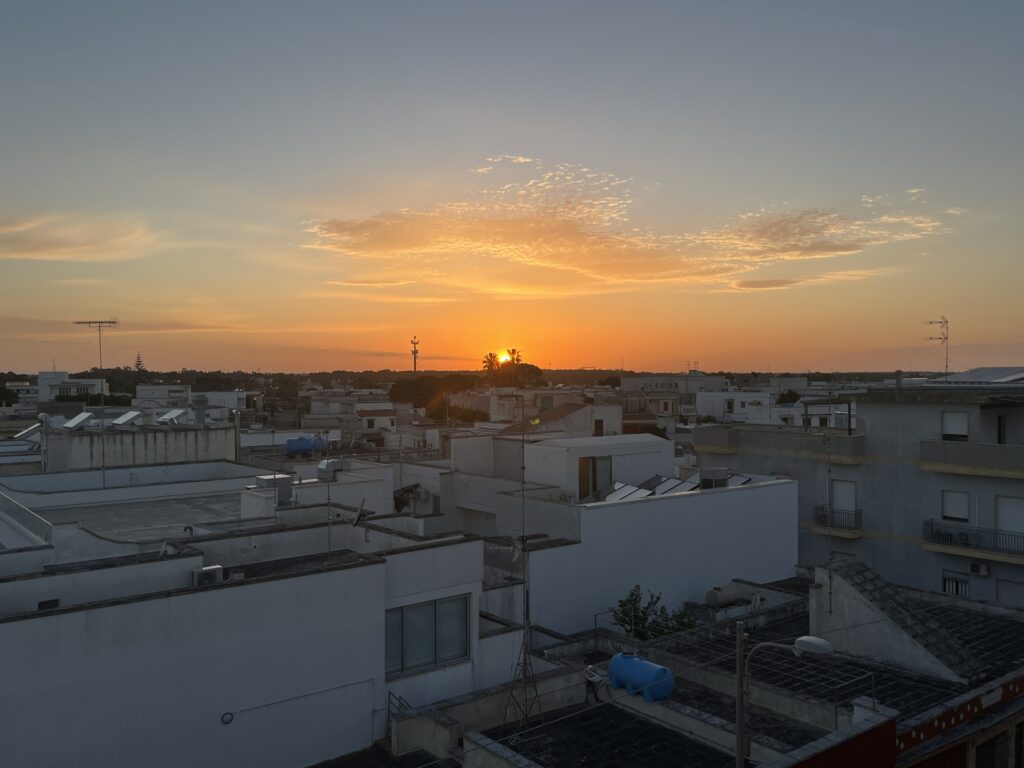
From the terrace of Hotel Belvedere, we watched the light slowly color the sky in shades of pink, while the surface of the pool seemed to merge seamlessly with the sea. Below us, quiet conversations, a bit of salt in the air, and from somewhere, the scent of a glass of negroamaro.
The editor’s recommendation: the magic of the masserias
If someone asked me what the greatest experience in Salento was for me, I might not even say the sea first. I would say the masserias.
Because there is something truly extraordinary about it. You set off toward nothing. Literally toward nothing. Olive trees, grapevines, dusty roads, low stone walls, and a few white buildings in the distance. Then, suddenly, you arrive at a wall, a gate, you step inside, and a whole different world opens up before you. I think only Italy knows how to do this.
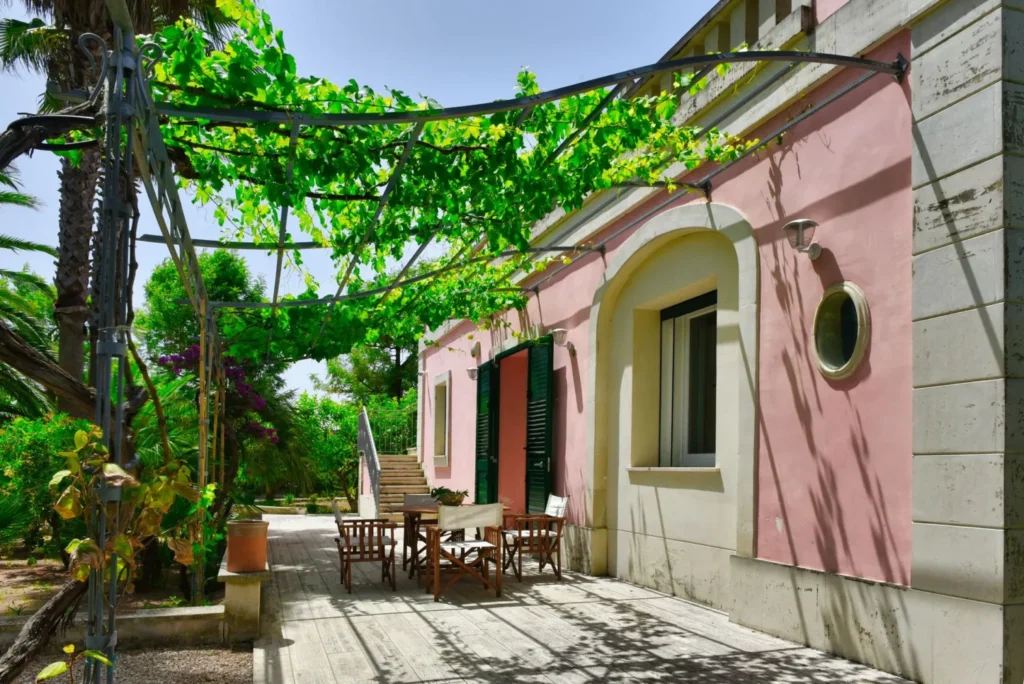
From the outside, you often see almost nothing. There is no loud luxury, no grand entrance gesture. And that is exactly what makes the experience so powerful. Because within the walls, everything is there: a shaded courtyard, white stone, vibrant plants, long tables, quiet conversations, good wines, slow lunches, and that natural elegance that cannot be learned. You either have it, or you don’t.
A masseria was originally a rural farm, an estate, often a fortified farmhouse. Today, many of these have been transformed into guesthouses, restaurants, wine estates, or elegant country accommodations. But in the best of them, the original essence is never lost: the closeness to the land. You feel that what is placed on the table did not „arrive” from somewhere else, but comes directly from right here. The tomatoes, the eggplants, the peppers, the olive oil, the fresh cheeses, the bread, the homemade pasta—everything is so simple that at first glance, it is almost disarming. Then you taste it, and you understand.
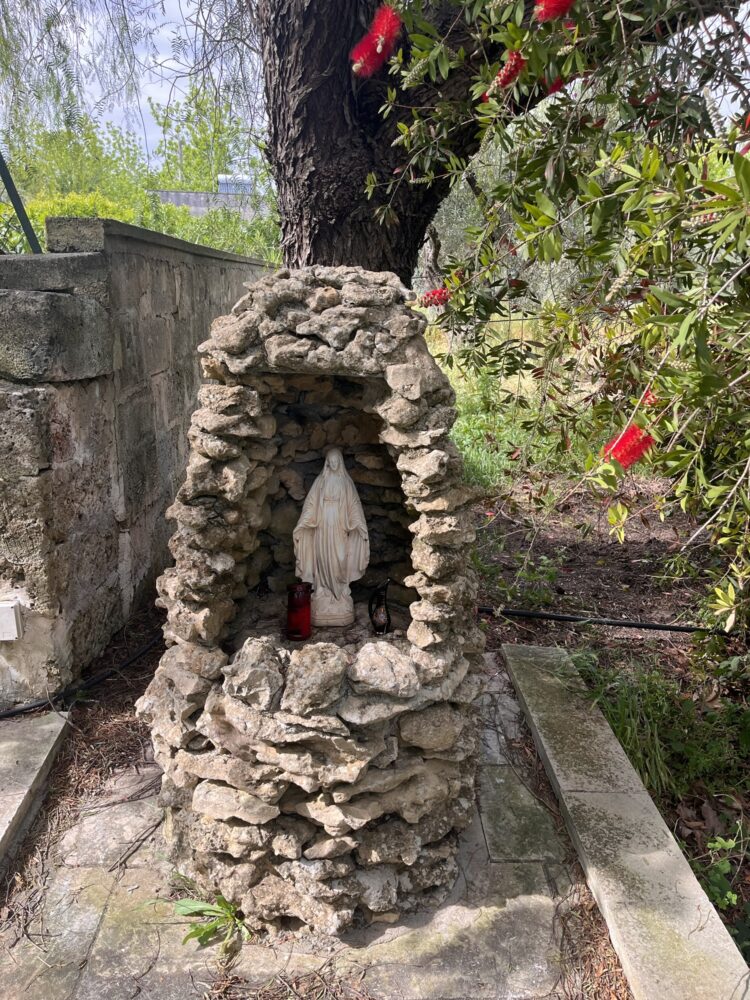


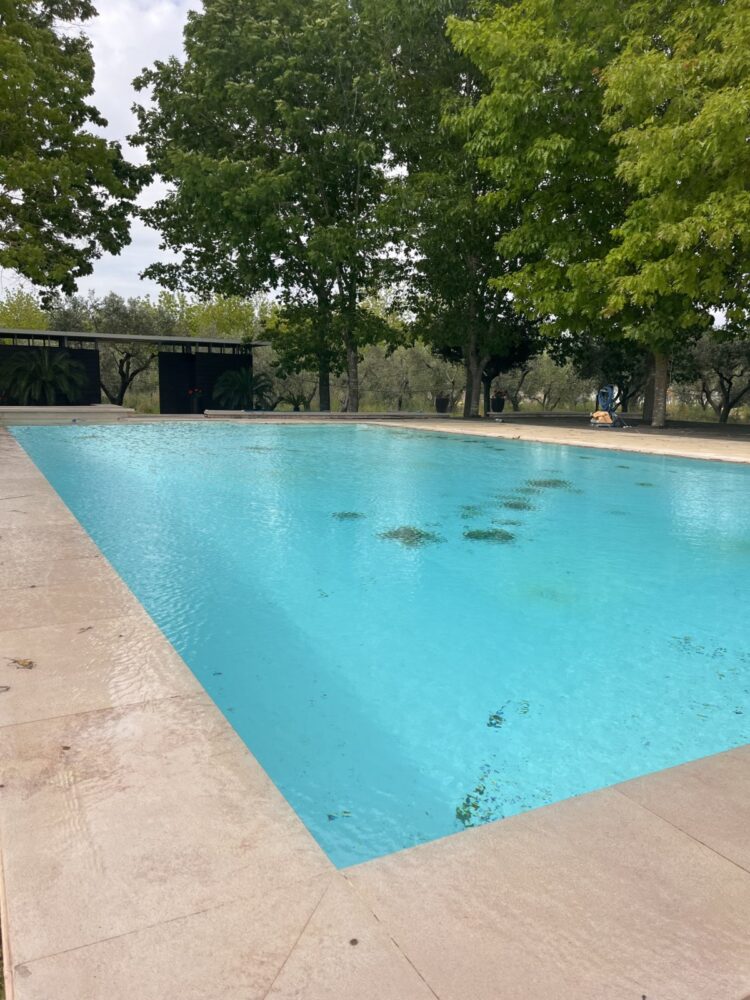

I was particularly captivated by the table settings. We know Italian taste from fashion, design, and architecture. But here, you truly see that this is not a stylistic question; it is an instinct. Out of vegetables, fruits, and flowers, they can create tablescapes that do not look like decorations, but rather a direct continuation of the landscape. Pomegranates, lemons, orange branches, olive branches, fresh herbs, ceramic dishes, white tablecloths, rustic wooden tables—nothing is trying too hard, yet everything is exactly where it belongs.
This is what prevents a Salentini lunch from being just a meal. It becomes an atmosphere, a sight, a scent, a rhythm. It’s not just that they bring out a few dishes. A whole world is built around you.
And perhaps that is why I loved these places so much. Because contained within the masserias is everything that makes Southern Italy inimitable: the earth, the food, the family, the hospitality, an instinctive sense of beauty, and the deep knowledge that the most important things in life often happen around a long table.
Atmosphere, sight, scent, and rhythm
I didn’t leave Salento with a single place in mind. Nor with a single experience. Perhaps that is why the sea is not the first thing that comes to my mind when I think of this region. Instead, it is an almond slowly turning in a copper cauldron. An inscription carved into the wall of a thousands-of-years-old cave. A family legend told over a glass of wine. And that calm certainty that there are still places in Europe where tradition isn’t a show put on for outsiders, but the natural pulse of everyday life.
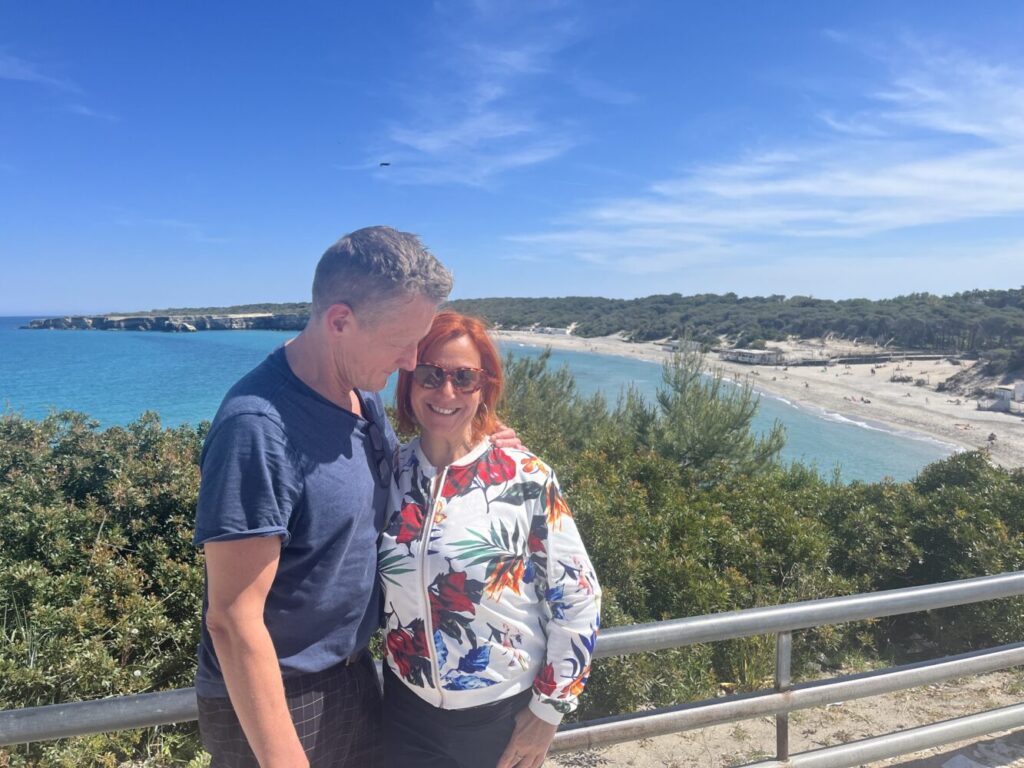
We don’t remember a place because of the postcards. We remember it because, for a brief moment, we became part of the story.
For more information:
For further details about the hotels, masserie, restaurants, wineries, museums, artisan workshops and attractions featured in this article, please visit the following websites:
- www.baronedimare.it
- www.masseriacorsano.com
- www.hotelbelvederesalento.com
- www.masseriaberzario.it
- www.masseriamessapia.it
- www.parcodegliaranci.com
- www.pasticceriadentoni.shop
- www.contizecca.it
- www.vinicolapalama.it
- www.simonesantoroenologo.it
- www.melogranimartino.com
- www.taxiboat.org
- www.laterradimezzo.org
- www.coliweb.com
- www.ceramichebenegiamo.com
- www.colisrl.it
- www.ceaportocesareo.it
This press trip was organized by Carmen Mancarella, PR manager, and editor of Spiagge magazine, in collaboration with the participating municipalities and tourism partners of Salento.
http://www.spiaggepuglia.it/

Related Articles


Related Articles