Sighișoara gastronomica fest
Dinner on the Move – A Taste of Sighișoara
We visited the inaugural Gastronomica Sighișoara festival, where not only the dishes changed with every course, but the restaurants did too. Three days, eighteen dishes, eight restaurants, plenty of wine, and a medieval town I discovered in a rather extraordinary way.
I had never been to Sighișoara before, although it had been on my travel wish list for years. For us Hungarians, the town holds a special historical significance. For me, however, this was the first time that a familiar name on the map became a real place: a delightful maze of cobbled streets, colourful houses, towers, terraces and, above all, people.
The occasion was the very first Gastronomica Sighișoara. We had been invited to attend the festival, so my introduction to the town was, quite literally, a matter of taste.
Dinner in Eight Restaurants? Absolutely!
I’ve attended more food festivals than I can count, but never one quite like this.
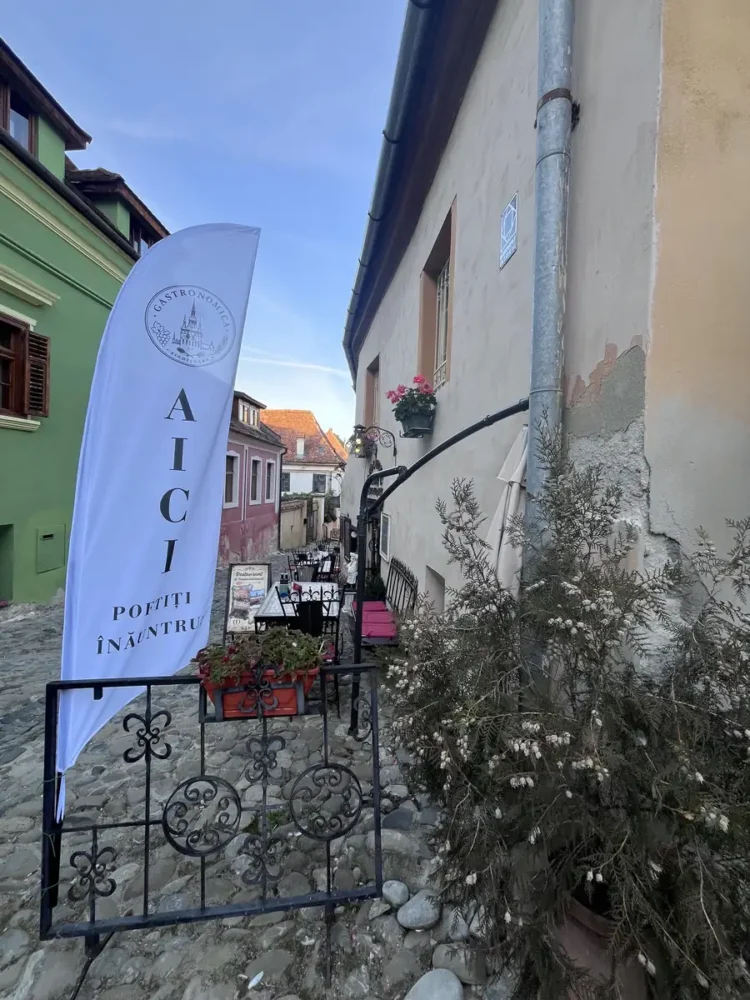
Imagine sitting down in a restaurant, enjoying your soup with a glass of wine, then getting up and strolling to another restaurant for your starter. The main course takes you somewhere else entirely, and by the time dessert arrives, you’re sitting in a fourth establishment.
In between, you’re wandering through a centuries-old town, chatting, admiring the architecture and discovering little corners you might otherwise have missed. By the end of dinner, you’ve effortlessly explored some of Sighișoara’s loveliest streets and several of its finest restaurants.
That, in a nutshell, was the brilliant idea behind Gastronomica. And I was sold immediately.
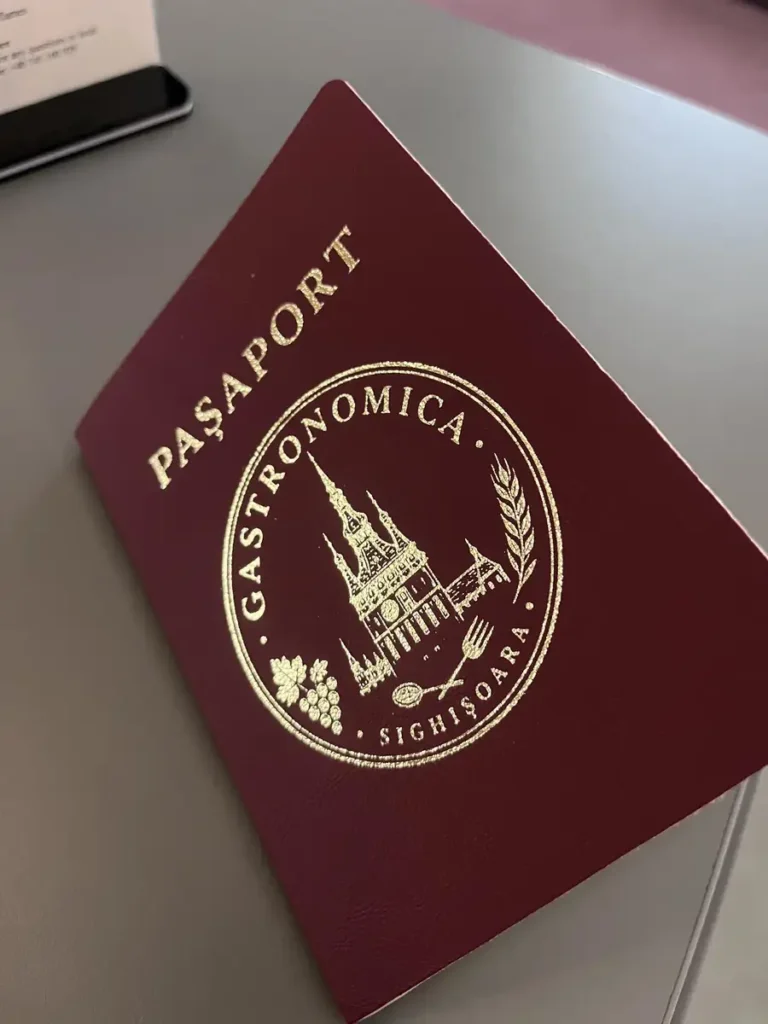
Held for the first time from 2 to 4 October, the festival turned the town’s restaurants into its main attractions. Instead of gathering everyone at a single venue, the organisers created a culinary journey through Sighișoara. Guests received a gastronomic passport that allowed them to move between participating restaurants, each offering a different dish, a different setting and a different wine.
For me, this was the most exciting aspect of the entire festival. It wasn’t simply about what we ate, but how we experienced it. Rather than spending hours at the same table, every course became another little discovery, with the town itself playing an integral part in the meal.
There was a wonderful social dimension, too. At each restaurant, we might find ourselves sharing a table with different people, striking up new conversations and making new acquaintances. The atmosphere was relaxed, spontaneous and refreshingly informal — something you rarely experience during a conventional multi-course dinner. I particularly enjoyed how naturally the conversations began.
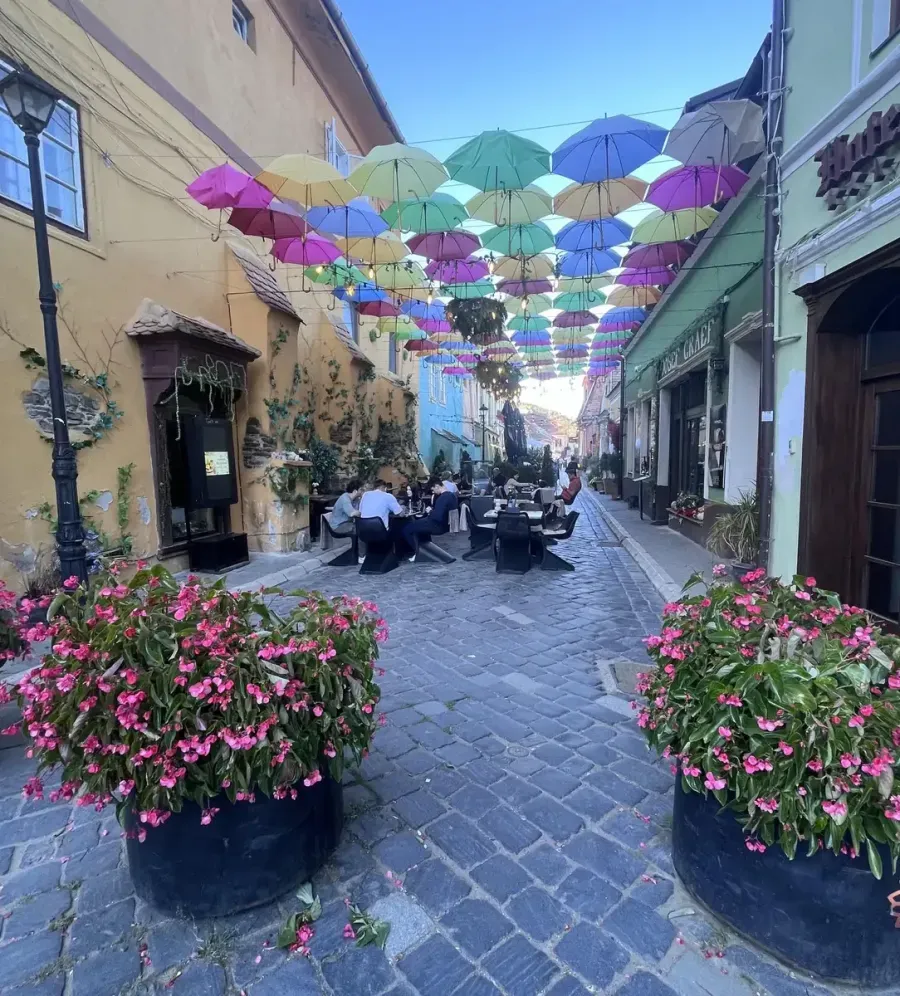
And Sighișoara couldn’t have been a better setting. Its historic centre is compact enough to explore on foot, yet varied enough to offer a surprise around almost every corner: a brightly painted façade, an ancient doorway, a tiny terrace or an intriguing side street you hadn’t intended to take.
Besides, there is something rather sensible about walking between courses. Anyone who has ever worked their way through a substantial tasting menu will appreciate the benefits.
A Passport That Had Nothing to Do with Border Control
Another inspired touch was the gastronomic passport.
We collected ours at the Wanderer, and it effectively became our ticket to discovering the flavours of Sighișoara.
Every participating restaurant represented another stop, where our passports were stamped after the tasting. To my surprise, I found myself enjoying the stamp collecting almost as much as the food itself.
Fortunately, there was no compulsory itinerary. We were free to decide where to go, which restaurant to visit next and how long to linger. No organised groups to follow, no rigid timetable and none of that familiar festival experience of standing in the same queue as everyone else.
The passport turned the whole adventure into a delicious little game. Booklet in one hand, occasionally a glass of wine in the other, and off we went in search of our next culinary destination.
There was even an incentive to complete the collection: anyone who gathered every stamp would receive a discount on next year’s festival ticket. Needless to say, everyone suddenly became a remarkably enthusiastic stamp collector.
Three Chefs, One Shared Vision
Gastronomica was born from an idea shared by three chefs: Birtalan Róbert, Nicolae Lihor and Tudor Baca.
I must admit to feeling a little extra pleasure — and a touch of national pride — when I discovered that one of the founders was Hungarian. But Birtalan Róbert’s involvement was about considerably more than a shared heritage.
The three chefs wanted to demonstrate that Transylvanian gastronomy has far more to offer than the handful of traditional dishes most tourists encounter.
Their ambition was to encourage visitors to see Sighișoara as a destination in its own right, rather than a brief stop on a tour of Transylvania.
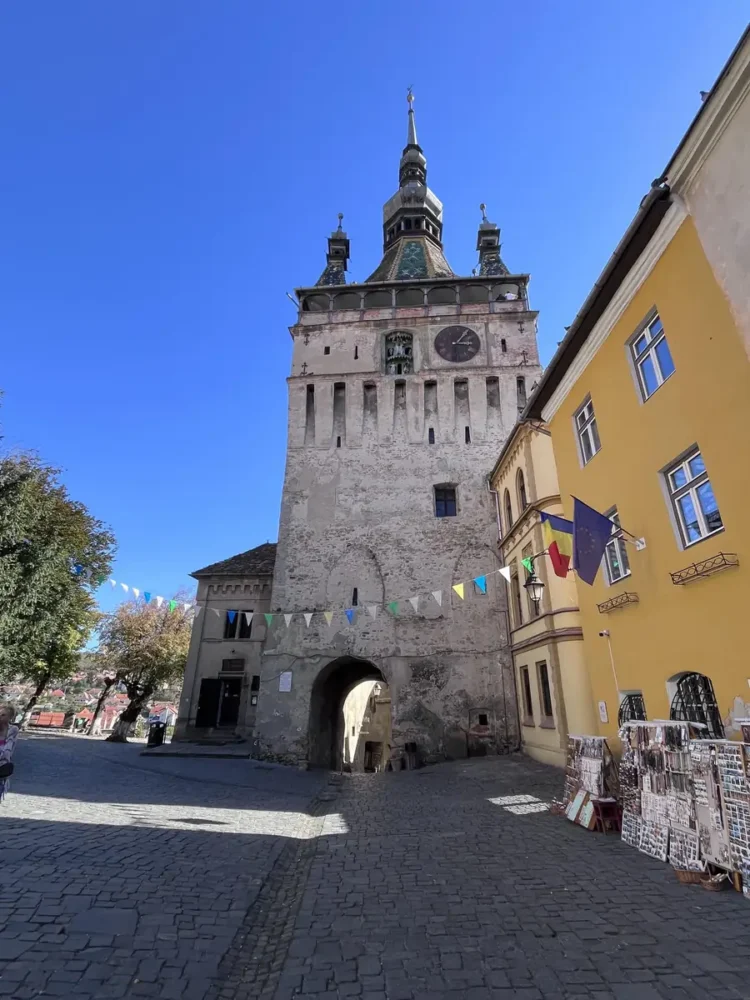
Instead of climbing up to the citadel, photographing the famous Clock Tower and immediately moving on, why not stay for a few days? Explore the restaurants, taste the local wines, discover the region’s culinary traditions and get to know the people who live here.
The festival was designed to make exactly that happen.
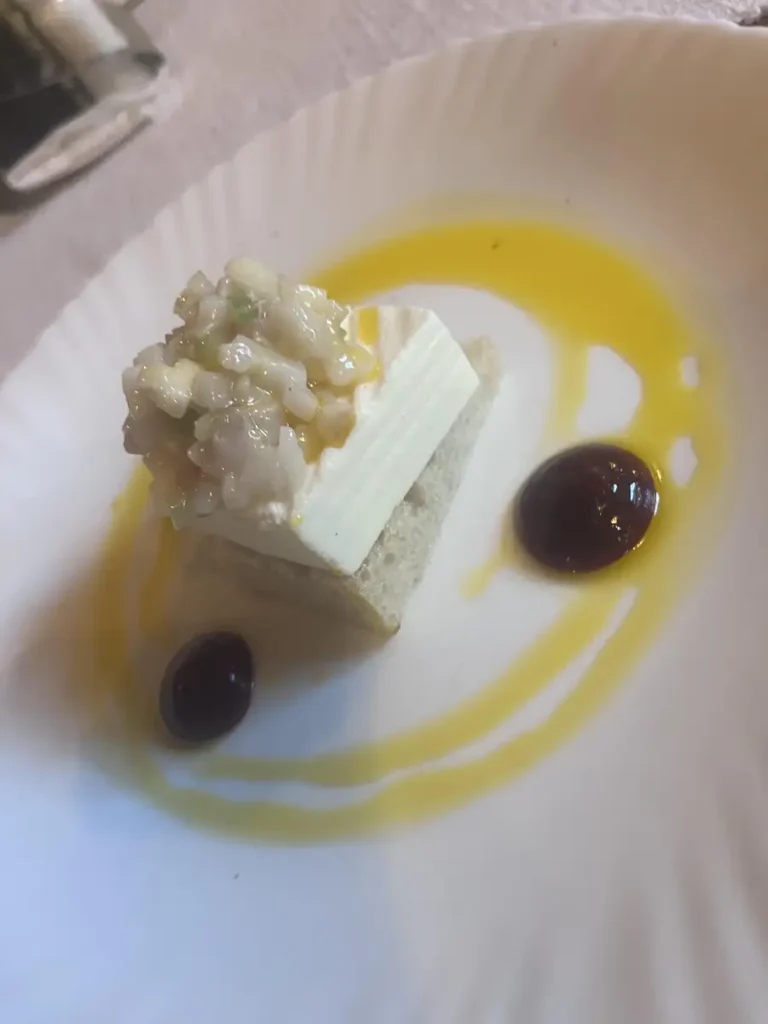
Over three days, eighteen different dishes appeared on the menus, ranging from traditional Transylvanian and Saxon recipes to contemporary interpretations of regional classics.
Local ingredients and culinary heritage played a central role, but the chefs showed little interest in reproducing everything exactly as it might have been prepared a century ago.
Quite the opposite. Their aim was to demonstrate how traditional flavours can be transformed into inventive, thoroughly contemporary cuisine.
Soup Here, Main Course There, Dessert Somewhere Else
The organisers had given each day its own culinary theme, with menus designed around a particular concept.
Friday’s medieval-inspired menu took us through four restaurants.
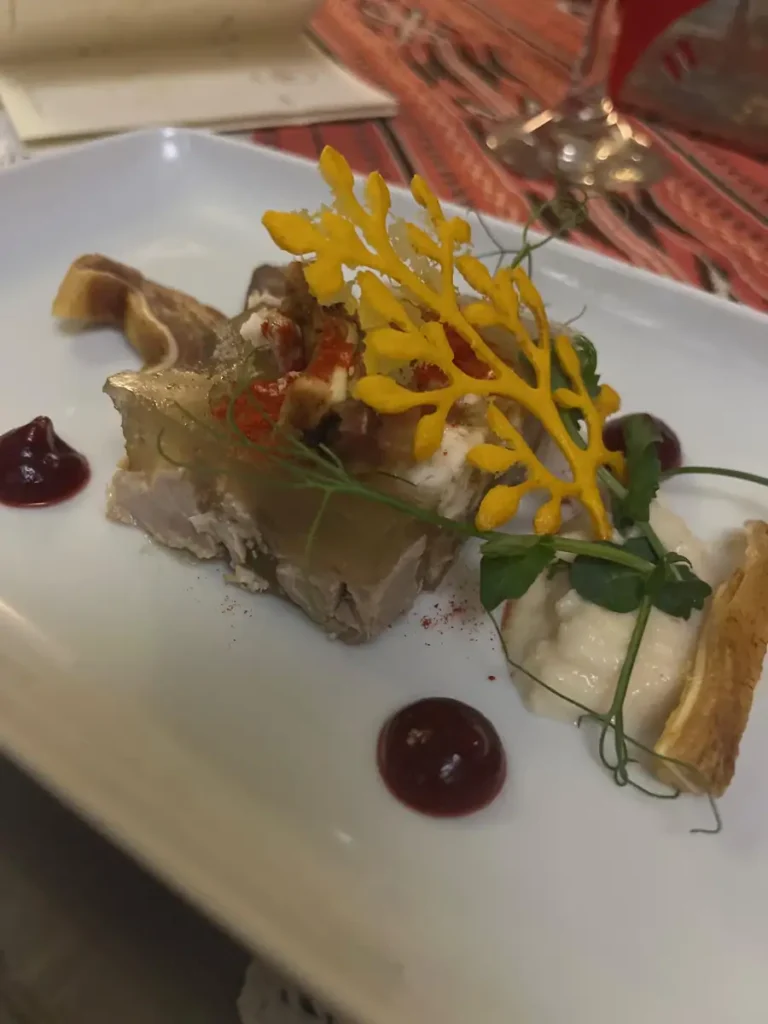
At Medieval Café, we were served pork aspic with crispy pig’s ear. Casa cu Cerb presented a cream of roasted garlic soup, while Boutique Hotel von Graf offered slow-cooked lamb with plums and apples. The evening ended at Burg Kaffee with lichiu, a traditional Saxon plum cake.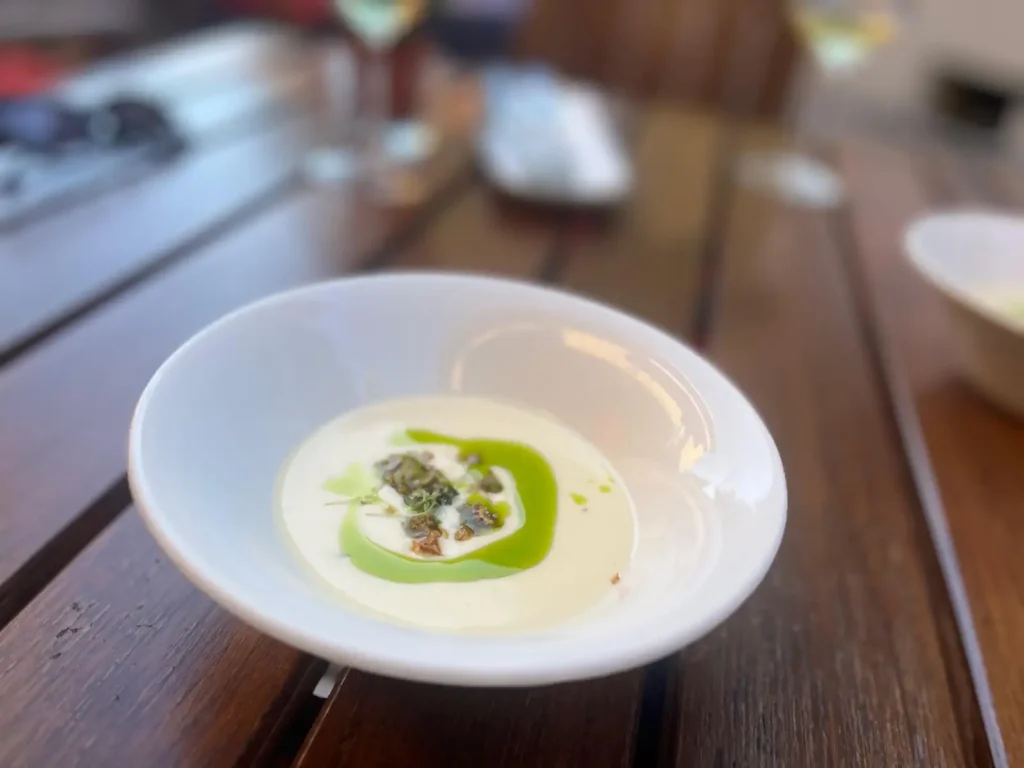
EDITOR’S FAVOURITE — Silky, Glossy, Absolutely Divine!
The roasted garlic cream soup at Casa cu Cerb.
I’ve tasted countless cream soups over the years, but never one quite so silky, so exquisitely smooth, so perfectly creamy. The roasted garlic gave it a beautifully delicate depth of flavour, and I confess I could happily have eaten another bowl.
Then it was time to move on with my newfound friends. And that was precisely the beauty of the whole concept: after a soup this wonderful, we didn’t simply sit waiting for the next course. We got up and headed for another restaurant.
Day Two: Nine Culinary Stops
Saturday’s programme was even more ambitious, with nine stops along the gastronomic trail.
At Citadela Bistro, traditional Transylvanian tochitură was reinvented as a croquette, served with roasted pepper sauce and pickled onions. Usually a hearty Romanian meat dish, here it appeared in a completely different guise: a crisp, elegant little bite.
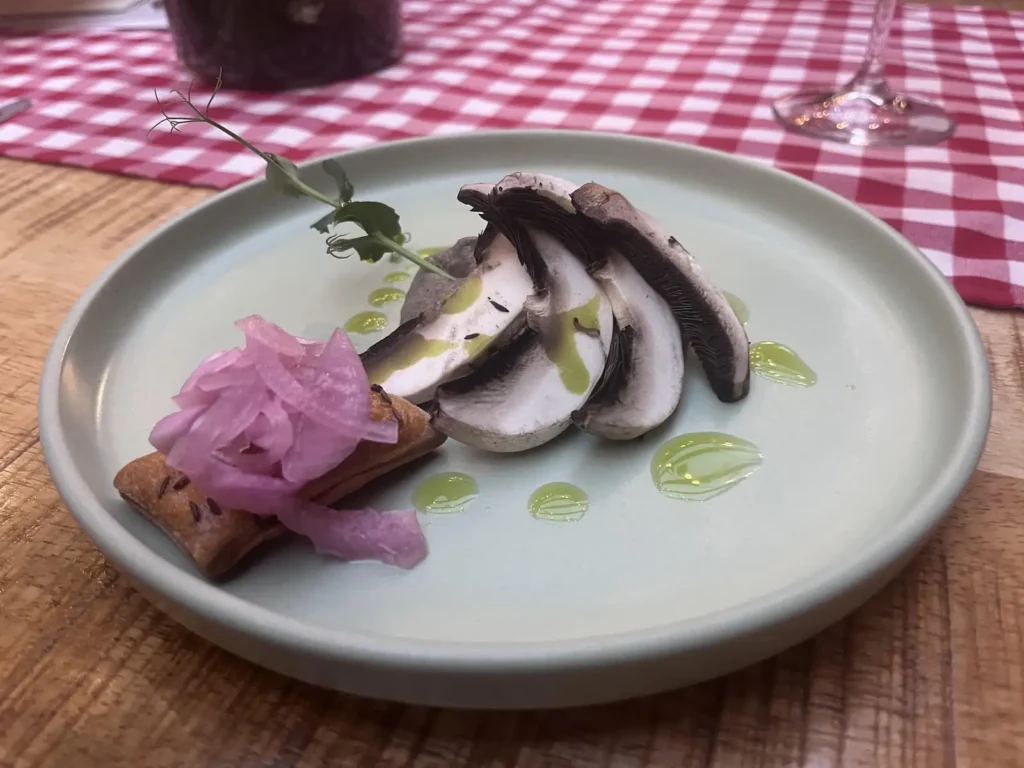
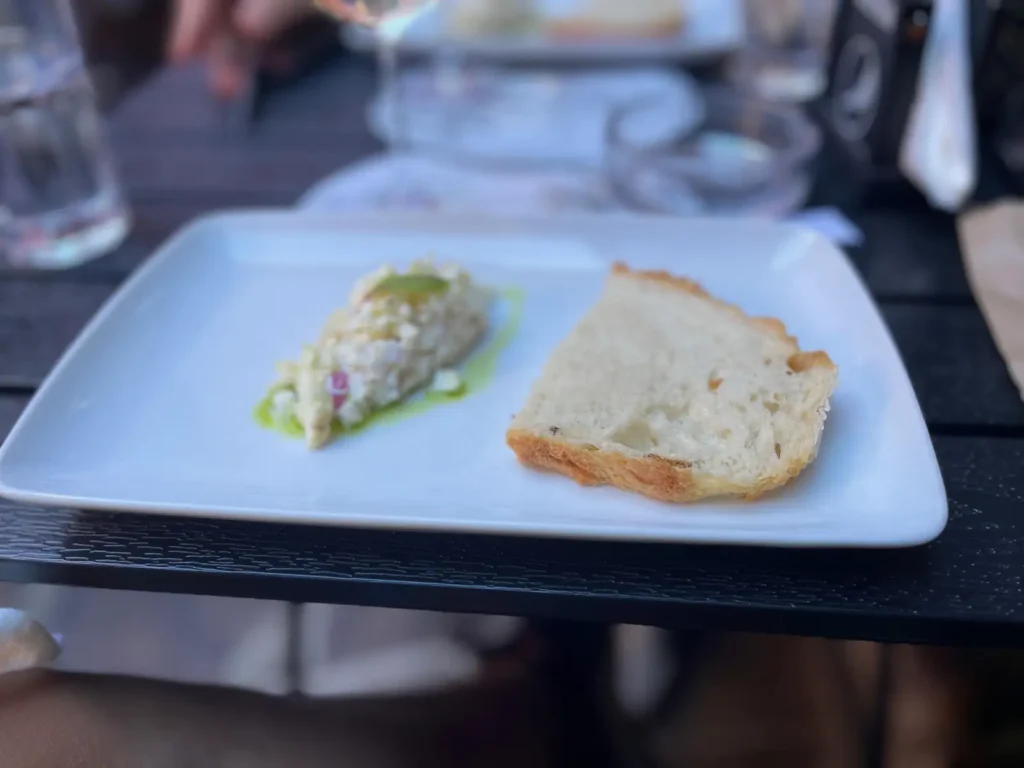
Gasthaus Alte Post offered mushroom pâté with savoury crackers, while Hotel Sighișoara presented a sphere of aged cheese accompanied by bacon tartare and apple.
At Medieval Café, we were treated to meatball soup flavoured with lovage. Among all the creative contemporary dishes, it was particularly comforting to encounter something so familiar and homely.
Boutique Hotel von Graf put celeriac centre stage, exploring the vegetable through different textures and preparations. An excellent example of how an everyday ingredient can become something genuinely interesting.
I have to admit, however, that I skipped this one. Celeriac and I have never been on particularly friendly terms.
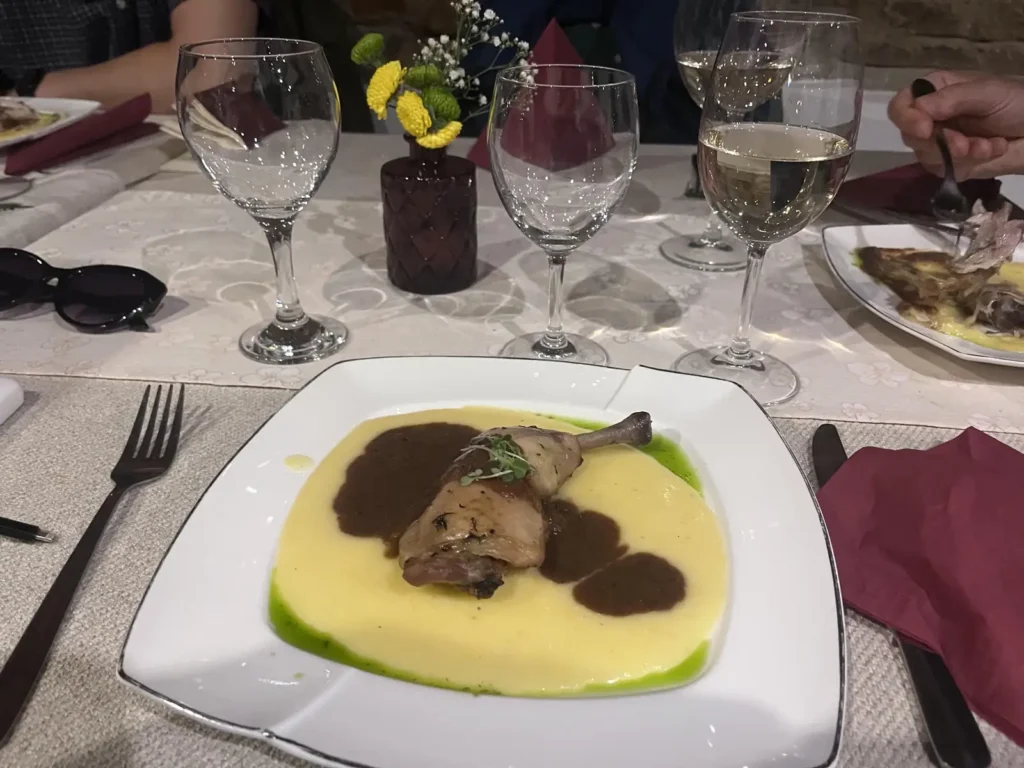
At Casa cu Cerb, Saxon-style chicken with plums offered another glimpse into the region’s wonderfully diverse culinary heritage.
Then there was the Wanderer, collaborating with Domeniul Dracula Daneș on a beef dish accompanied by onion purée, confit sweet onions and a wine sauce.
Dessert was not forgotten either. The menu included papanași, one of Romania’s best-loved traditional sweets.
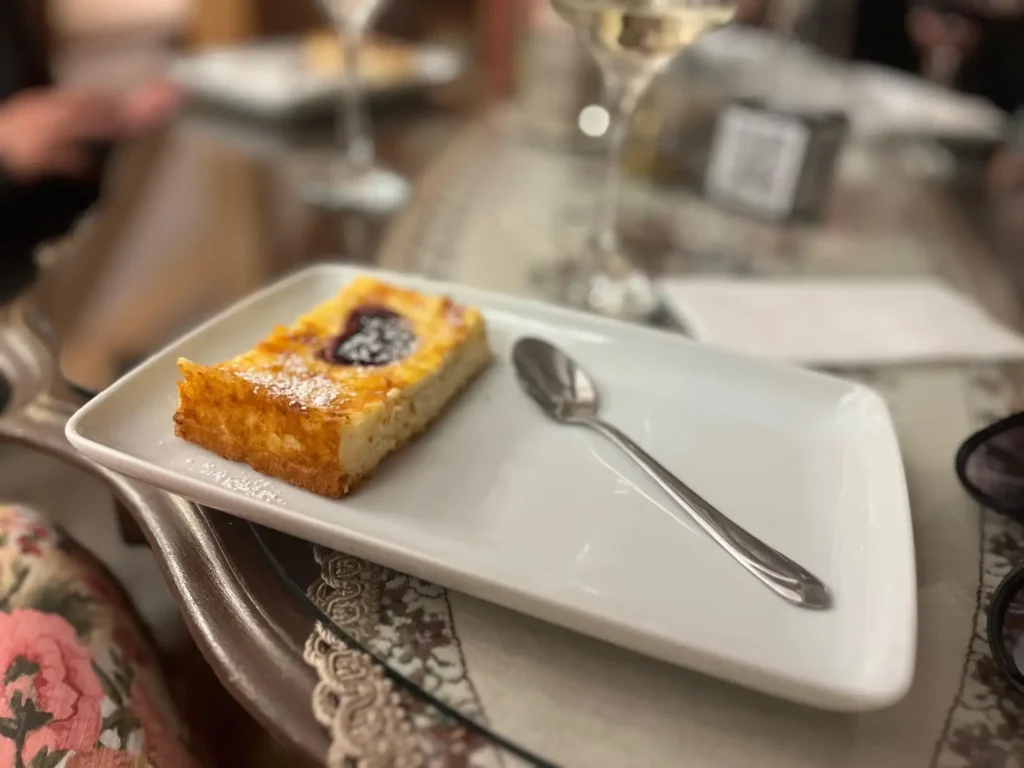
The day’s culinary marathon could be rounded off at Burg Kaffee with a Transylvanian-style cremeschnitte, a luscious layered custard pastry.
Sunday turned towards more traditional Transylvanian flavours, built around the comforting idea of a family lunch.
Citadela Bistro prepared a creamy potato soup with leek and cheese. At von Graf, cauliflower salad came with an interesting explanation from the chef: its secret lay in combining cooked cauliflower with raw florets. Sure enough, every now and then, an unexpected little crunch interrupted the softer textures.
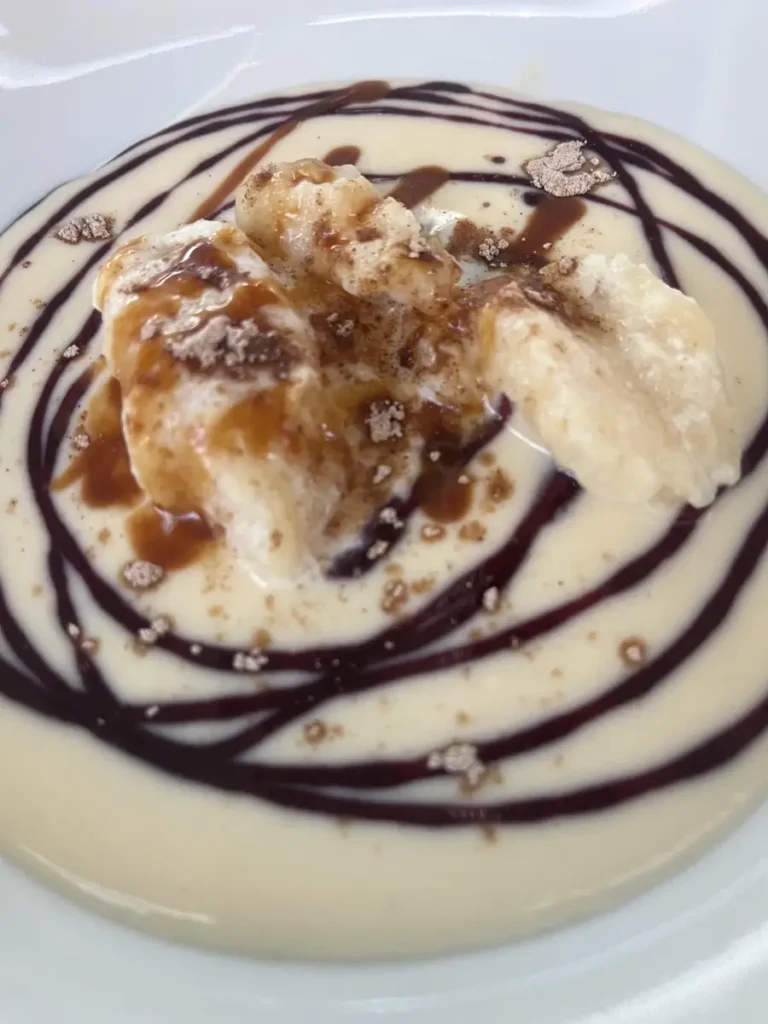
Gasthaus Alte Post served mushroom paprikash with nokedli, Hungarian-style egg dumplings, while Hotel Sighișoara offered stuffed peppers. At the Wanderer, in collaboration with Domeniul Dracula Daneș, dessert was madártej, the delicate vanilla custard dessert with floating clouds of meringue, known internationally as floating islands.
What I found particularly fascinating was how many dishes felt familiar.
Paprikash, nokedli, stuffed peppers and madártej are all part of everyday Hungarian culinary culture. Yet here they were, equally at home in Romanian and Transylvanian kitchens.
Perhaps nowhere does a shared culinary heritage become more tangible than around a dining table.
The dishes were paired with wines from Romanian wineries, turning the festival into a rather enjoyable wine-discovery tour as well.
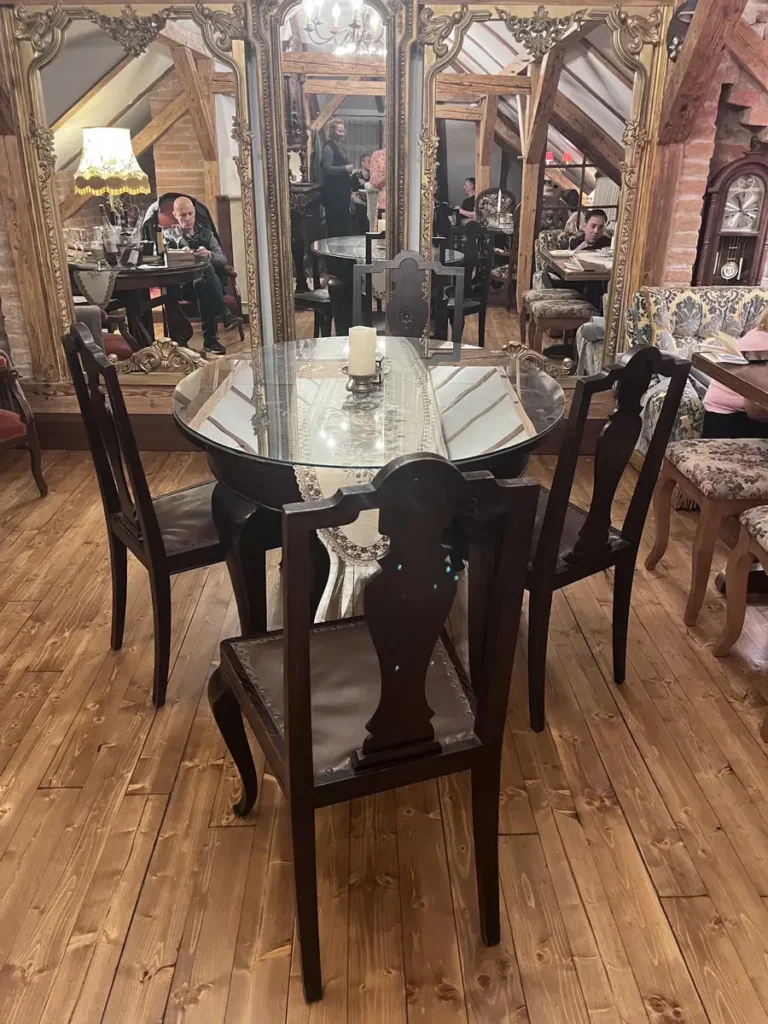
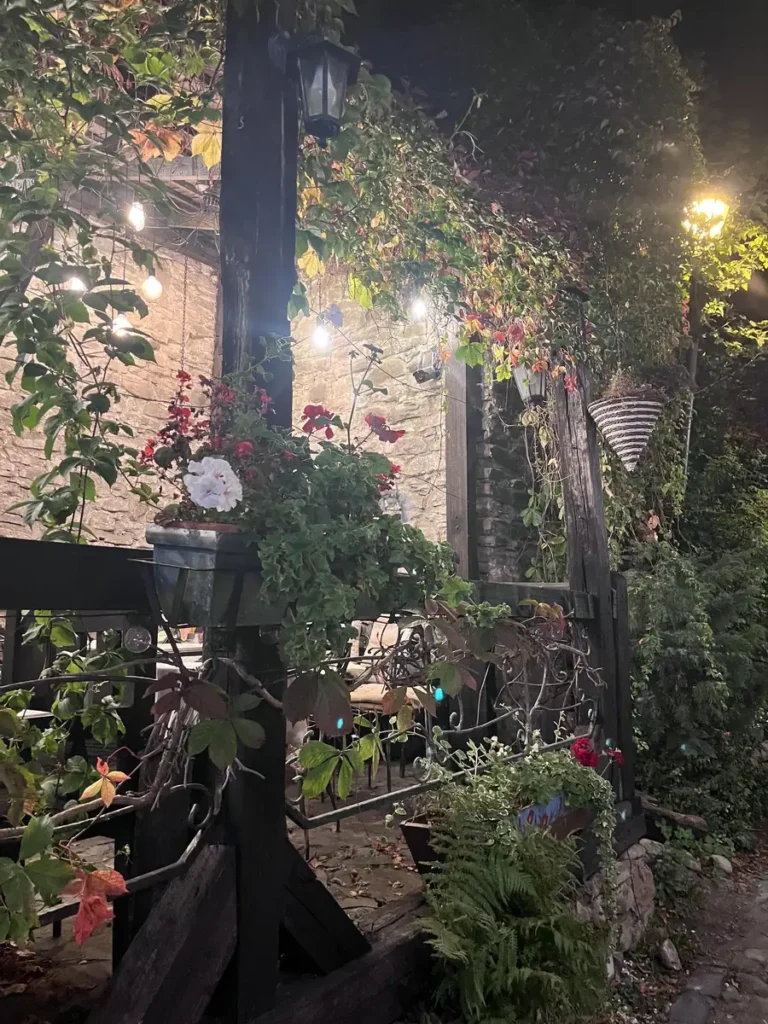
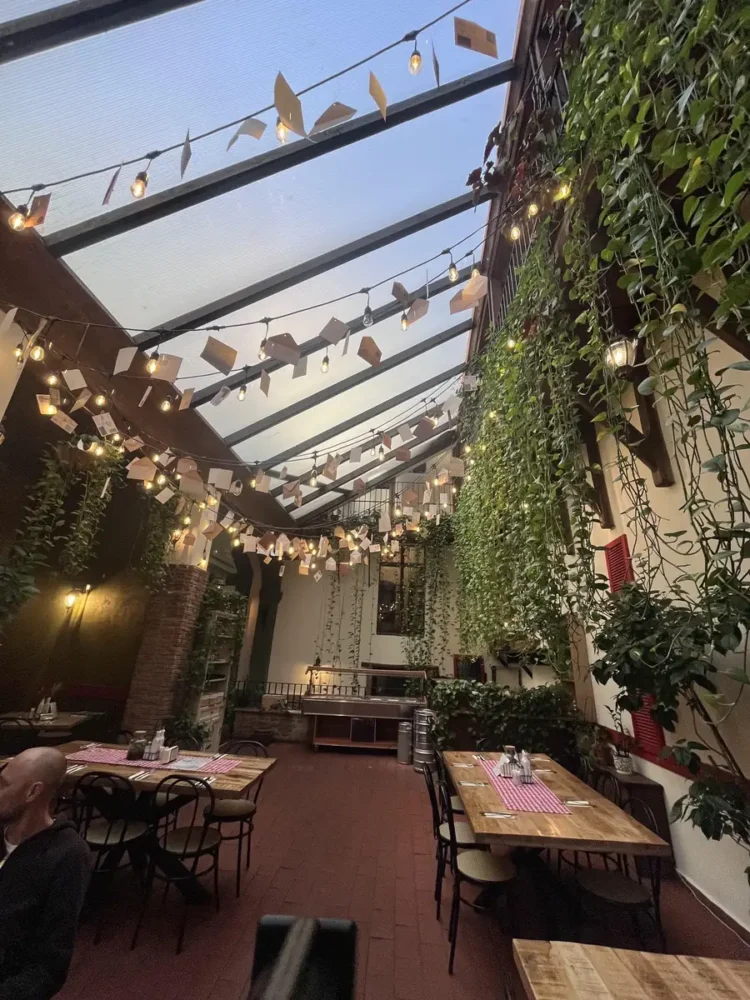
Having grown up in a family where aesthetics mattered, I was particularly sensitive to the way the interiors of the restaurants influenced my mood. One moment we were dining within centuries-old walls, the next on a charming terrace, and a few minutes later we found ourselves in an entirely different setting.
Each change of scenery added another layer to the experience.
At a conventional dinner, a single chef guides guests through the menu. Here, several kitchens, several chefs and several restaurants worked together, while we travelled through the courses ourselves.
It also meant discovering places we might never have thought to visit otherwise.
When a Chef Spends Three Days Making a Sauce
Gastronomica was about much more than eating.
The programme also included cooking demonstrations, which I found every bit as fascinating as the dishes served in the restaurants.
The setting was the Butchers’ Bastion, an extraordinary backdrop for a contemporary cooking show. There is something wonderfully incongruous about discussing modern culinary techniques, local produce and innovative recipes inside a building that has witnessed centuries of history.
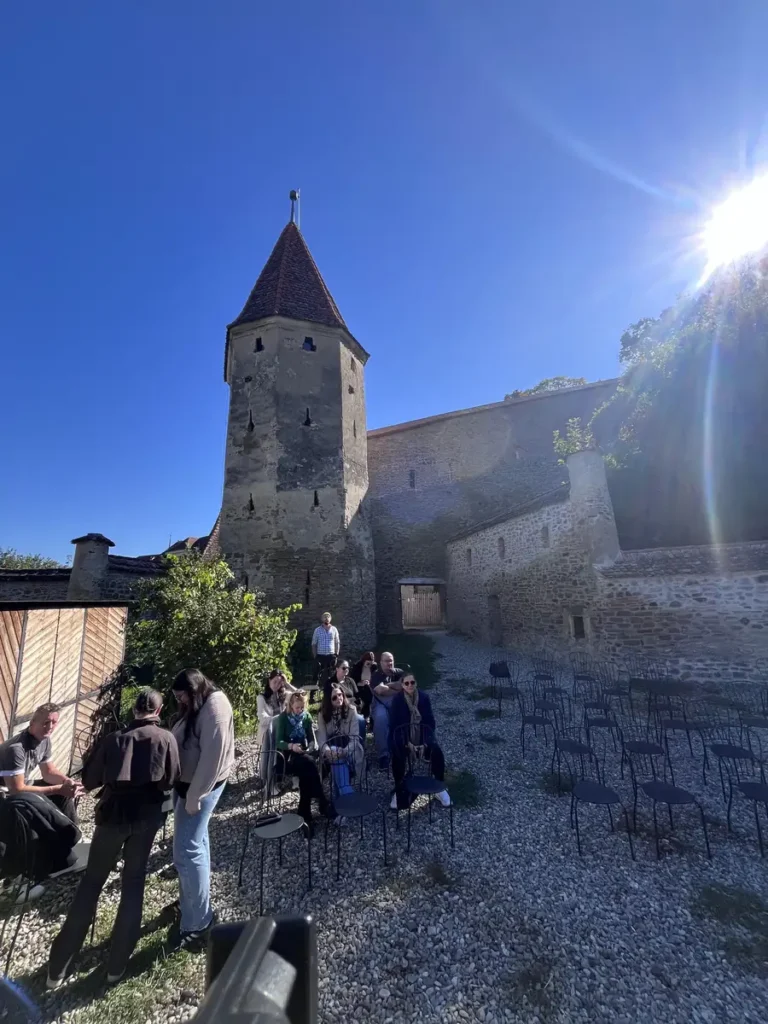
Saturday’s programme featured Andrei Bulz, chef at Royal Bistro Caffe, and Nicolae Crăciun of Cimbru.
While cooking, Nicolae shared far more about his life and his relationship with food than one would normally expect at a culinary demonstration.
He spoke about how increasingly he finds himself returning to the flavours of childhood: meals prepared at home, vegetables from the family garden, and the cooking of his grandparents.
He recalled a day when his mother slaughtered a turkey and the family cooked it that very afternoon in a cauldron over an open fire, using nothing but ingredients they had at home.
It was a simple meal, he said, but it had real flavour.
Then came a revelation that made me reconsider the meaning of patience in the kitchen.
One of his sauces takes three days to prepare.
Three days!
He cooks it slowly at a low temperature, strains it, reduces it and continues refining it until, on the fourth day, it finally reaches the consistency and flavour he wants.
“This isn’t fast food. It’s slow food,” Nicola explained.
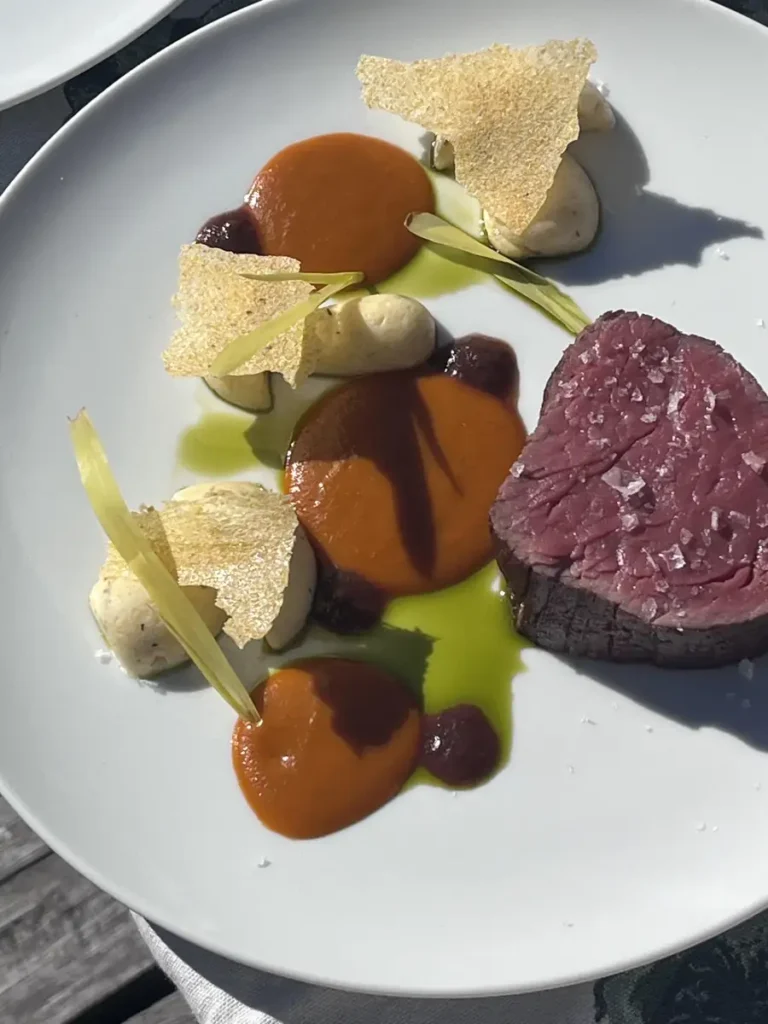
As he prepared the beef, he talked about modern culinary techniques, from sous-vide cooking to smoked oil, and why sustainability matters so much to him.
The smoked oil was particularly intriguing. He places glowing charcoal into chilled oil, then covers the container to allow the smoke to infuse it. Just a few drops can transform the character of a dish.
We also heard about Transylvania’s small-scale producers and an unusual cheese matured in the Țaga cave.
According to Nicola, Romania has an extraordinary wealth of excellent ingredients, yet many of its producers remain virtually unknown beyond the country’s borders.
“There is no such thing as an insignificant ingredient,” he emphasised. “Even something as simple as cornmeal can become extraordinary if you approach it with enough care and imagination.”
And when the meat needed time to rest, the chef offered a piece of advice I found particularly appealing: pour yourself a glass of wine.
The meat rests. We rest.
Now there’s a culinary philosophy I can wholeheartedly embrace.
Sighișoara: Where History Is Part of Everyday Life
Between culinary stops, we naturally found time to explore the town itself.
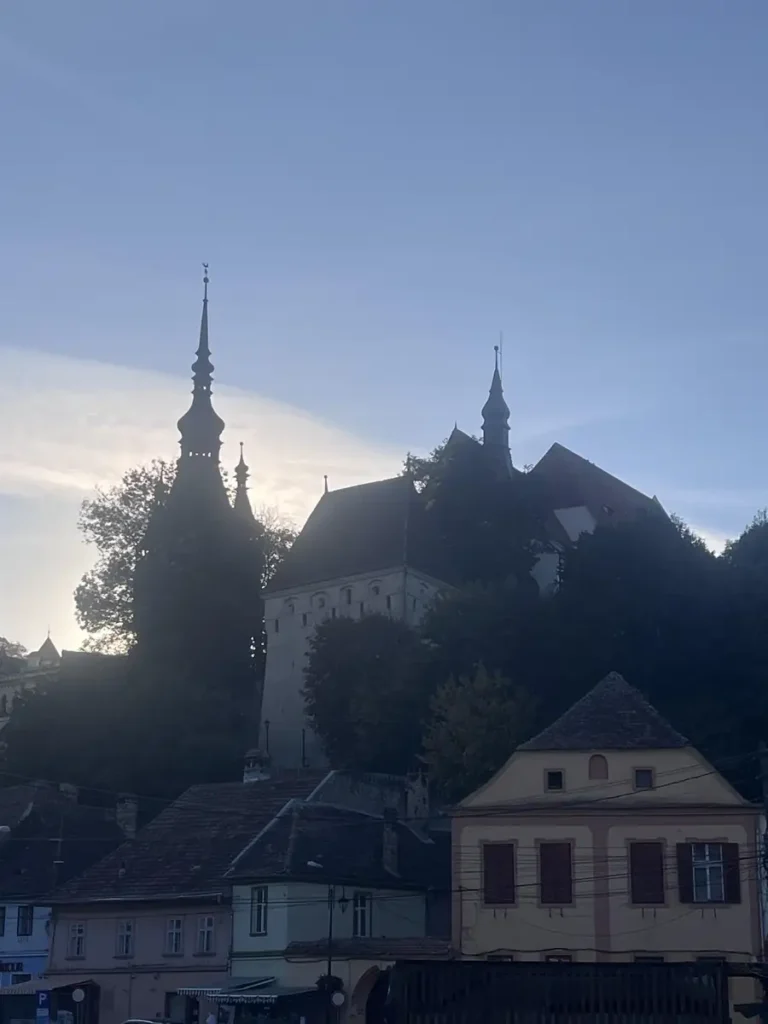
Sighișoara’s historic centre has been a UNESCO World Heritage Site since 1999 and is one of Europe’s remarkable surviving inhabited medieval citadels.
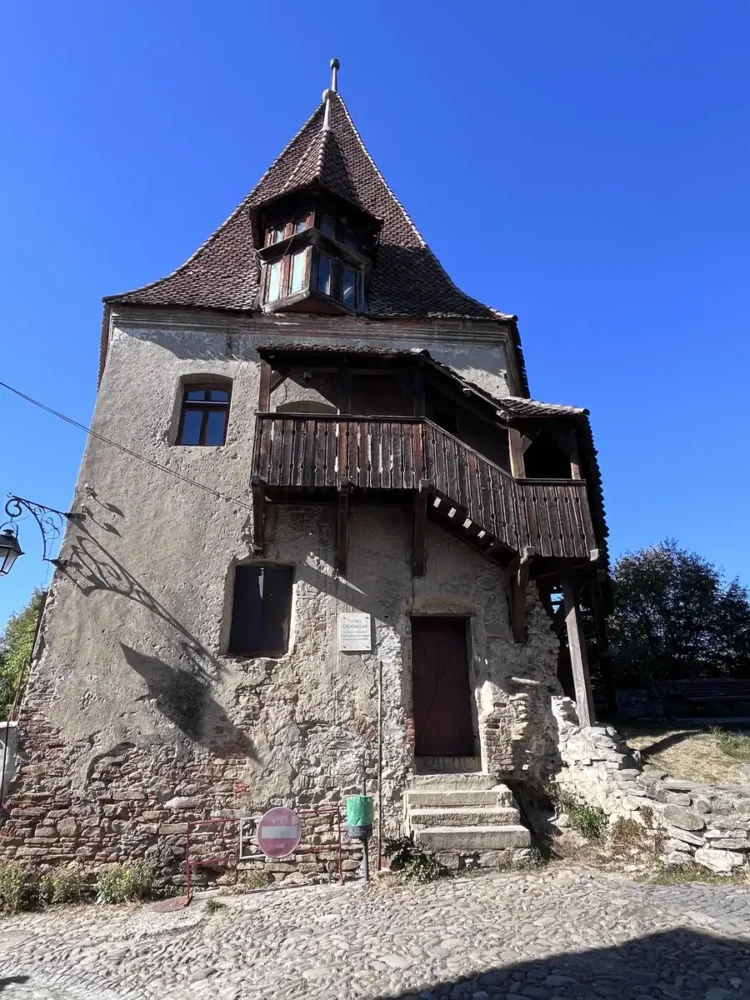
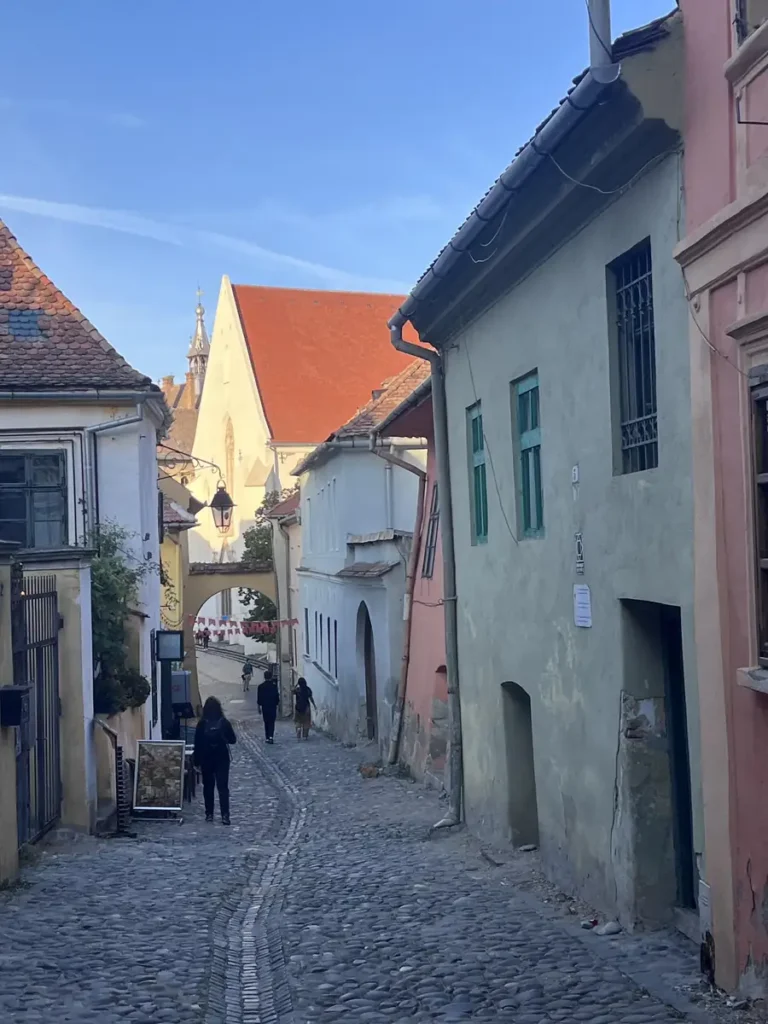
Founded by Transylvanian Saxons, the town has preserved much of its distinctive character. Ancient guild towers, colourful burghers’ houses and narrow cobbled streets still define its appearance.
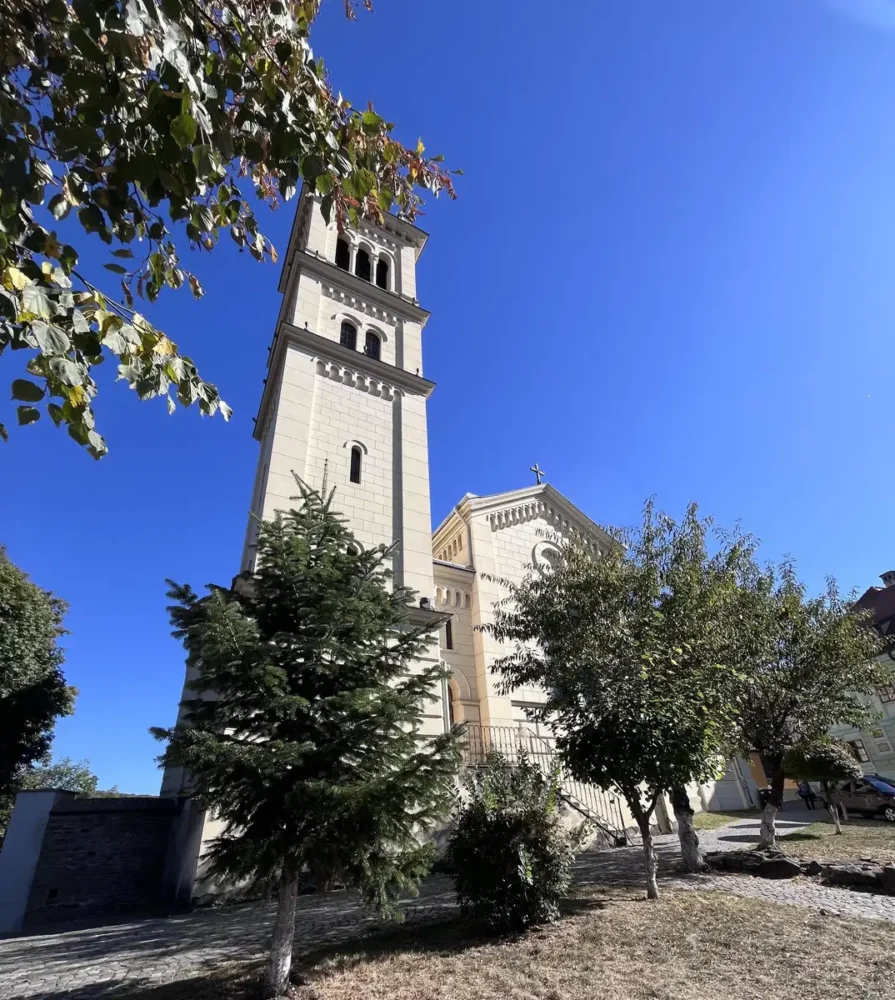
Its most famous landmark is undoubtedly the Clock Tower, one of Sighișoara’s most recognisable symbols. With its remarkable clock mechanism, moving figures and panoramic views across the town, it is well worth a visit in its own right.
Then there is the famous Covered Stairway, known as the Scholars’ Stairs, leading up to the Church on the Hill and the historic school.
In the autumn sunshine, the brightly painted houses, intimate little squares and old archways were particularly beautiful.
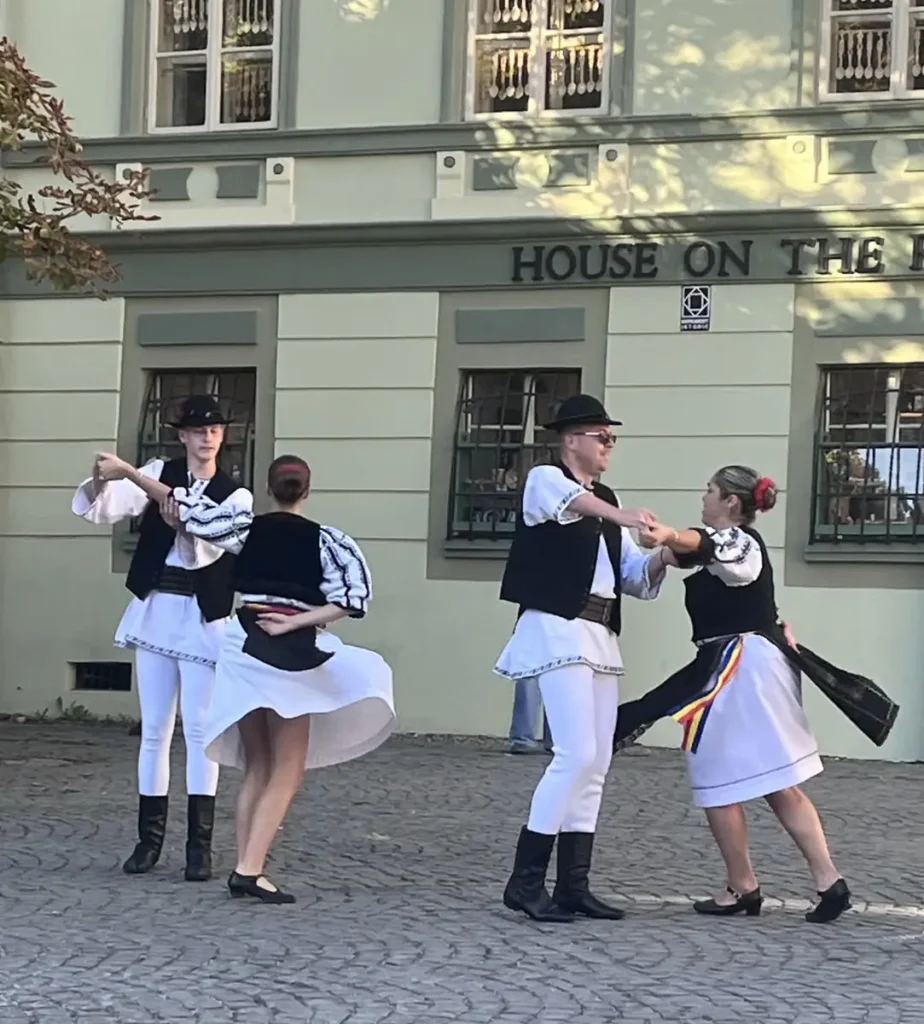
During the festival, the entire historic quarter seemed to come alive. Restaurants hosted tastings, terraces filled with people enjoying wine, local producers displayed their specialities, and everywhere we met residents who were clearly delighted that something new was happening in their town.
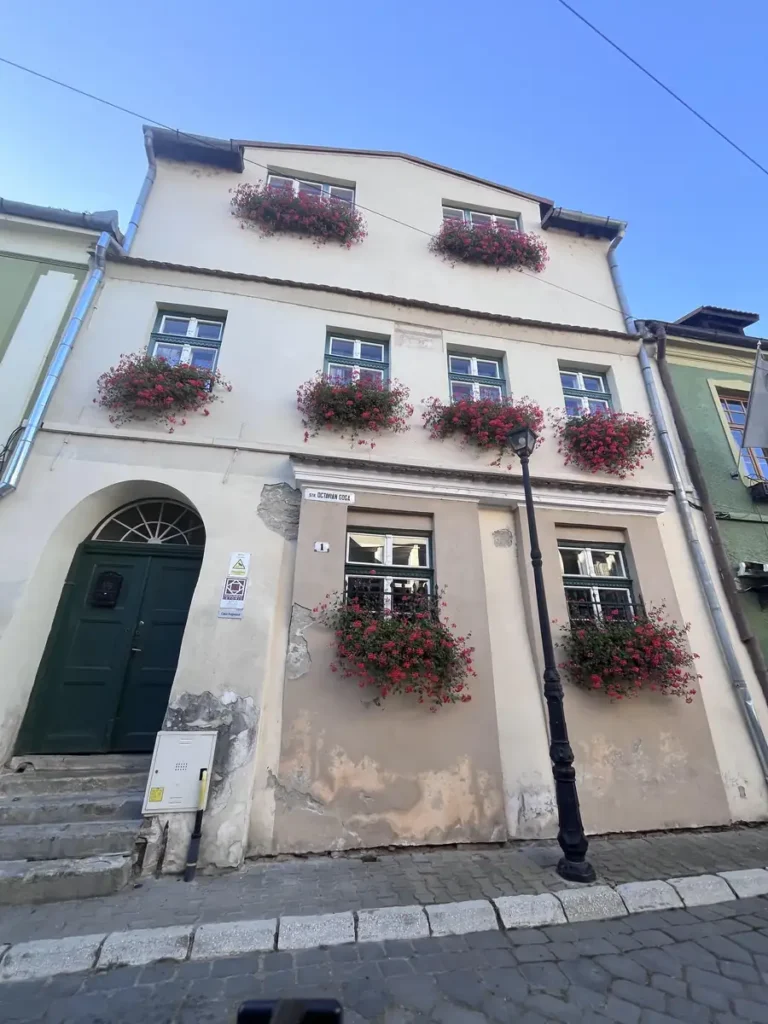
Wanderer: So Much More Than Our Hotel
The Wanderer deserves a chapter of its own in my Sighișoara story.
For a start, its location is ideal. Situated just below the historic citadel, on the edge of a wooded area, it offers easy access to the medieval streets, which are only a few minutes’ walk away.
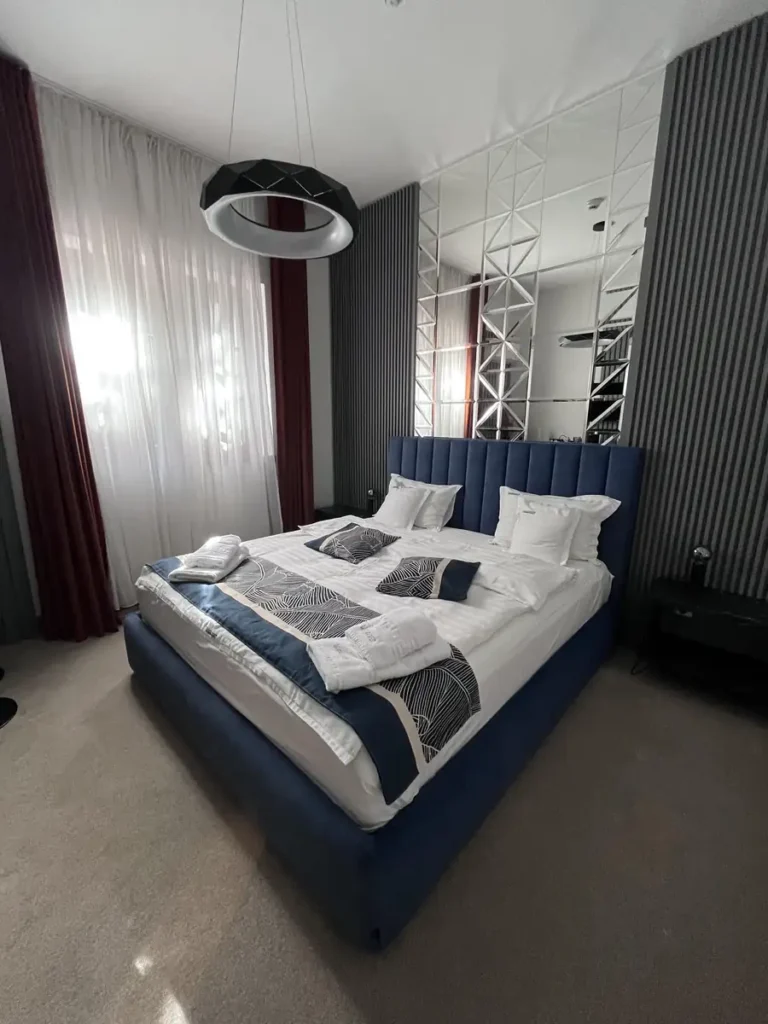
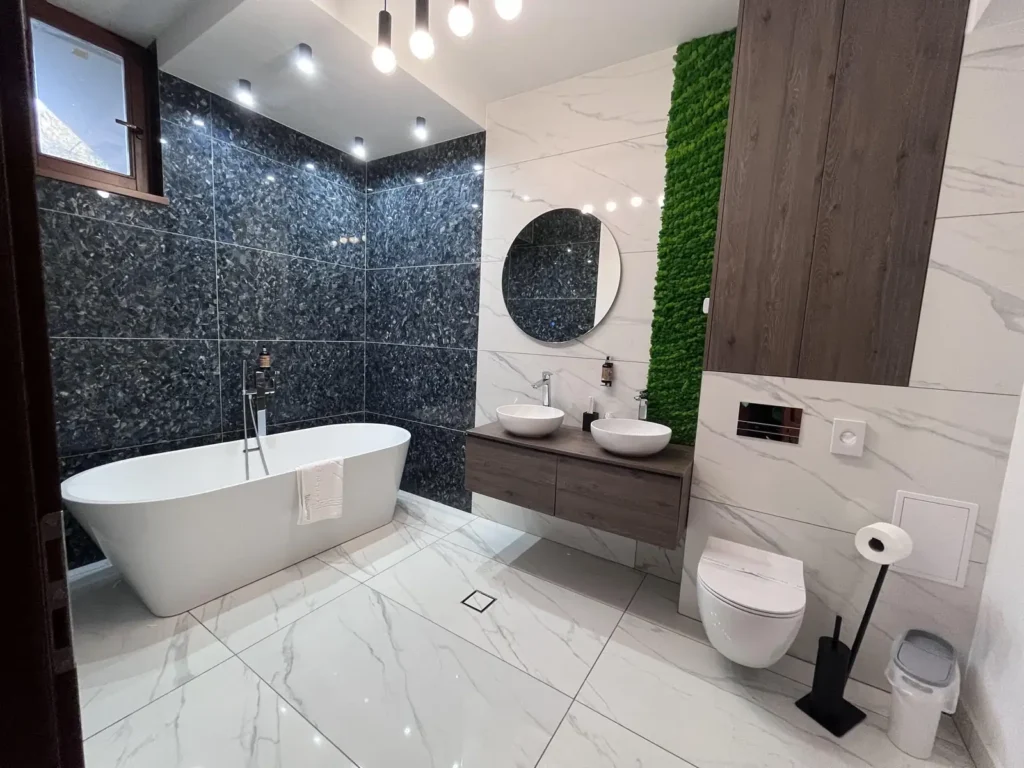
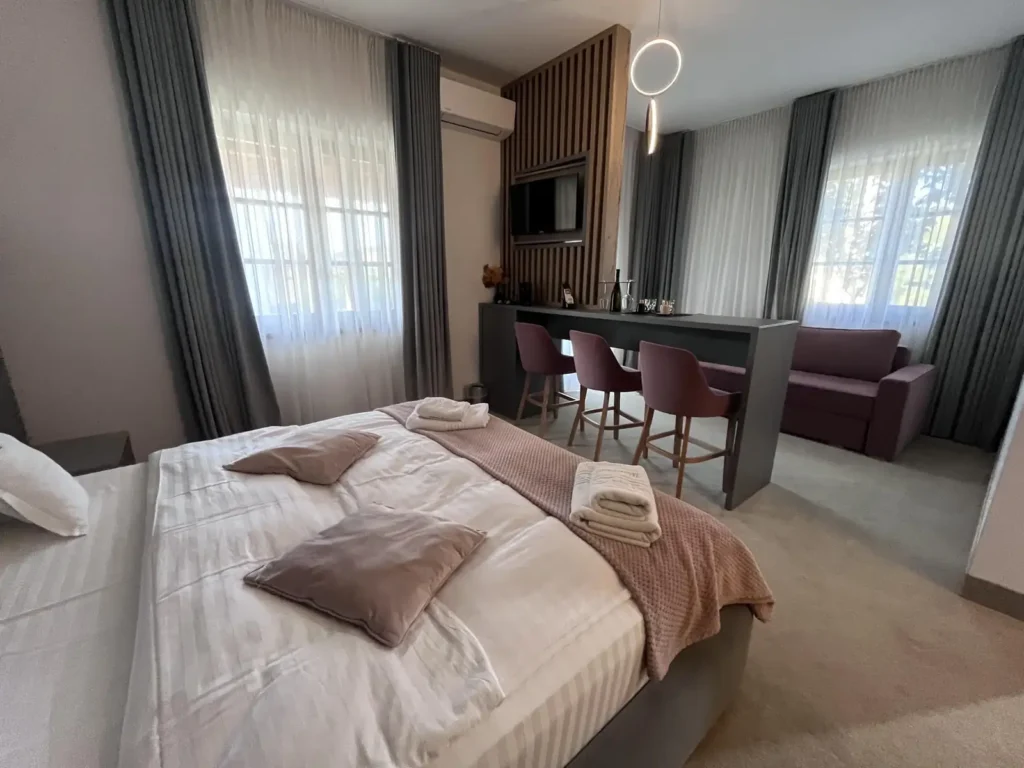
The hotel brings together old and new with considerable charm. Rustic details, natural materials and contemporary furnishings create an atmosphere that feels both stylish and welcoming.
And no two rooms are alike.
During the festival, its restaurant and terrace became one of the focal points of Sighișoara’s gastronomic activity.
This was where we collected our culinary passports, where the local producers’ market took place, and where the restaurant itself contributed to the tasting route.
The market fitted beautifully with the philosophy of the festival: local ingredients, artisan products and, most importantly, people who not only sell what they make but genuinely know and care about it.
In Cristina Szocs, the owner of the Wanderer, I discovered not only an excellent host but also an impressive hospitality professional.
To me, Cristina embodies a particular kind of leadership: someone who combines intuition and empathy with the confidence and determination needed to run a team effectively.
She is open to new ideas, attentive to her guests and, from what I observed, genuinely interested in the opinions of her staff.
I suspect this combination is one of the reasons the Wanderer works so well.
The waiters seemed able to anticipate our needs almost before we expressed them. And believe me, that level of attentiveness makes a real difference to whether I leave a hotel feeling satisfied.
So much of a hotel’s character depends on the person behind it. In fact, I would wish a leader like Cristina on just about any business.
After a long day of moving between restaurants, it felt especially good to return here.
We weren’t simply staying in a hotel. For a few days, we had become part of the everyday life of the festival.
Another particularly successful idea was involving local young people as volunteers. Their enthusiasm, warmth and willingness to help brought a lovely sense of freshness and energy to the event.
The Kindness You Can’t Put on a Programme
I travel extensively and spend a great deal of time in hotels and restaurants. Naturally, hospitality professionals everywhere make an effort to be welcoming.
But in Sighișoara, something felt different.
There was a directness, a sincerity and an easy warmth in the way people approached us that I found particularly endearing.
They were happy to talk, to help, to share their stories. You could sense their pride in what they had created.
And this, perhaps, is what distinguished Gastronomica from so many other festivals.
Especially for a first edition, such an atmosphere is invaluable.
You can design an impeccable programme, invite outstanding chefs and serve exceptional wines. But the feeling that makes guests genuinely comfortable, the sense that they are welcome rather than merely being looked after, is not something you can simply organise.
In the end, those encounters stayed with me every bit as vividly as the food itself.
A Festival I Hope Will Become a Tradition
For me, the inaugural Gastronomica Sighișoara demonstrated beautifully that a food festival doesn’t have to follow the conventional formula.
According to the organisers, the plan is to hold Gastronomica twice next year, once in spring and again in autumn.
I would happily recommend it to families, couples and even solo travellers who want to discover Sighișoara at their own pace.
And, of course, to anyone who appreciates good food, imaginative gastronomy and excellent wine — especially when all three come with the added pleasure of a magnificent historic setting.
One of the organisers’ main ambitions was to persuade visitors not to treat Sighișoara as a place to spend just a few hours, but to stay longer, explore its restaurants and discover the town beyond its famous landmarks.
In my case, their plan worked perfectly.
I came to Sighișoara for Gastronomica. But I’m quite certain that gastronomy won’t be the only reason I return.
Annamária Veszeli
WE! Magazine – World Explorer