Modena – where balsamic vinegar has a story to tell
I have to admit that, until recently, I was one of those people for whom balsamic vinegar meant more or less whatever we took off the supermarket shelf, drizzled over a salad or perhaps a little Parmesan, and thought no more about. Of course I knew there were better, more expensive, authentic versions from Modena. But why anyone would pay a substantial sum for a tiny bottle, and what happens to its contents over ten, twenty, thirty or even a hundred years, I had no idea.
Then I went to Modena.
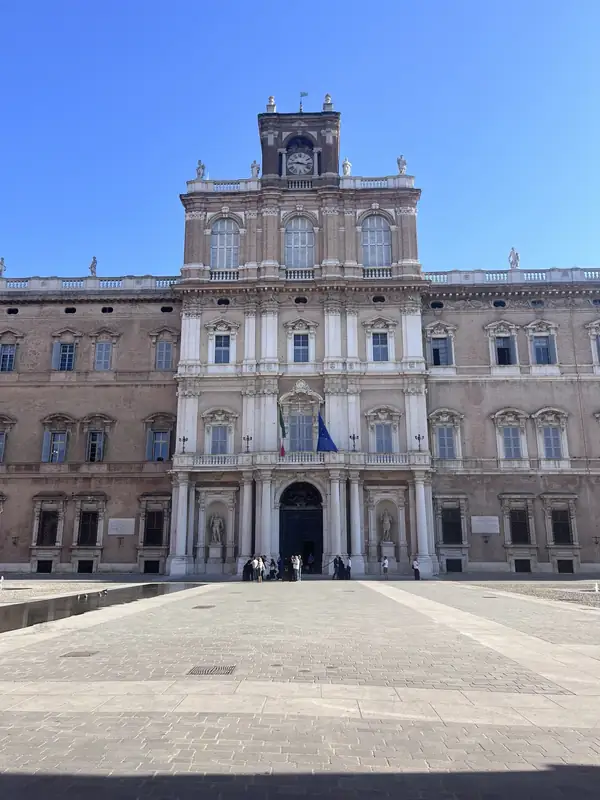
Modena’s historic Piazza Grande.
And I quickly discovered that, when it comes to Aceto Balsamico di Modena, the word “vinegar” hardly tells the whole story. This is history, family heritage, patience and an extraordinary passion passed down through generations, all captured in a tiny bottle.
A city with a flavour of its own
Modena lies in the heart of Emilia-Romagna, a region where, after just a few hours, you begin to suspect that Italians really have organised their entire lives around food. And quite right too.
Parmigiano Reggiano, prosciutto, mortadella, fresh tortellini, tigelle – it is almost impossible to make a wrong turn here.
But Modena has something uniquely its own: balsamic vinegar.
Its history stretches back centuries. Special vinegars made from cooked grape must were already produced in the area in medieval times, and later became prized at the ducal court. Families aged their precious barrels in their attics, passing the collections from one generation to the next.
That was when I began looking at the dark liquid in an entirely different way.
It all begins with the grapes
The story of balsamic vinegar does not begin in a factory. It begins in a vineyard.
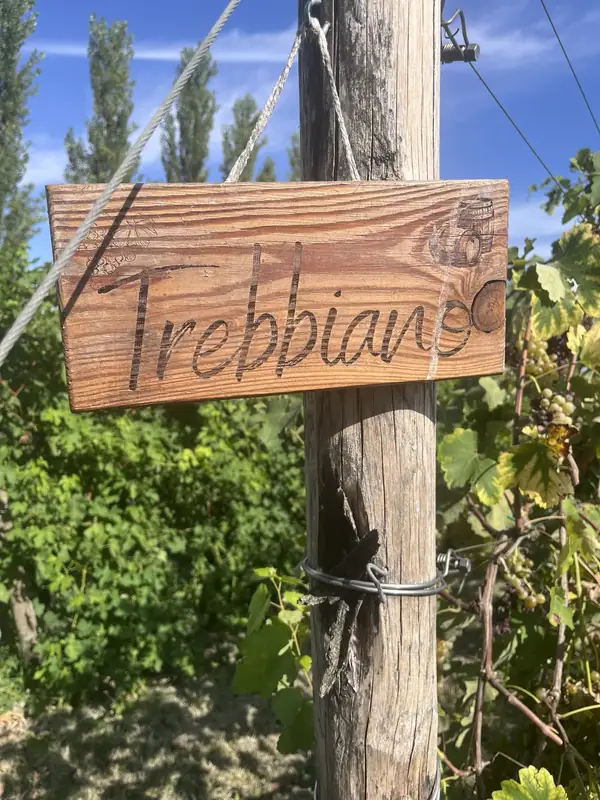
Trebbiano grapes identified in the educational vineyard.
Trebbiano and Lambrusco are among the local grape varieties whose must can, many years later, become Modena’s celebrated balsamic vinegar.
At the Monari family’s educational vineyard, developed with a university, we could see seven varieties growing side by side – and taste the grapes directly from the vines. The contrast was striking: Lambrusco had a lively tartness, while Albana tasted noticeably sweeter. Ancellotta, Lambrusco di Sorbara and Lambrusco Salamino revealed their own distinct clusters and leaves. The vineyard was a reminder that the flavour of balsamic vinegar begins long before a barrel is filled.
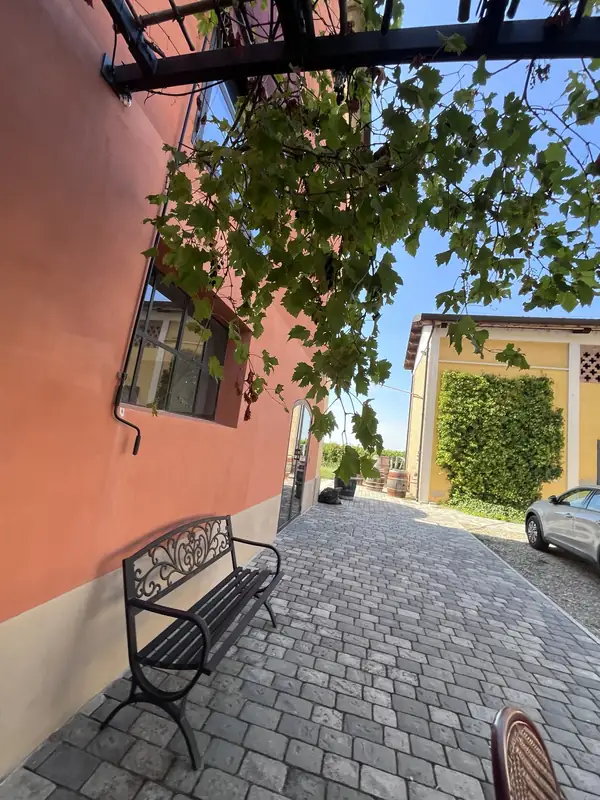
The landscape of Modena.
The grapes are pressed and the must is slowly cooked for hours. Not ten minutes, not half an hour: sometimes eight to twelve hours, until it has reduced and the natural sugars and aromas become concentrated.
Only then does the truly fascinating part begin.
The barrels.
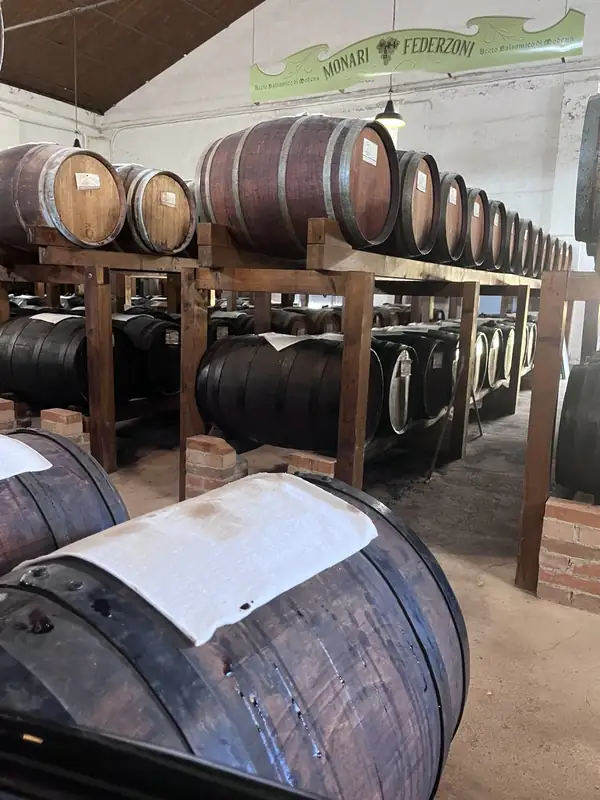
Traditional wooden barrels.
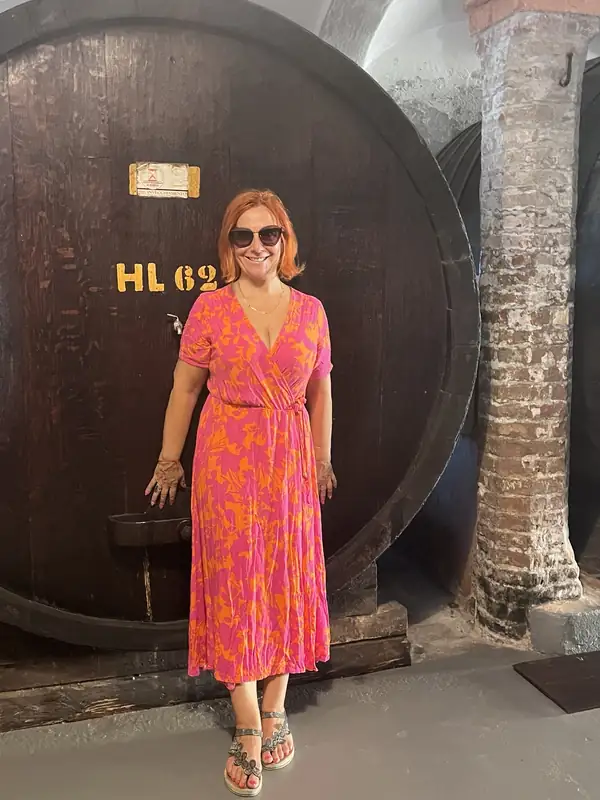
1897 on the side of a barrel
If I could bring home just one image from this trip, I would probably choose the old barrels.
They stand in rows, in different sizes and made from different woods. Chestnut, oak, cherry, juniper – each contributes something to the liquid ageing inside. Acacia is another wood used in the traditional process.
Balsamic vinegar is not simply poured into a barrel and taken out twelve years later.
Each year, small quantities are transferred and the barrels topped up as the liquid evaporates and becomes more concentrated. A traditional battery is arranged from larger to smaller casks; the smallest supplies a limited quantity of finished vinegar, while the larger barrels replenish the ones below them. Different woods contribute different aromas, and time does the rest.
Slowly.
Very slowly.
We saw barrels dating from the 1920s, 1940s, 1954 and 1977. And there was one from 1897.
That stops you in your tracks.
Suddenly you are no longer looking at an industrial food product. That barrel has survived two world wars; generations have been born and died around it, the world has changed beyond recognition, and it has continued to serve the same extraordinary purpose.
One important distinction our guide explained: the date on the barrel is not the age of every drop inside it. These casks are continually replenished. An 1897 barrel is a remarkable historical object, not proof of a 129-year-old vinegar.
From that moment on, the word “traditional” meant something entirely different to me.
Twelve years is only the beginning
Aceto Balsamico Tradizionale di Modena DOP must be aged for at least twelve years. The exceptionally long-aged Extravecchio version spends at least twenty-five years in the traditional barrel system.
Twenty-five years.
Just think: someone who begins the process today may not see the result tasted as intended until 2051.
Perhaps that is why this is, above all, a family story.
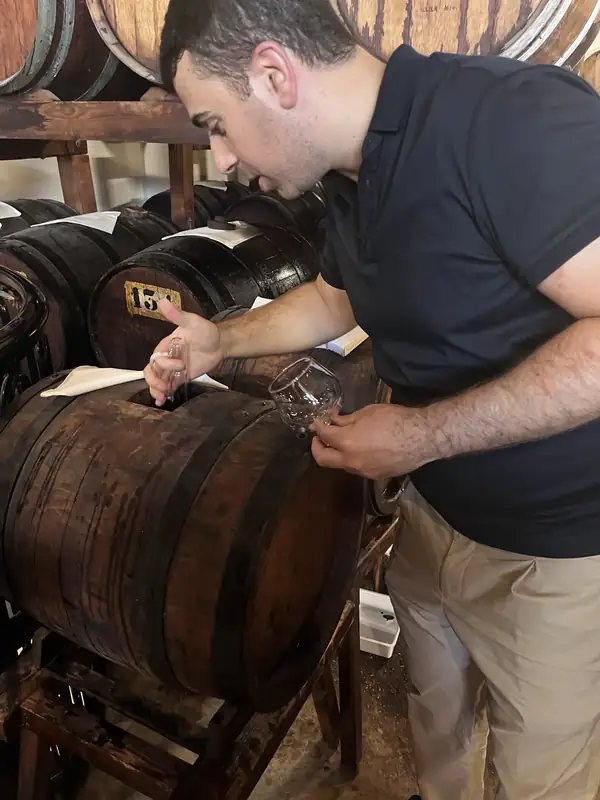
At one of our stops, we discovered a family business in which the knowledge of balsamic-making and the barrels themselves are inherited much like jewellery or a family home.
The story of Aceto Balsamico del Duca began in 1891, when Adriano Grosoli opened a shop selling balsamic vinegar alongside other local specialities. Later generations developed the business, and in 1974 the family decided to focus more closely on balsamic vinegar. Today, Mariangela and Elena carry that heritage forward.
There is a particularly beautiful local custom: a family might start a new set of barrels when a child is born, tending it as the child grows, and eventually give it as part of a wedding dowry. A gift that cannot be rushed or bought at the last minute.
Standing among those barrels, you realise that “Made in Italy” is not simply a marketing slogan.
It really is a family history.
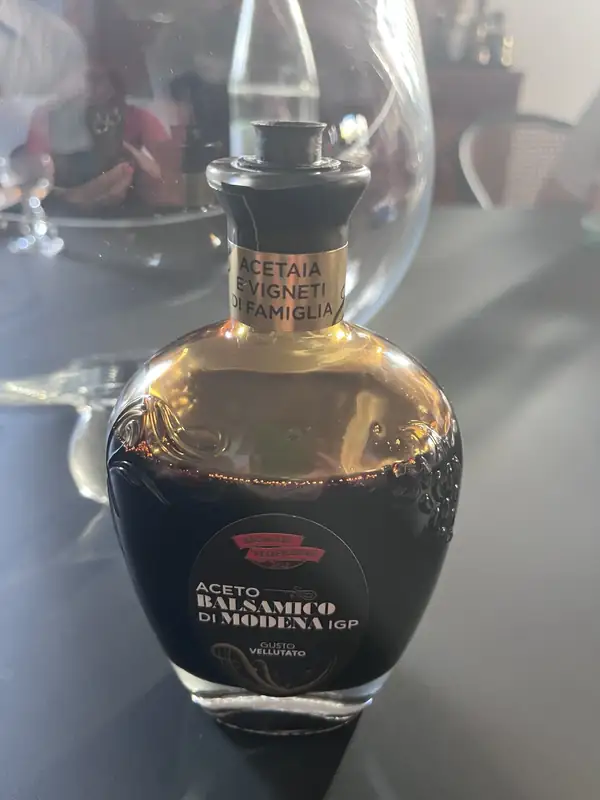
A precious balsamic vinegar.
Two names, two very different vinegars
One of the most useful lessons of the visit was learning that not every bottle labelled “balsamic vinegar of Modena” contains the same kind of product.
Traditional balsamic vinegar, Aceto Balsamico Tradizionale di Modena DOP, is made from cooked grape must and aged for a minimum of twelve years. It is assessed under strict rules and sold in a distinctive 100 ml bottle. Aceto Balsamico di Modena IGP, by contrast, is made using wine vinegar together with cooked or concentrated grape must, and has a minimum ageing period of sixty days; versions marked “invecchiato” are aged for at least three years.
Both belong to Modena’s food culture, but their ingredients, production methods and price points are different. Understanding that difference changes the way you read a label – and the way you taste what is inside.
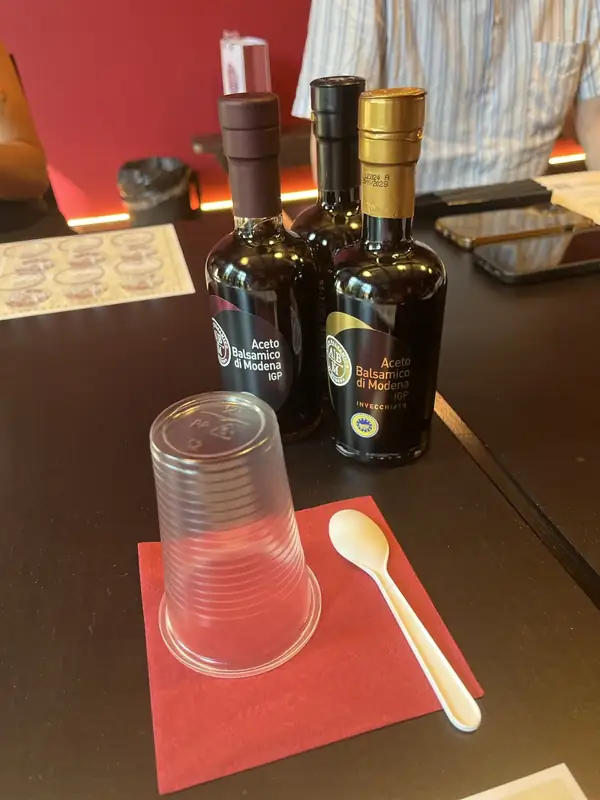
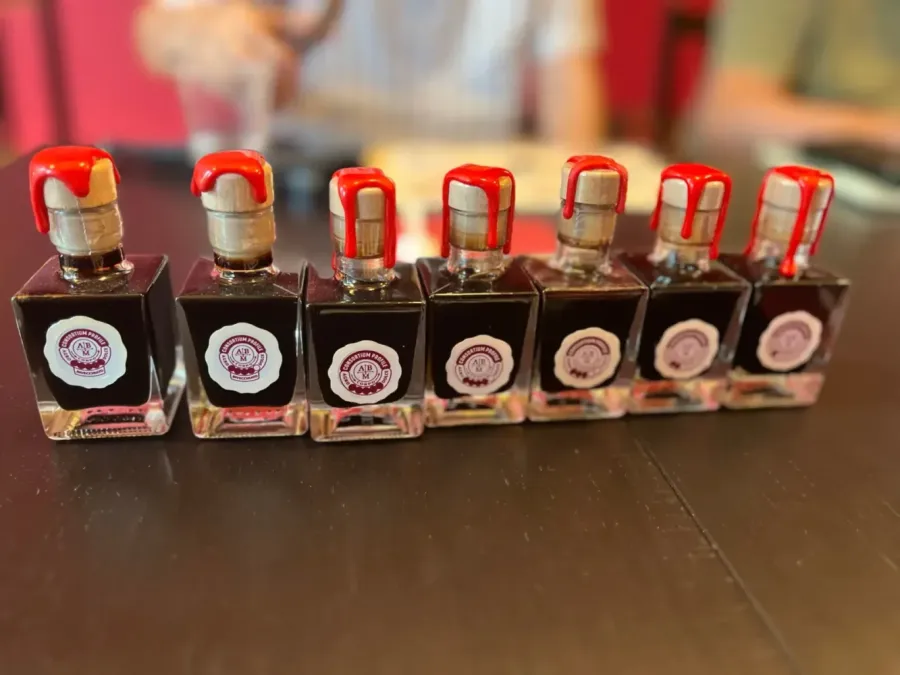
A tasting selection of balsamic vinegars.
And then we taste it
Of course, all this is fascinating, but eventually you have to taste it.
And that brought the second surprise.
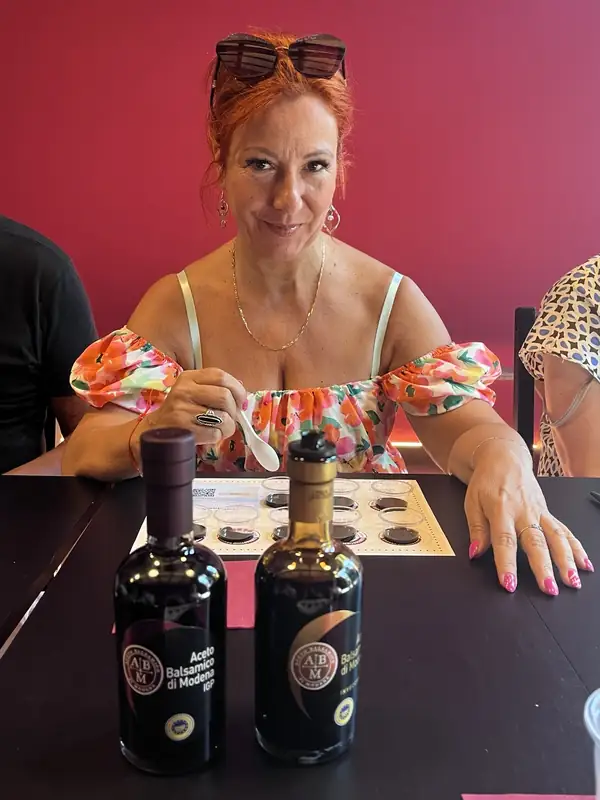
Tasting the different expressions of balsamic vinegar.
Good balsamic vinegar is not simply sweet. Nor is it simply sour.
It is dense and complex, sweet and acidic at once, with notes of wood, concentrated grape flavours and a depth that is difficult to describe.
A few drops are enough.
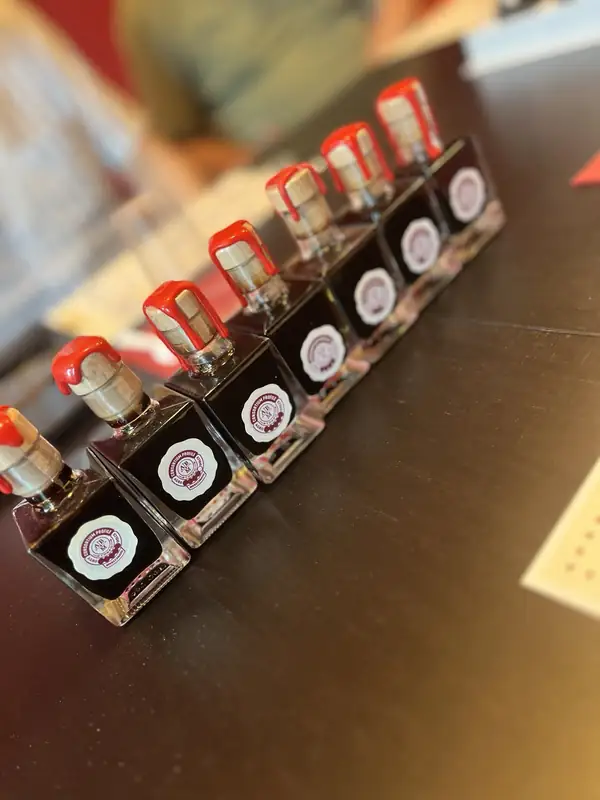
The tasting bottles, ready to sample.
On Parmigiano Reggiano, for example, it is practically perfect. But in Modena you soon discover that people use it far more adventurously: with meat, fruit, desserts and even ice cream.
And yes, balsamic vinegar on ice cream works.
Very well indeed.
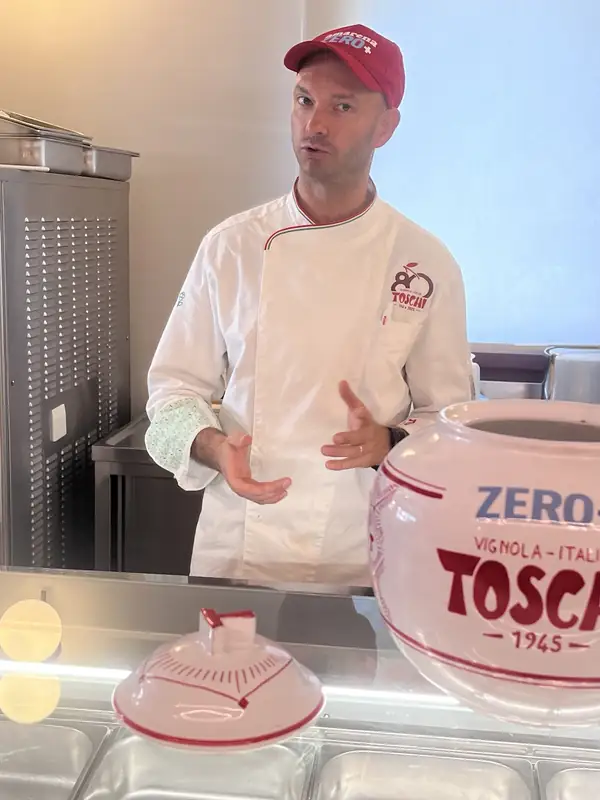
The gelato-making workshop at Casa Toschi.
We did more than taste gelato: at Casa Toschi, we actually made it ourselves. The workshop was one of the most playful parts of the trip. Instead of simply being handed something delicious, we followed – and tried our hand at – the process of making authentic Italian gelato. And naturally, Modena’s star ingredient made an appearance here too. If the thought of a few drops of balsamic vinegar on ice cream had once seemed strange, that afternoon finally convinced me why the pairing works.
Mercato Albinelli – where you want to eat everything
If you are in Modena, of course you have to visit the market.
Mercato Albinelli is exactly the kind of Italian market I love: colourful, lively and packed with fresh produce, cheeses, cured meats and pasta.
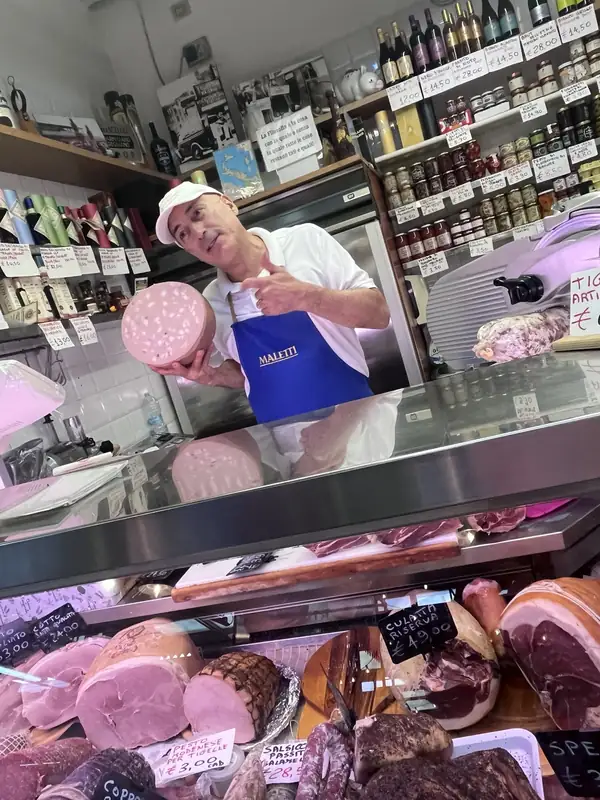
A friendly encounter at the market.
You make the mistake of thinking you are just going to browse.
Five minutes later, you are tasting Parmigiano Reggiano, watching fresh tortellini being prepared and wondering how to take everything home.
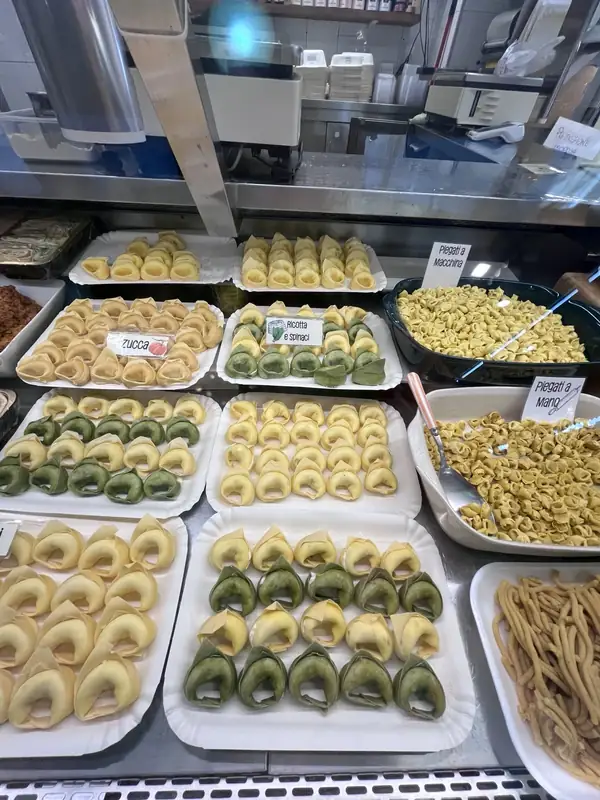
Fresh pasta at the market.
Tigelle, the region’s small round flatbreads, are another essential. Split open and filled with ham, cheese or other local delicacies – sometimes with the traditional combination of lardo, garlic, rosemary and Parmesan – they are almost impossible to resist.
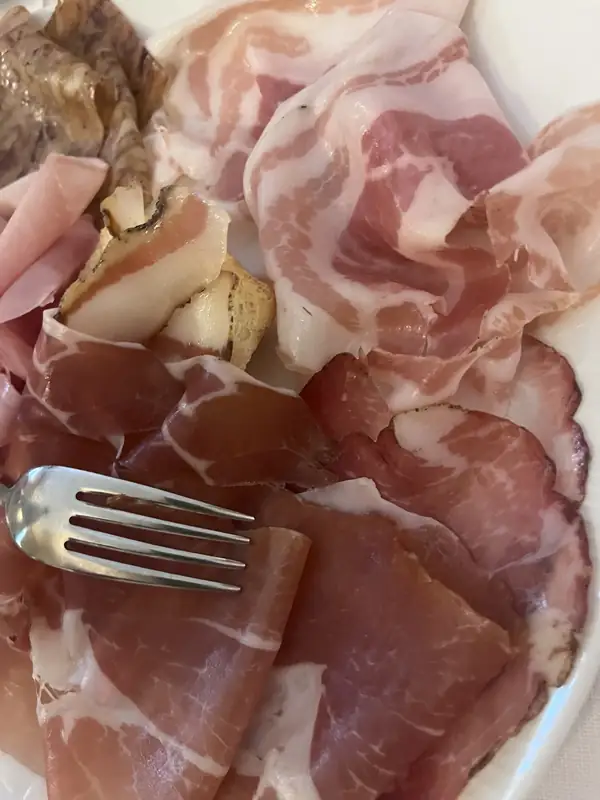
The irresistible cured meats of Emilia-Romagna.
Emilia-Romagna is not the place to go on a diet.
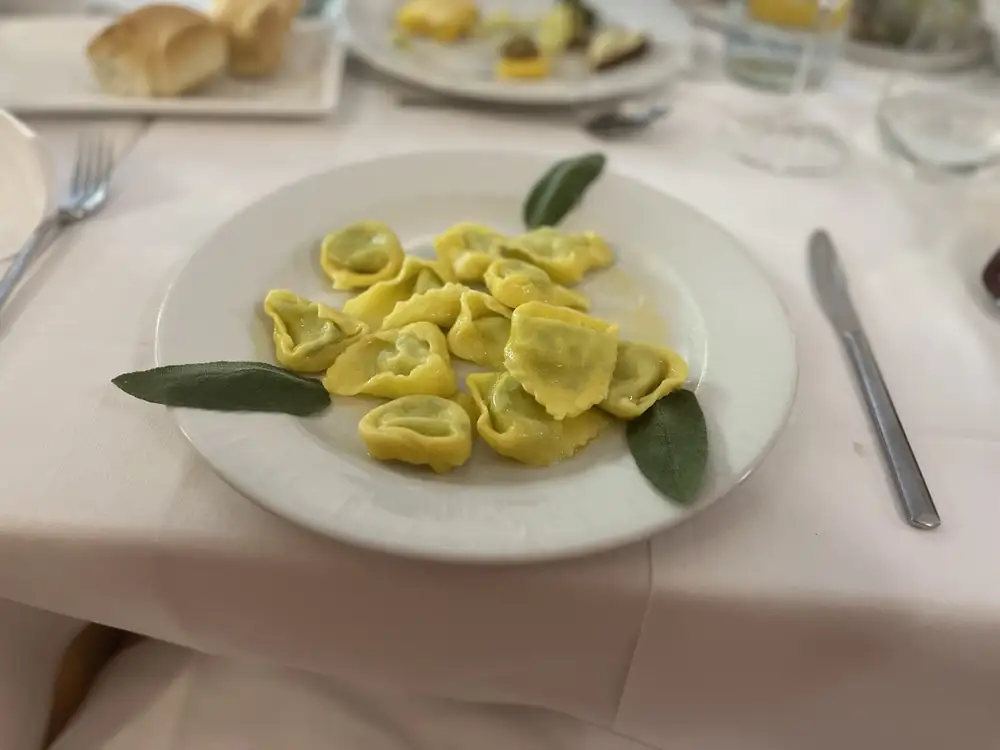
Handmade filled pasta served with sage.
Modena beyond the table
The city itself deserves at least a few hours away from the dining table.
Piazza Grande, the Romanesque cathedral and the soaring Ghirlandina tower form the heart of Modena’s historic centre. The monumental Palazzo Ducale offers another face of a city I had come to know mainly through its flavours.
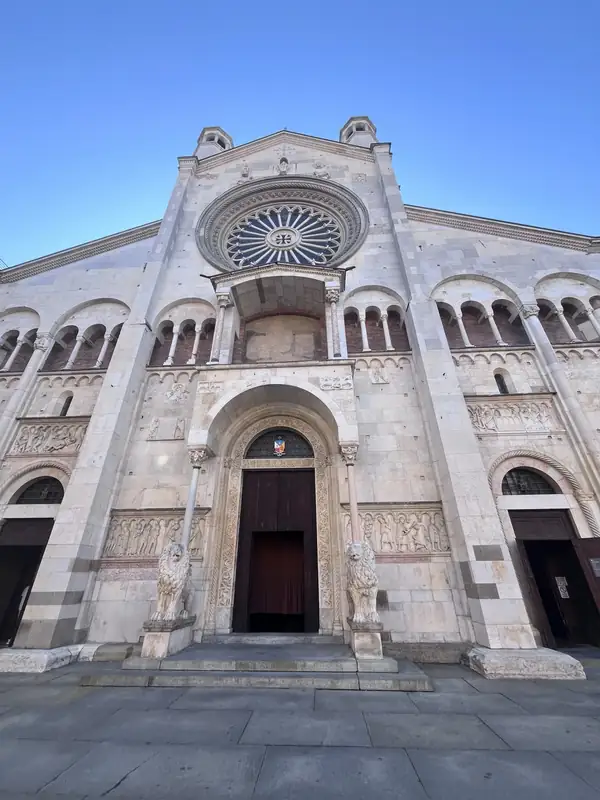
Modena’s Romanesque cathedral.
There are delightful details everywhere. The streets still carry traces of the canals that once crossed Modena, while the cathedral’s carved stonework tells stories to anyone willing to look up. And San Geminiano, the city’s patron saint, remains at the centre of local legend and identity.
The imposing Palazzo Ducale.
Modena is not a big city. And that is precisely its charm.
It is walkable and elegant without being ostentatious. The kind of Italian city where you constantly feel like sitting down for a coffee or a glass of Lambrusco, only to realise that two hours have passed.
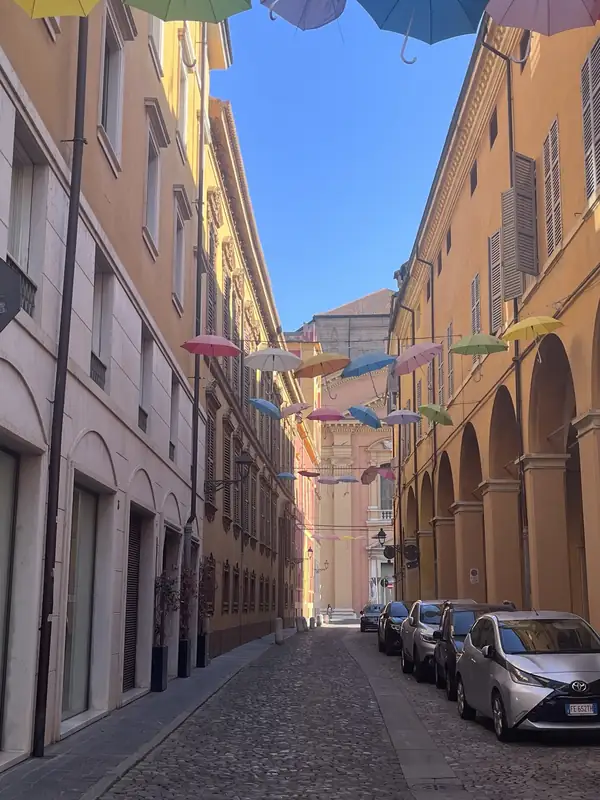
A quiet street in Modena.
Hotel Principe was a convenient base for exploring. Situated on Corso Vittorio Emanuele II, close to the historic centre, it made the city easy to discover on foot – especially valuable on such a short, busy trip.
There is no Modena without Ferrari
And then there is Ferrari.
Somehow Modena manages to be home to both century-old balsamic barrels and one of the world’s most recognisable sports-car names.
Even from the outside, the Museo Enzo Ferrari announces that something quite different awaits. Inside are the cars, the engines and the story of Enzo Ferrari.
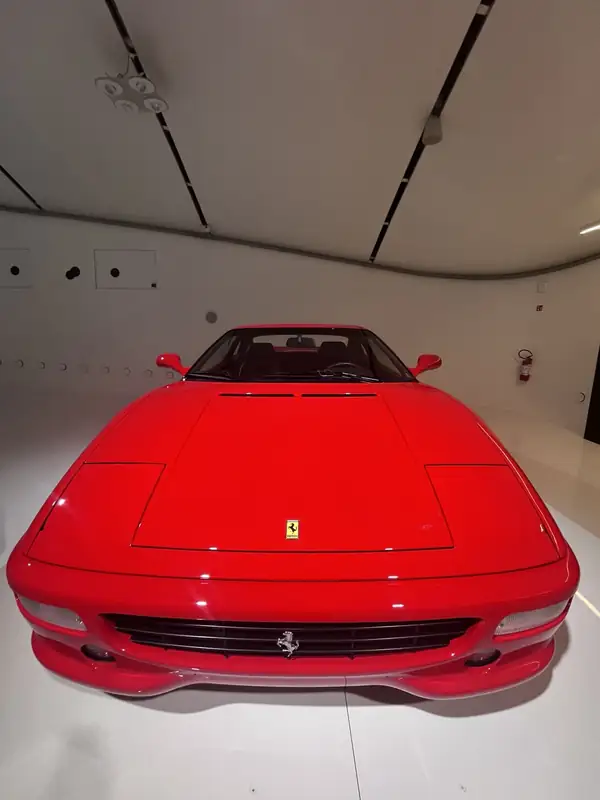
A striking Ferrari on display.
At first glance, it has nothing to do with balsamic vinegar.
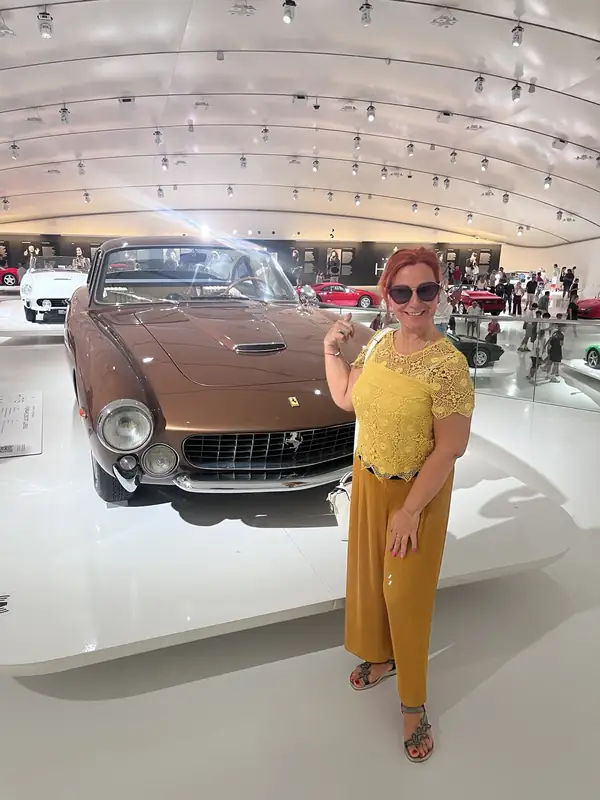
Among the classic cars at Museo Enzo Ferrari.
Yet by the end of the trip, I felt there was a connection after all.
Both are driven by the same Modenese obsession: it is not enough to make something well; you have to make it as well as humanly possible. Even if it takes decades.
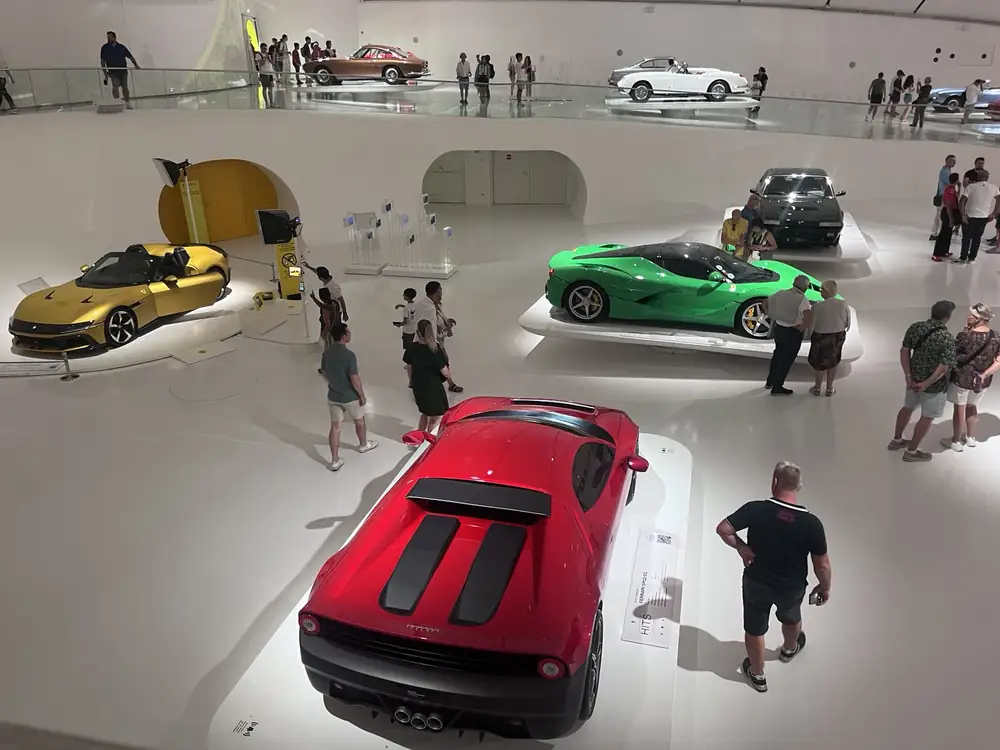
The spectacular Museo Enzo Ferrari exhibition.
Twenty-five years in a bottle
When you return home from Modena, you look at bottles of balsamic vinegar a little differently.
I certainly do.
Now I know that behind a genuinely long-aged traditional balsamic vinegar are the grapes, the cooked must, the attic, the heat of summer and cold of winter, barrels made from different woods and, above all, time.
A great deal of time.
And there are the people who begin something knowing full well that the next generation may be the one to finish it.
There are few more beautiful definitions of luxury.
In Modena, I learned that true luxury is sometimes nothing more than a few drops of something worth waiting twenty-five years for.

Related Articles


Related Articles