
Modena – where balsamic vinegar has a story to tell
I have to confess, I used to be one of those people for whom balsamic vinegar was simply something you took off the kitchen shelf, drizzled over a salad, perhaps added a few drops to some Parmesan, and that was that. Of course, I knew there were better, more expensive, authentic versions from Modena. But why anyone would pay a small fortune for a tiny bottle of balsamic vinegar, or what actually happens to it over ten, twenty, thirty or even a hundred years, I hadn’t the faintest idea.
Then I went to Modena.
And it didn’t take long to discover that, when it comes to Aceto Balsamico di Modena, the word vinegar doesn’t really do it justice. What I found was history, family heritage, patience and a rather extraordinary passion passed down through generations, all captured in one tiny bottle.
A city with a flavour of its own
Modena lies in the heart of Emilia-Romagna, a region where, after just a few hours, you begin to suspect that Italians have organised their entire lives around eating. And quite right too.
Parmigiano Reggiano, prosciutto, mortadella, fresh tortellini, tigelle – it’s almost impossible to make a wrong turn here.
But Modena has something that belongs to it alone: balsamic vinegar.
Its story stretches back centuries. As early as the Middle Ages, people in the region were making a special vinegar from cooked grape must, and it later became a prized delicacy at the ducal court of Modena. Families aged it in their attics, and their precious collections of barrels were handed down from one generation to the next.
And that was when I began to look at this dark, glossy liquid in an entirely different way.
It all begins with a grape
The story of balsamic vinegar doesn’t begin in a factory. It begins in a vineyard.
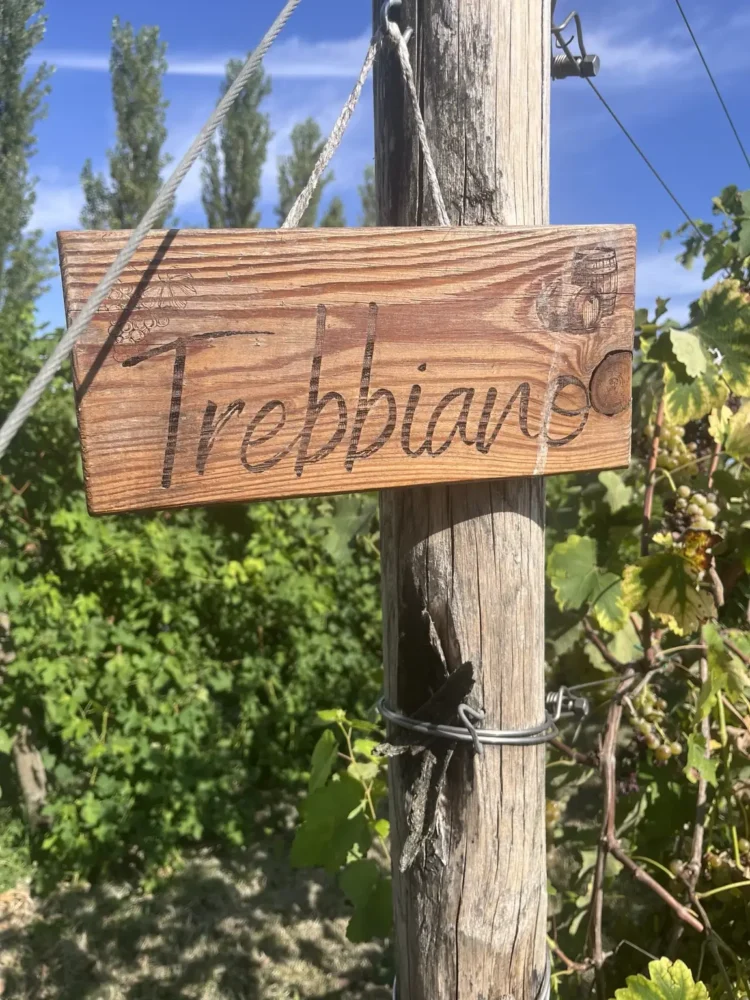
Trebbiano grapes identified in the educational vineyard.
Trebbiano and Lambrusco are among the local grape varieties used to produce the must that, many years later, may become Modena’s famous balsamic vinegar.
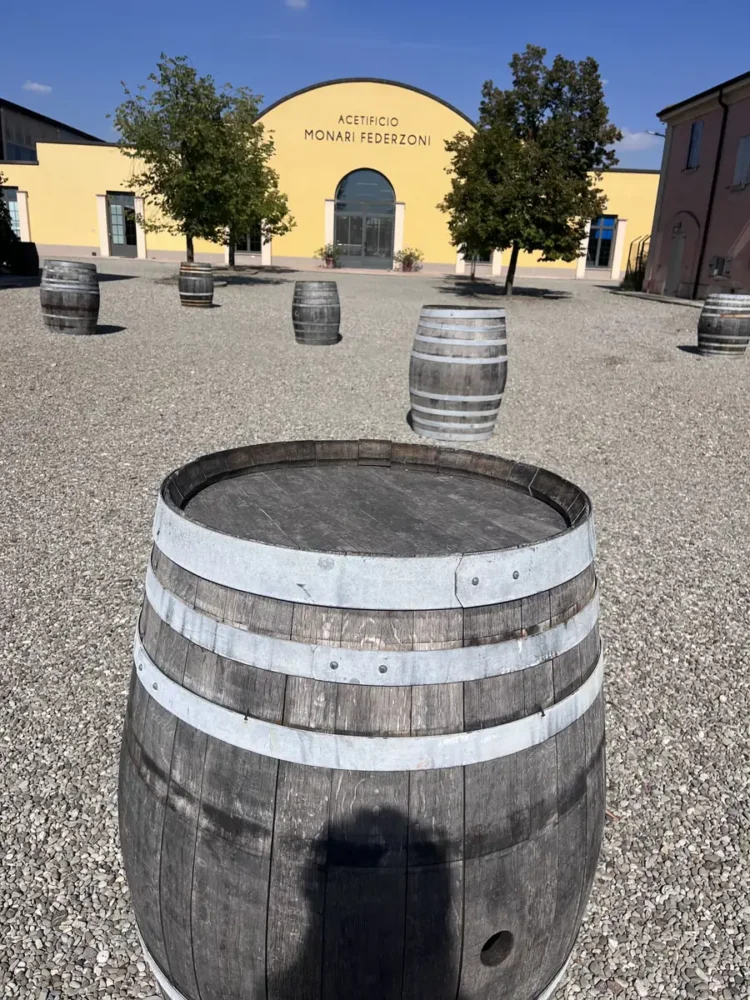
At the Monari family’s vineyard, I had the chance to get to know these grapes rather more intimately. Together with a university, the family has created an educational vineyard where seven different grape varieties grow side by side. We arrived at just the right moment: we could pick the grapes straight from the vines and taste them.
I wasn’t expecting any great revelations. Grapes are grapes, I thought. Some sweeter, some a little more acidic.
How wrong I was!
I was genuinely astonished by the differences. Moving from one vine to another, I discovered flavours so distinct that I soon found myself eagerly anticipating the next one. It was almost like a wine tasting, except that we were eating the grapes themselves. And later, when I tasted the different balsamic vinegars, I experienced exactly the same surprise: how could products made from the same basic ingredient taste so completely different?
Lambrusco has a distinctly tart, almost sharp character. Even its name gives the game away: the local word brusco refers to that sour, astringent quality. Albana, on the other hand, is noticeably sweeter, with long bunches that look quite different from the others.
Walking among Ancellotta, Lambrusco di Sorbara and Lambrusco Salamino, we also learnt something I would never have guessed. Sorbara and Salamino are traditionally planted together because they complement each other during pollination.
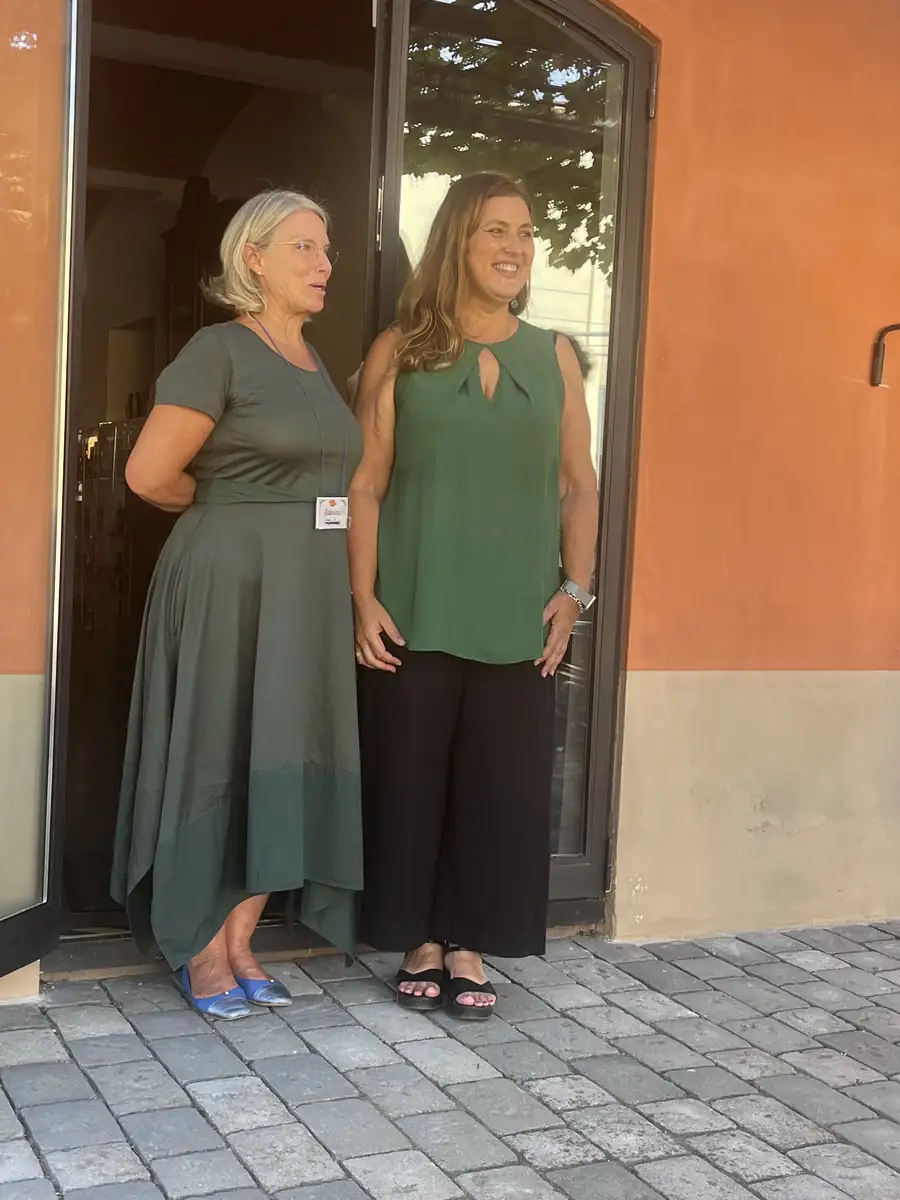
And speaking of family, the Monari business is now carried on by three sisters. I met Sabrina, and during our conversation I also discovered that the name Elena had already appeared in the family’s history in the early nineteenth century.
What struck me most about Sabrina was her enthusiasm. Listening to her, I had the feeling that the vineyard was much more than part of a business. She spoke about her family’s past with the affection of someone showing you old family photographs. There was unmistakable pride in her voice, but nothing boastful about it. Rather, the quiet happiness of someone who knows exactly what she has inherited and how much it matters to pass it on.
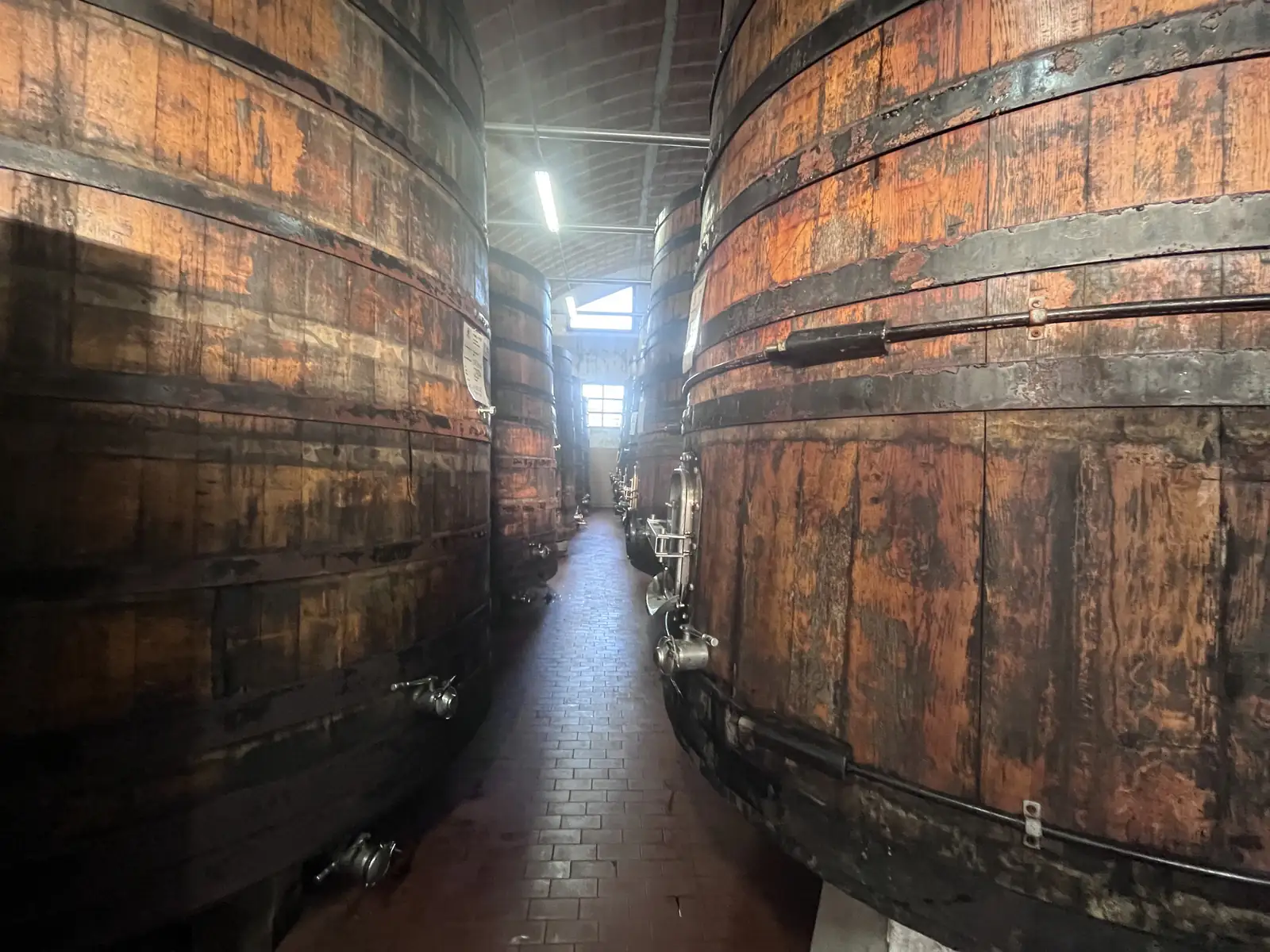
The grapes are pressed, and the must is then cooked slowly for hours. Not ten minutes, not half an hour, but sometimes eight to twelve hours. As it simmers, it becomes more concentrated, intensifying the grapes’ natural sugars and aromas.
And only then does the really fascinating part begin.
The barrels.
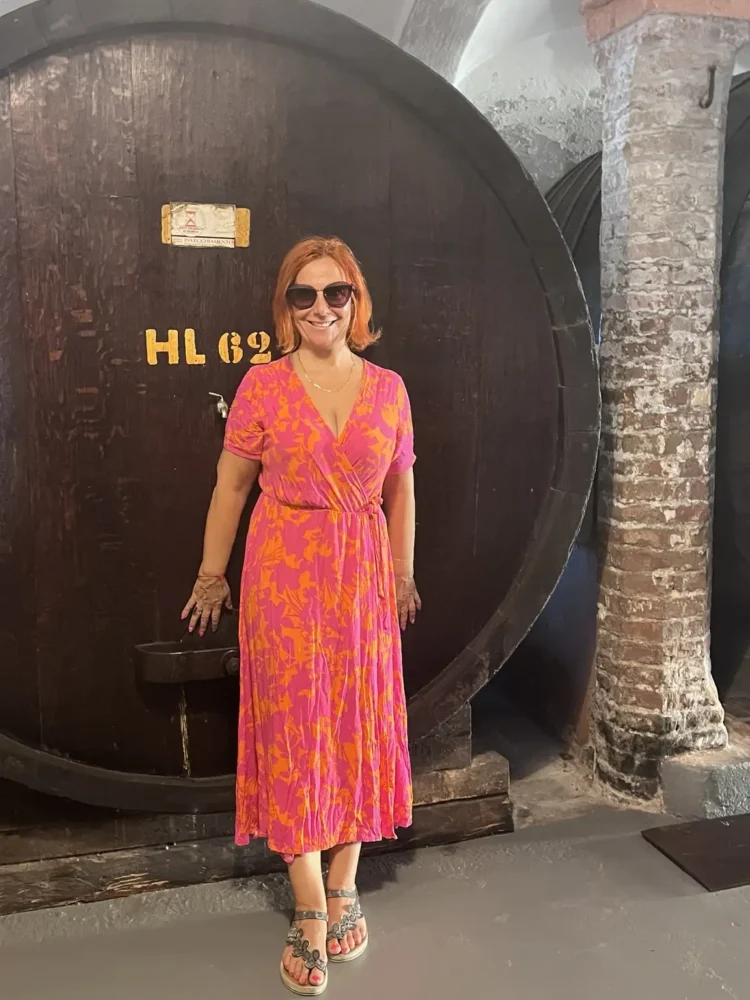
1897, written on a barrel
If I could bring home just one image from this trip, I would probably choose the old barrels.
They stand in rows, different sizes, different woods. Chestnut, oak, cherry, juniper – each contributing something of its own to whatever is happening inside.
You see, balsamic vinegar isn’t simply poured into a barrel and left there until someone opens it twelve years later.
Year after year, it moves from barrel to barrel. As it evaporates and becomes more concentrated, the smaller barrels are replenished from the larger ones. Each type of wood lends its own aromas, while time quietly does the rest.
Slowly.
Very slowly.
At Aceto Balsamico del Duca, Elena explained this extraordinary process in detail. The barrels are not sealed airtight, allowing the liquid to breathe. During the hot summer months, a considerable amount evaporates.
Elena guided us through the rows of barrels with such enthusiasm that I barely noticed how much I was learning. As she pointed to old family photographs and then to the barrels themselves, it was impossible not to feel how personal all this was to her. This wasn’t a rehearsed presentation. She was telling us her family’s story.
I particularly loved the way she referred to the younger barrels as teenagers and the oldest ones as grandmothers. Suddenly, the barrels seemed almost like members of the family.
In winter comes the annual travasi, the process of transferring and topping up the vinegar. The smallest barrel is replenished from the next larger one, which in turn receives liquid from the next, and so on. Finally, the largest barrel is topped up with newly prepared grape must.
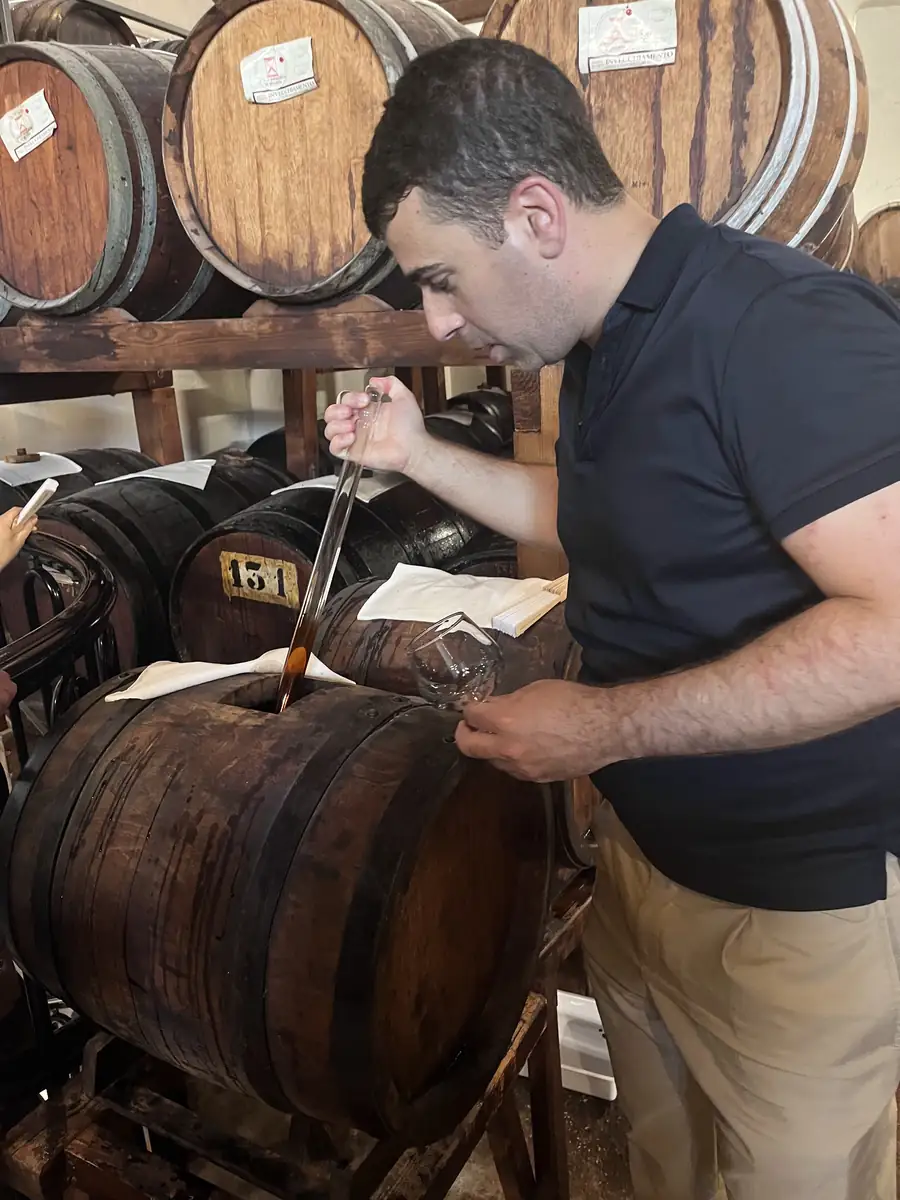
For the first eleven years, not a single drop of finished traditional balsamic vinegar is taken out. Even in the twelfth year, only around 15–20 per cent of the smallest barrel’s contents may be extracted.
And the story doesn’t end there. Before it can be bottled, the vinegar must pass strict chemical and sensory examinations.
We saw barrels dating from the 1920s, the 1940s, 1954 and 1977. And then there was one dating all the way back to 1897.
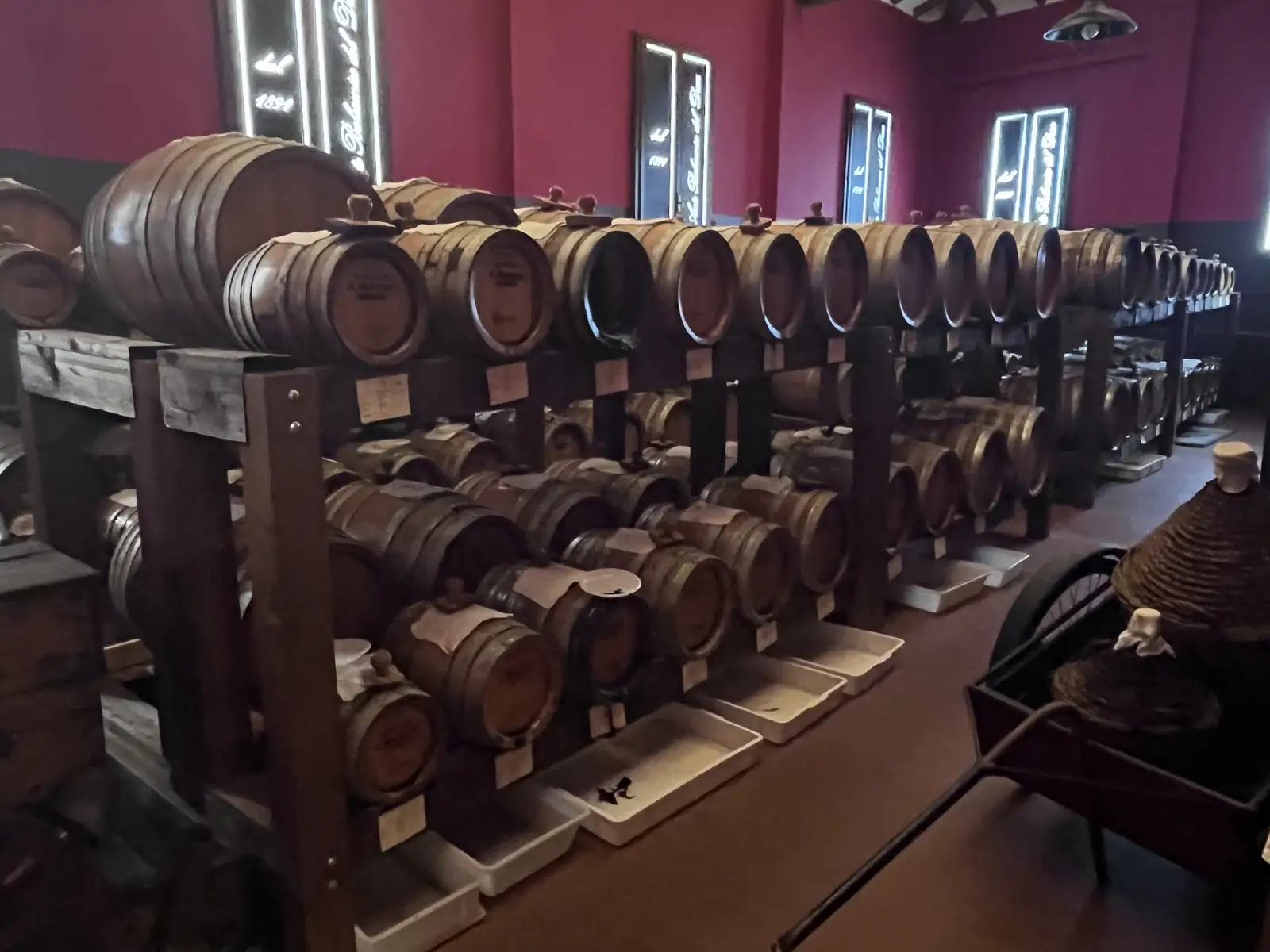
That certainly makes you stop and stare.
Because suddenly, you’re no longer looking at a food product. That barrel has survived two world wars. Generations have been born and died around it. The world has changed beyond recognition, while it has remained there, quietly ageing balsamic vinegar.
Elena was quick to clear up one common misconception, however. Just because a barrel dates from 1897 doesn’t mean the vinegar inside is 129 years old. Its contents are continually replenished and blended with newer batches. A tiny proportion may indeed be extremely old, but the vinegar itself cannot simply be given the age of its barrel.
Worth remembering the next time someone offers you a supposedly hundred-year-old balsamic vinegar.
From that moment on, the word traditional meant something entirely different to me.
Twelve years is only the beginning
Aceto Balsamico Tradizionale di Modena DOP must be aged for at least twelve years. The particularly long-aged versions spend twenty-five years or more developing their extraordinary character.
Twenty-five years.
Just imagine. Someone begins making something today that may not be tasted in its intended form until 2051.
Perhaps that’s why balsamic vinegar is so deeply connected to family life.
At one of our stops, we discovered a family business in which the knowledge of balsamic-making and the barrels themselves are inherited much like jewellery or a family home.
Elena told us about an old Modenese tradition: when a child was born, the family would start a new series of barrels. The parents would tend it over the years, and when the child married, the precious balsamic vinegar would be given as part of the dowry.
I couldn’t help imagining a family caring for something for twenty-five years, knowing that one day it would become a wedding gift for their daughter or son.
Not money. Not jewellery.
Balsamic vinegar.
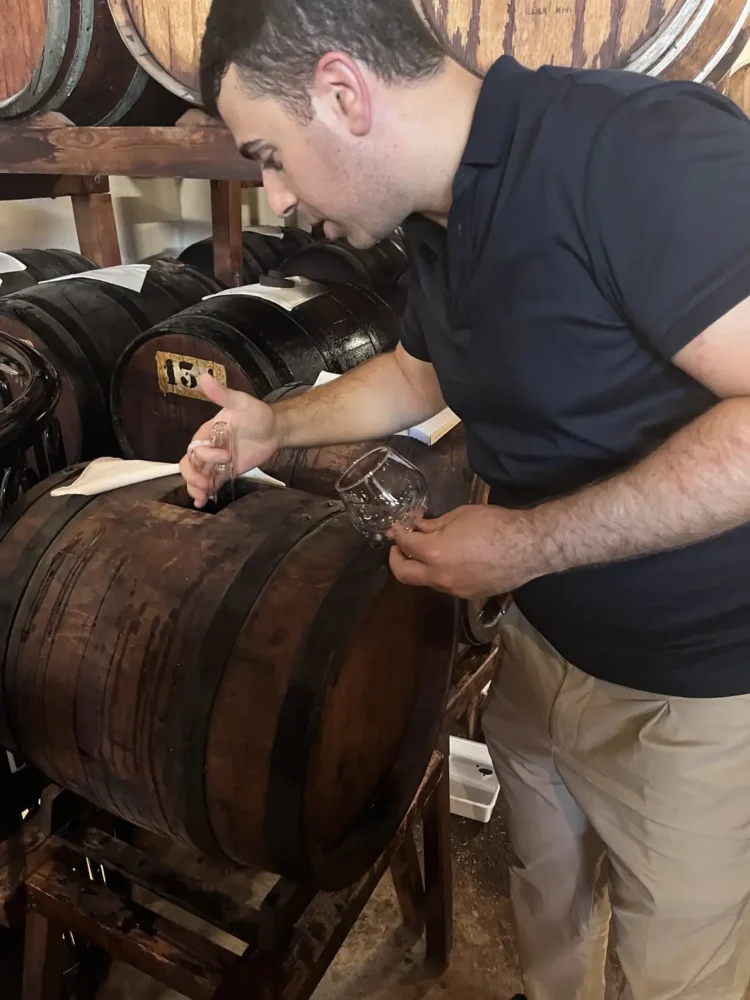
At one of our stops, we discovered a family business where the knowledge of making balsamic vinegar, along with the barrels themselves, is inherited much as other families might pass down an old piece of jewellery or a house.
The story of Aceto Balsamico del Duca began in 1891. The Grosoli family carried the business through successive generations, and today Mariangela and Elena represent that remarkable heritage.
Elena also told us how the family business began as a small shop selling not only balsamic vinegar but also cheese, cured meats, wine and liqueurs. The real turning point came in the 1970s, when Adriano Grosoli realised that the arrival of supermarkets would make life increasingly difficult for traditional small shops.
So he decided to stake everything on a single product: balsamic vinegar.
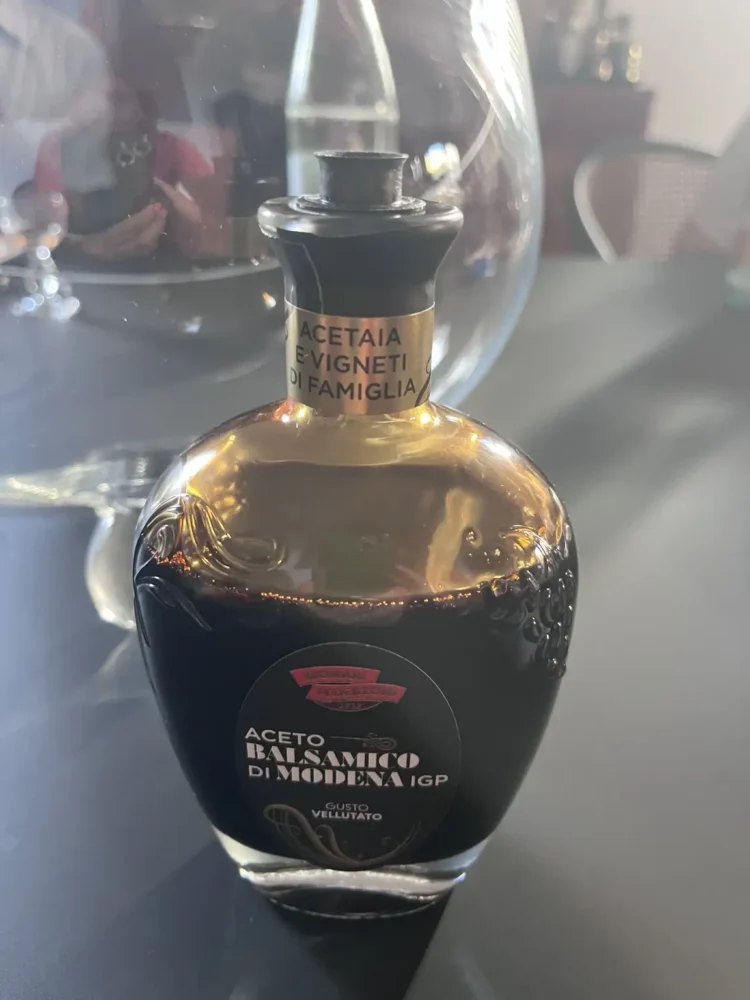
A precious balsamic vinegar.
A rather bold decision, considering that most of the world had barely heard of it at the time.
The business has now reached its fifth generation. And the ducal portrait on its label is no coincidence. Francesco I d’Este, the former Duke of Modena, belonged to a courtly world in which balsamic vinegar was a prestigious gift. In the 1980s, Adriano Grosoli chose to connect the family product with Modena’s ducal past by using a detail from Velázquez’s famous portrait.
Standing there, listening to these stories, I understood that Made in Italy wasn’t just a marketing slogan.
This really was family history.
And then, finally, we taste it
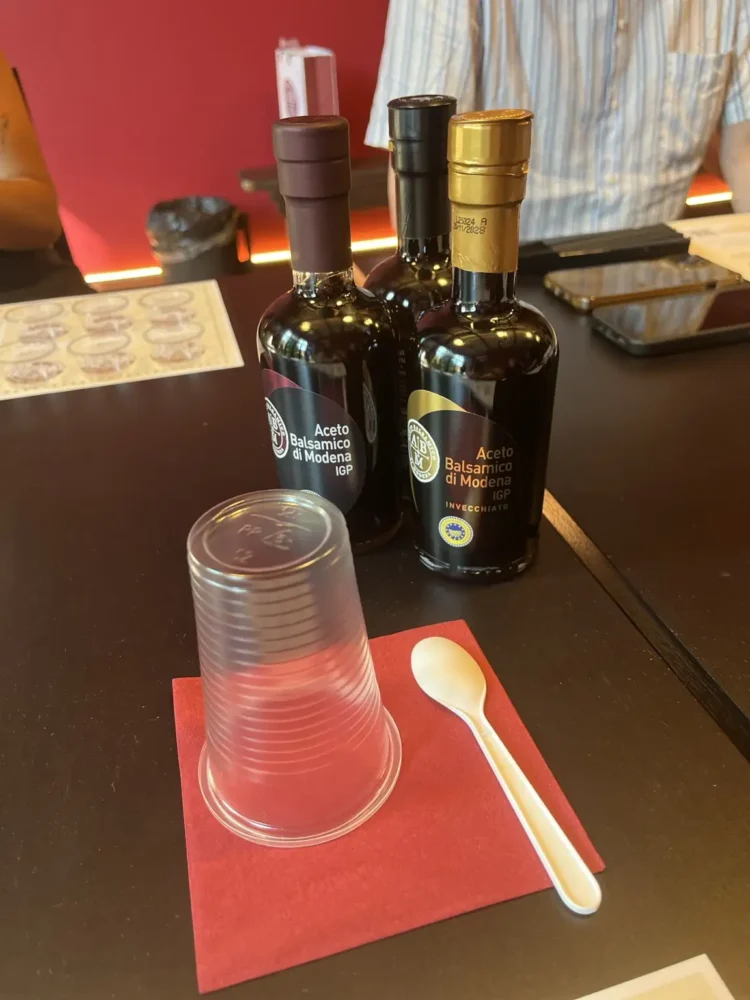
A tasting selection of balsamic vinegars.
All these stories are wonderful, of course, but eventually there’s only one thing to do.
Taste the vinegar.
And that brought my second big surprise.
Good balsamic vinegar isn’t simply sweet. Nor is it simply sour.
It’s thick, complex, simultaneously sweet and acidic, with the aromas of wood, the concentrated flavour of grapes and a depth that is surprisingly difficult to describe.
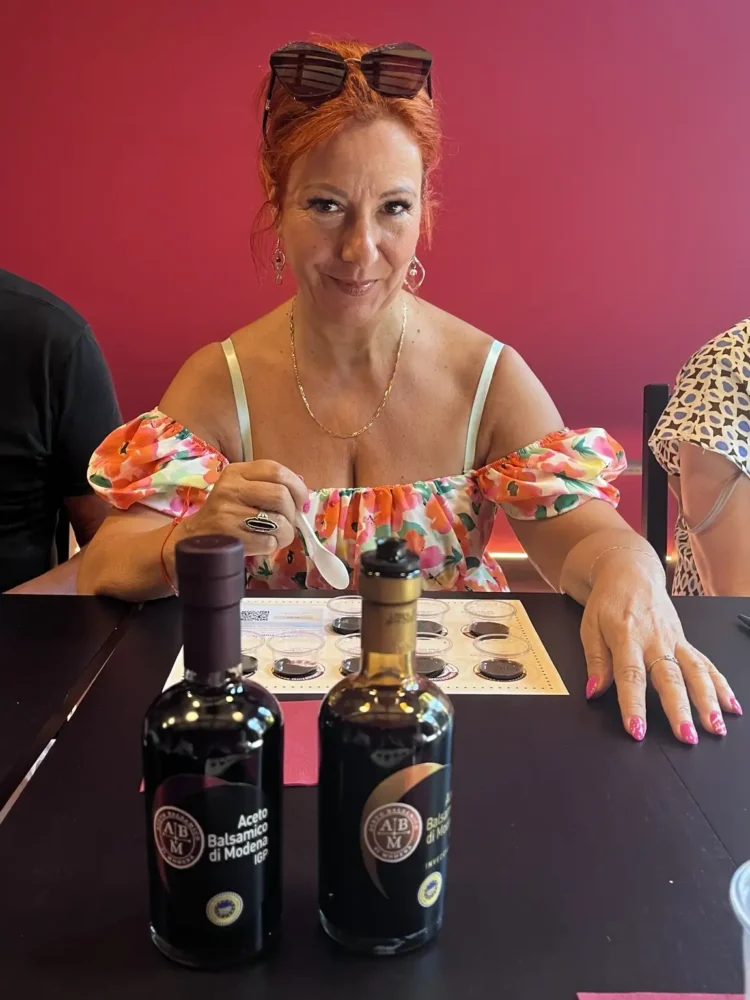
Tasting the different expressions of balsamic vinegar.
What really amazed me, though, was how different the individual balsamic vinegars tasted.
As I sampled them one after another, I found myself thinking back to the vineyard. There, too, I had been astonished that grapes could taste so different. Here, one balsamic was brighter and more acidic, another softer and sweeter, while a third left lingering woody notes on my palate.
I almost wanted to start the entire tasting again, just to compare them all once more.
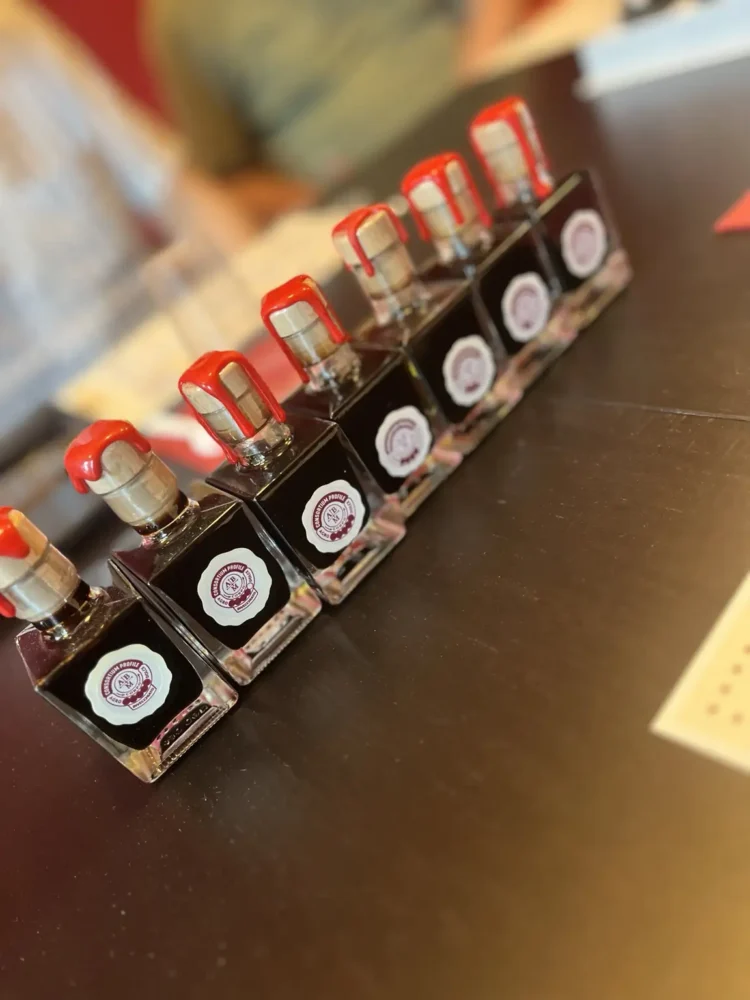
A few drops are enough.
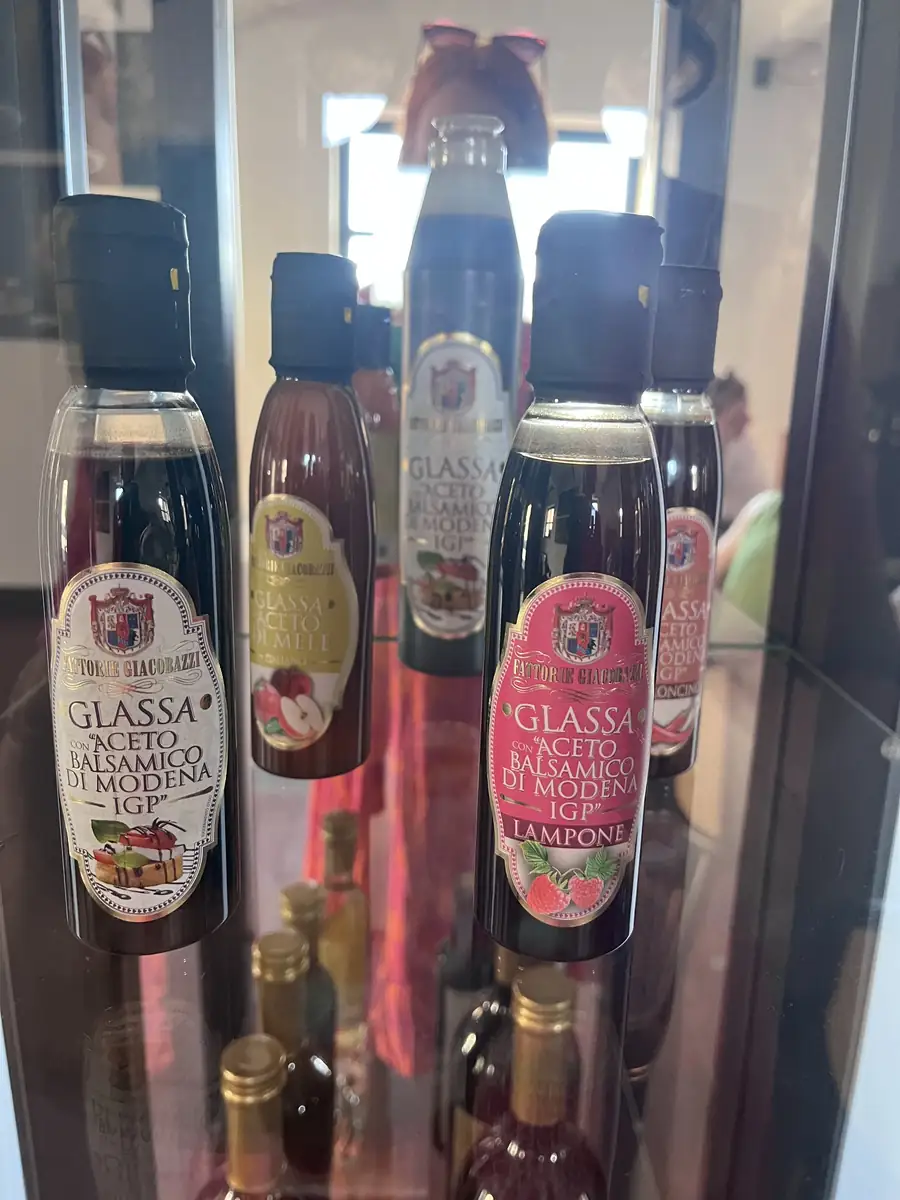
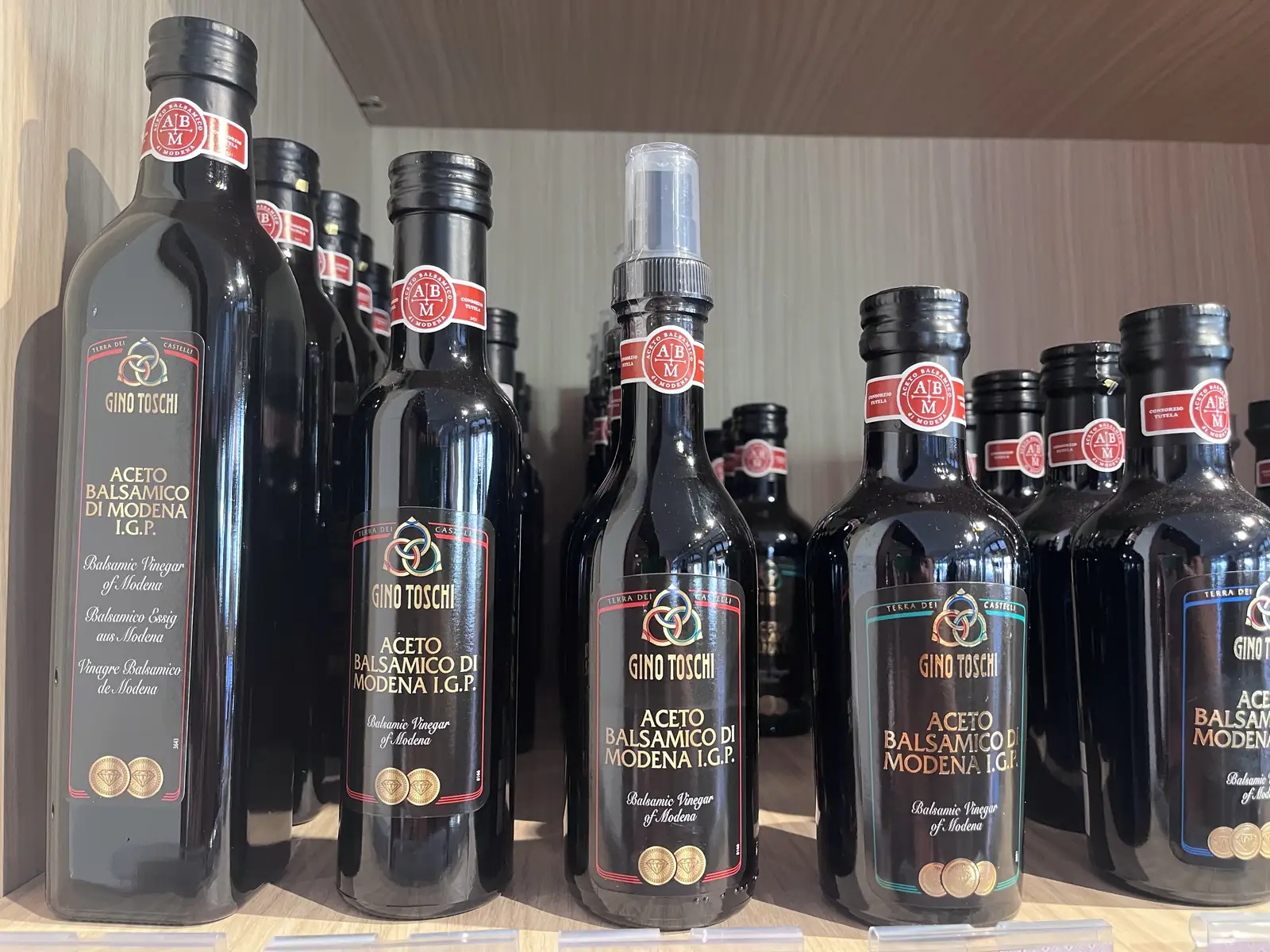
During the tasting, we also learnt about an important distinction. The Aceto Balsamico di Modena IGP that we usually find on supermarket shelves is not the same product as traditional DOP balsamic vinegar.
IGP balsamic vinegar is made from wine vinegar combined with cooked or concentrated grape must, whereas the traditional DOP version is made exclusively from cooked grape must and undergoes a much longer ageing process.
The DOP version is also easy to recognise: every producer uses the same distinctive 100 ml bottle, designed by Giorgetto Giugiaro.
Drizzled over Parmigiano Reggiano, it’s absolutely delicious. But in Modena, you quickly discover that people are far more adventurous with it: meat, fruit, desserts and even ice cream.
And yes, balsamic vinegar on ice cream really works.
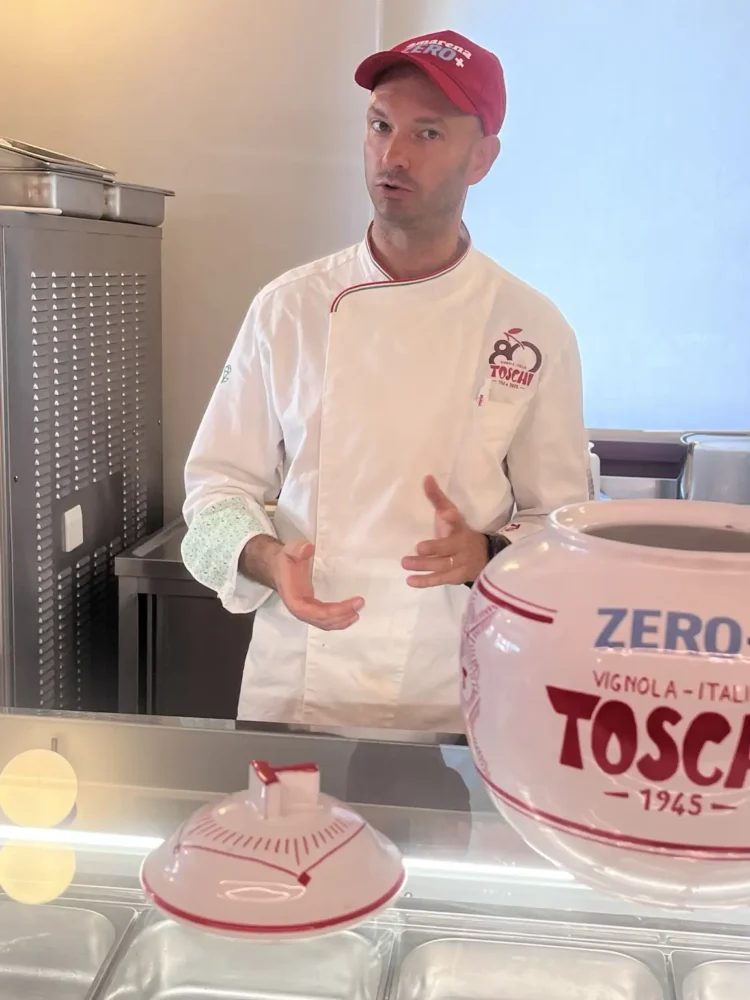
The gelato-making workshop at Casa Toschi.
Surprisingly well, in fact.
At Casa Toschi, I didn’t just get to taste gelato. I made it myself.
And I loved every minute of it!
Of course, when you travel to Italy, you expect to eat plenty of wonderful things. What you don’t necessarily expect is to find yourself making your own gelato.
During the workshop, I followed the process of making authentic Italian ice cream and took part in preparing it myself. There was something irresistibly Italian about the whole experience. Even learning becomes a pleasure here. Before you know it, you’ve been swept up in that cheerful, life-loving atmosphere that the Italians seem to create so effortlessly.
And then came the balsamic vinegar.
I have to admit, the idea struck me as rather bizarre.
Balsamic vinegar on ice cream? On salad, yes. On cheese, absolutely. Even on meat. But on a sweet, creamy dessert?
Fortunately, my curiosity was stronger than my prejudice.
And thank goodness for that!
The sweetness of the gelato and the acidity of the balsamic vinegar worked together in a way I would never have imagined. Strange, surprising, yet beautifully balanced. The sort of combination you’d probably never order of your own accord, only to find yourself wondering why you hadn’t tried it years ago.
Mercato Albinelli – where I wanted to eat everything
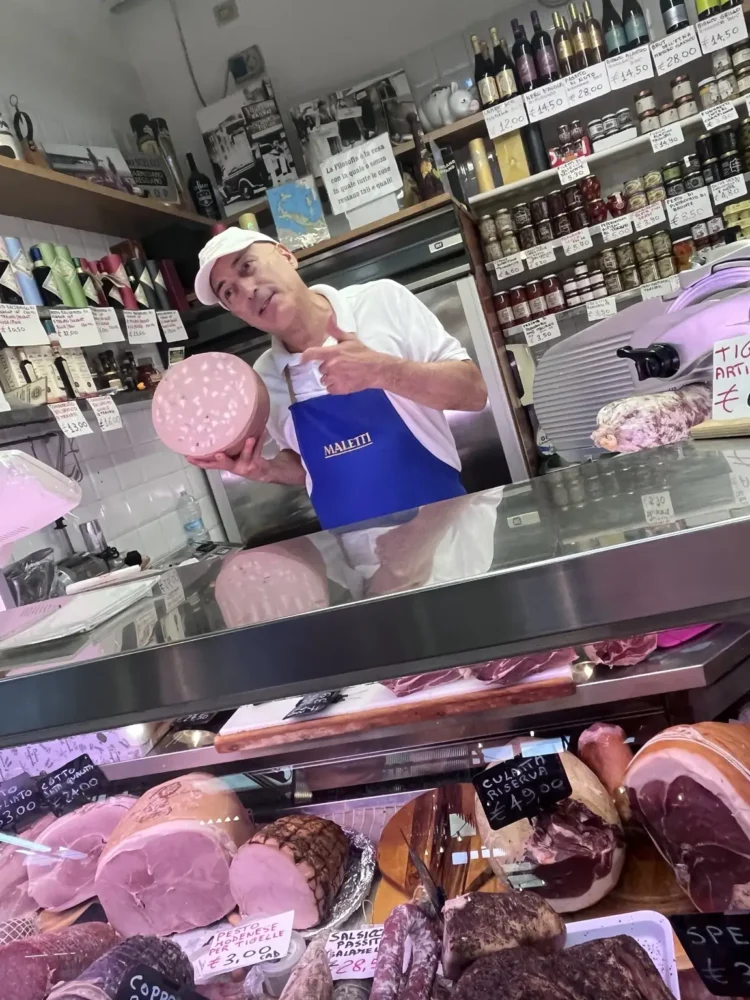
Naturally, a visit to Modena wouldn’t be complete without a trip to the market.
For me, Mercato Albinelli is exactly the kind of Italian market I love: colourful, lively, full of fresh produce, cheeses, cured meats and pasta.
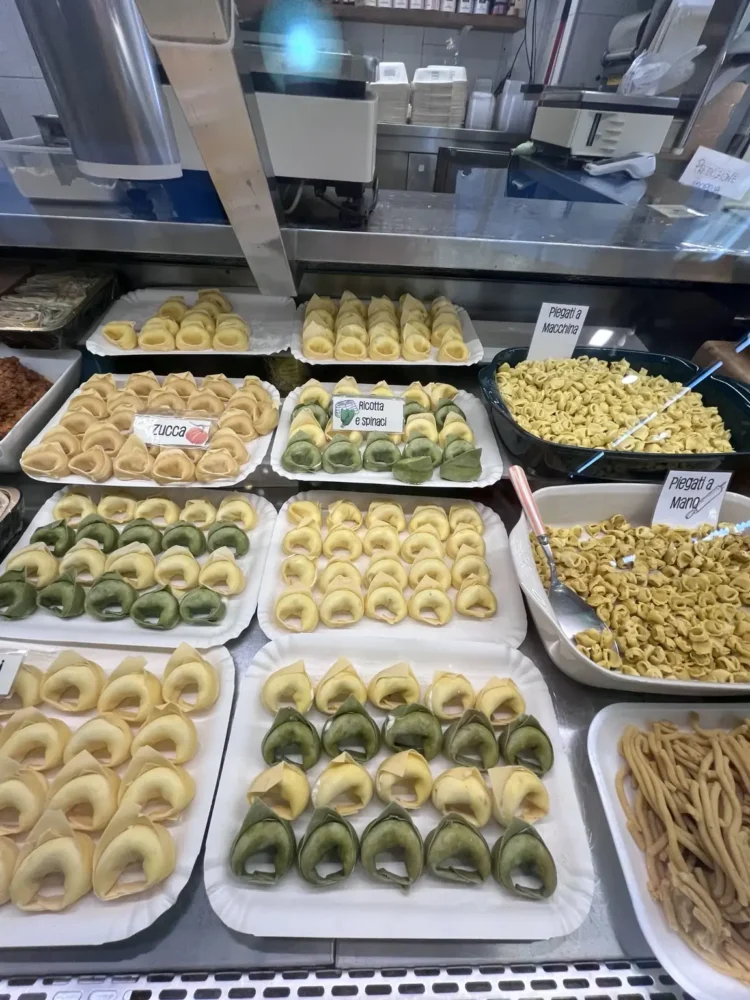
It’s the sort of place where you make the mistake of telling yourself you’re just going to have a look.
Five minutes later, you’re tasting Parmigiano Reggiano, watching fresh tortellini being made and wondering how on earth you can fit everything into your suitcase.
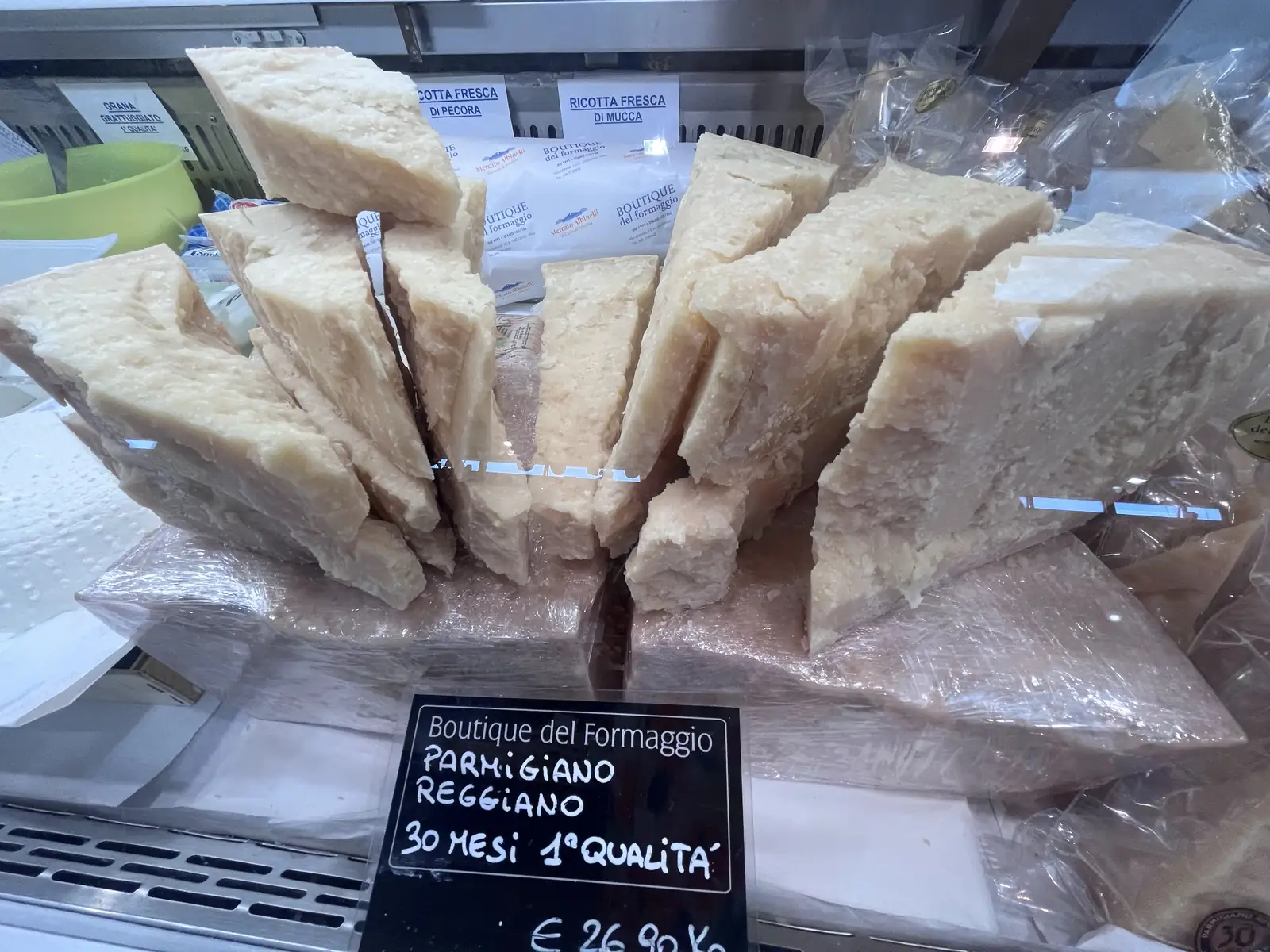
Tigelle, the region’s characteristic little flatbreads, are another absolute must. They’re sliced open and filled with ham, cheese or other local delicacies, and frankly, there’s very little left to discuss after that.
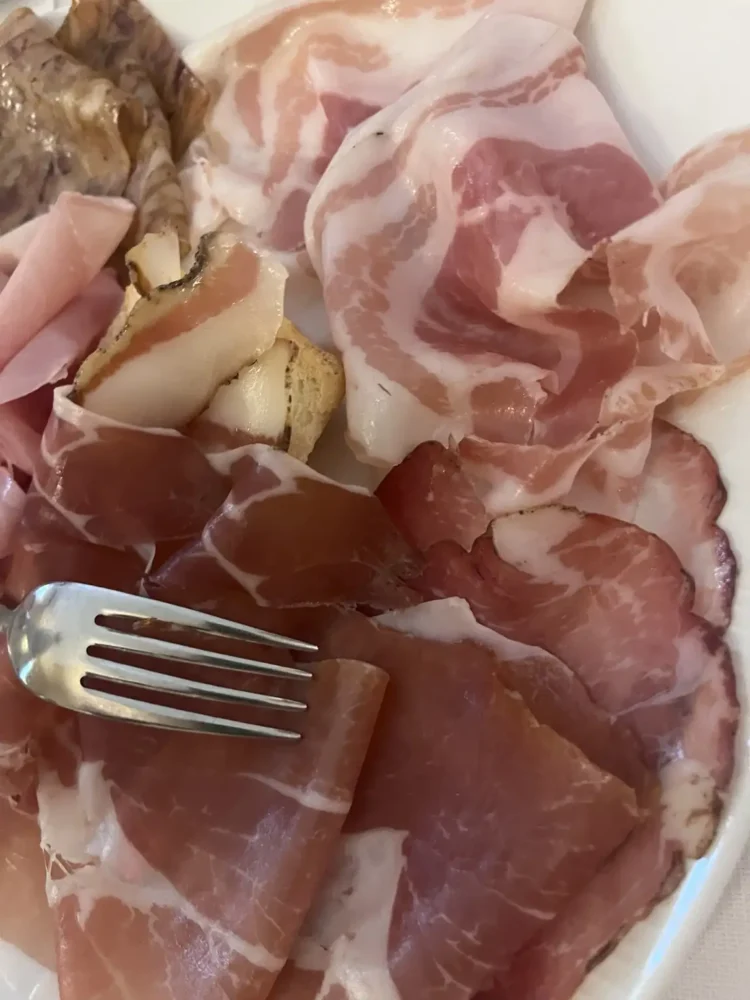
The irresistible cured meats of Emilia-Romagna.
The traditional version may also contain a spread made with pork fat, rosemary and garlic, topped with a generous amount of grated Parmigiano Reggiano.
Not exactly diet food, but I doubt anyone in Modena loses much sleep over that.
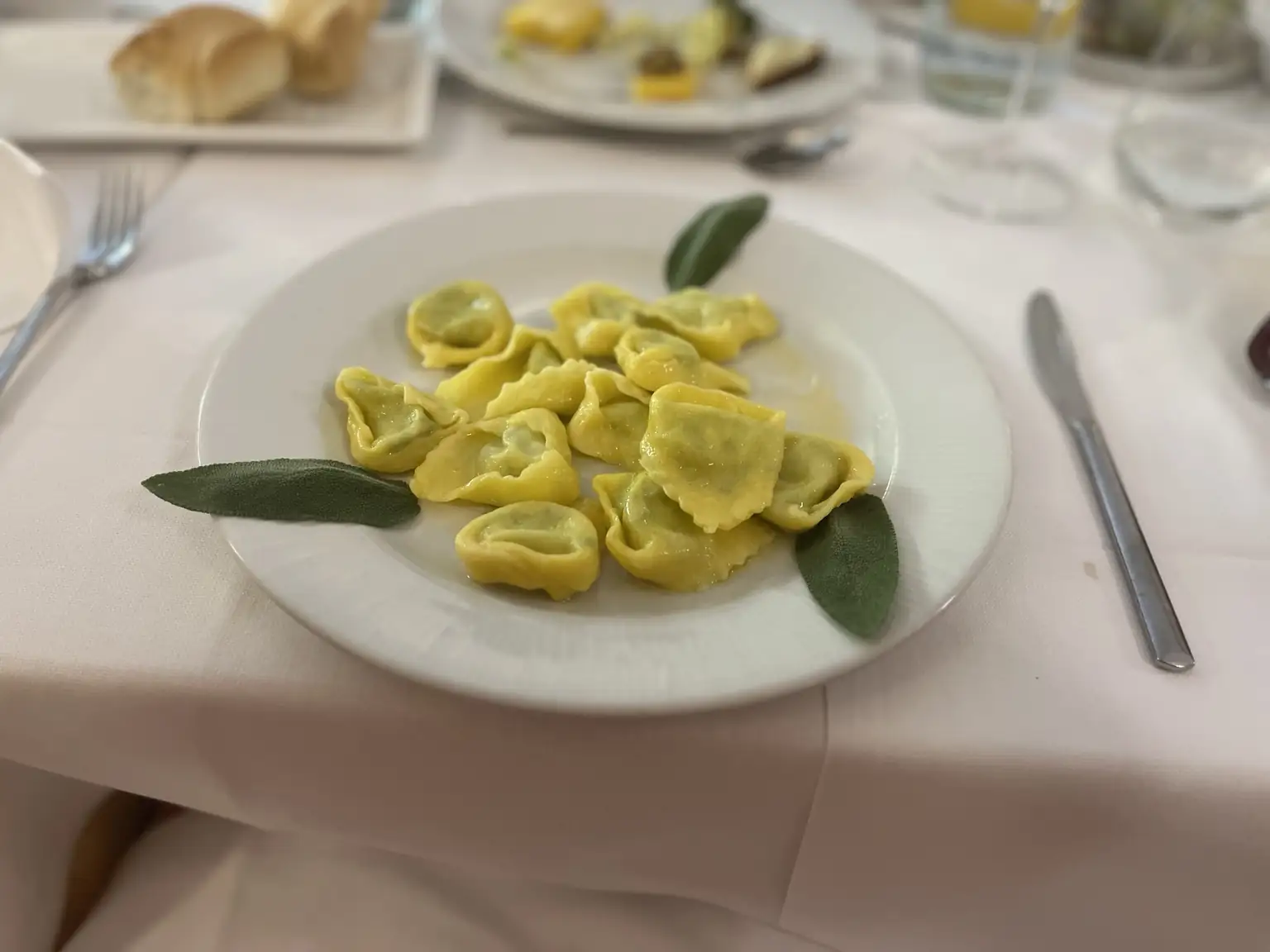
Handmade filled pasta served with sage.
Emilia-Romagna is not the place to go on a diet.
Modena beyond the dining table
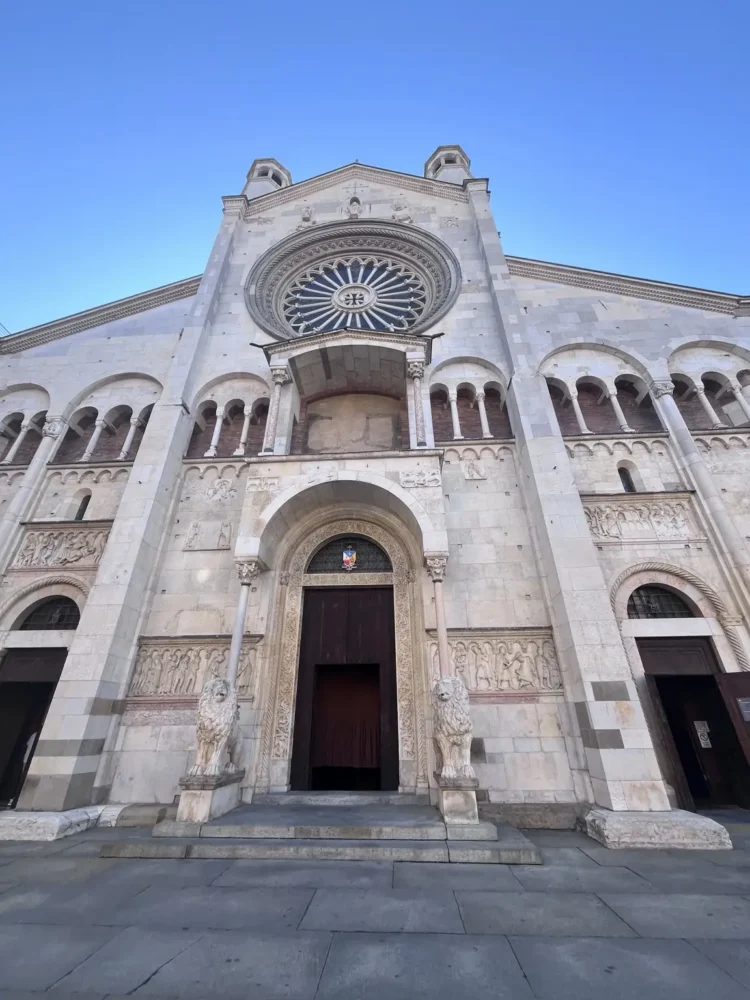
Modena’s Romanesque cathedral.
And yet the city itself deserves at least a few hours away from the table.
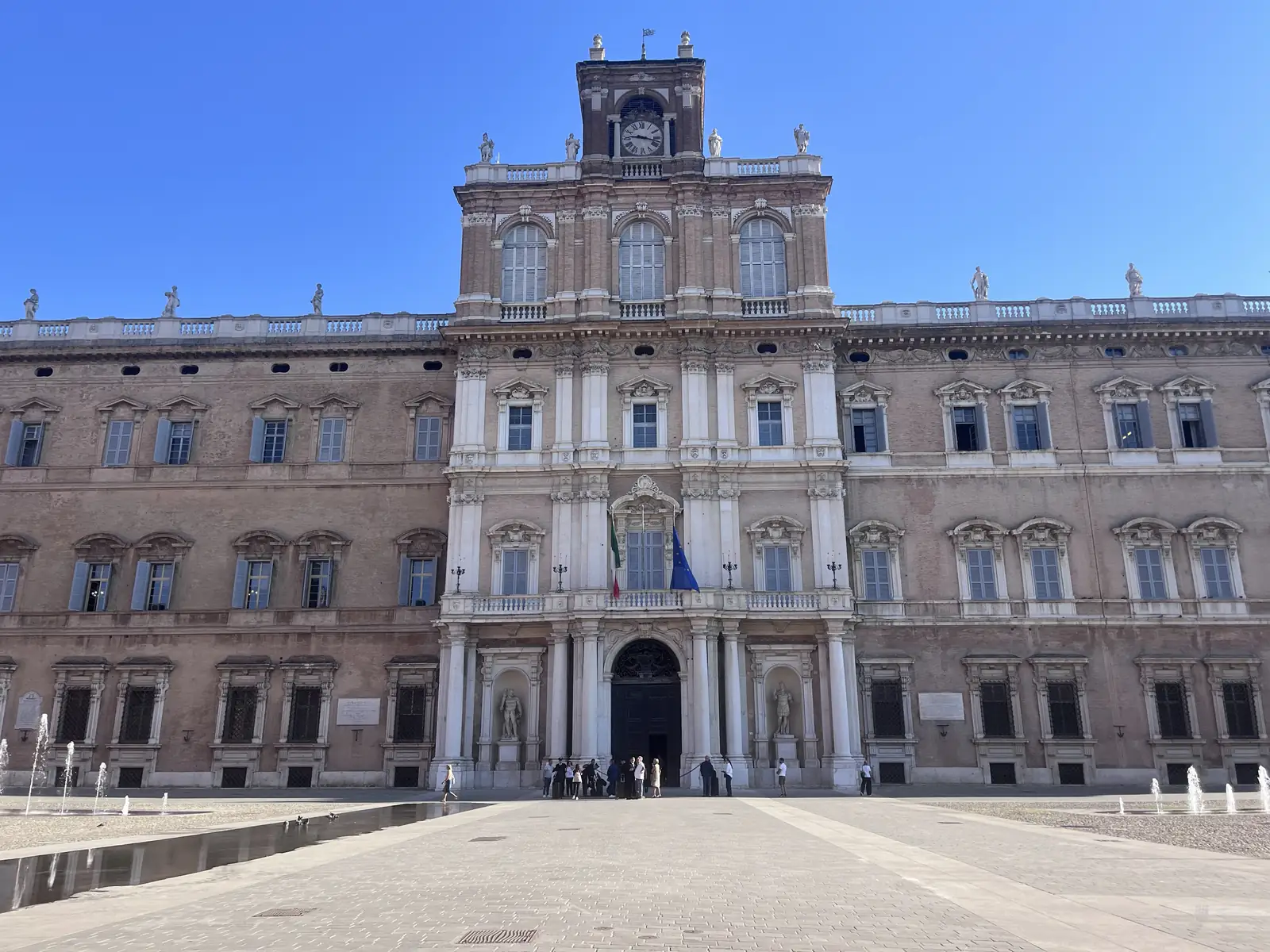
Piazza Grande, the Romanesque cathedral and the soaring Ghirlandina tower form the heart of Modena’s historic centre. The monumental Palazzo Ducale reveals a completely different side of the city I had, until then, been discovering mainly through its flavours.
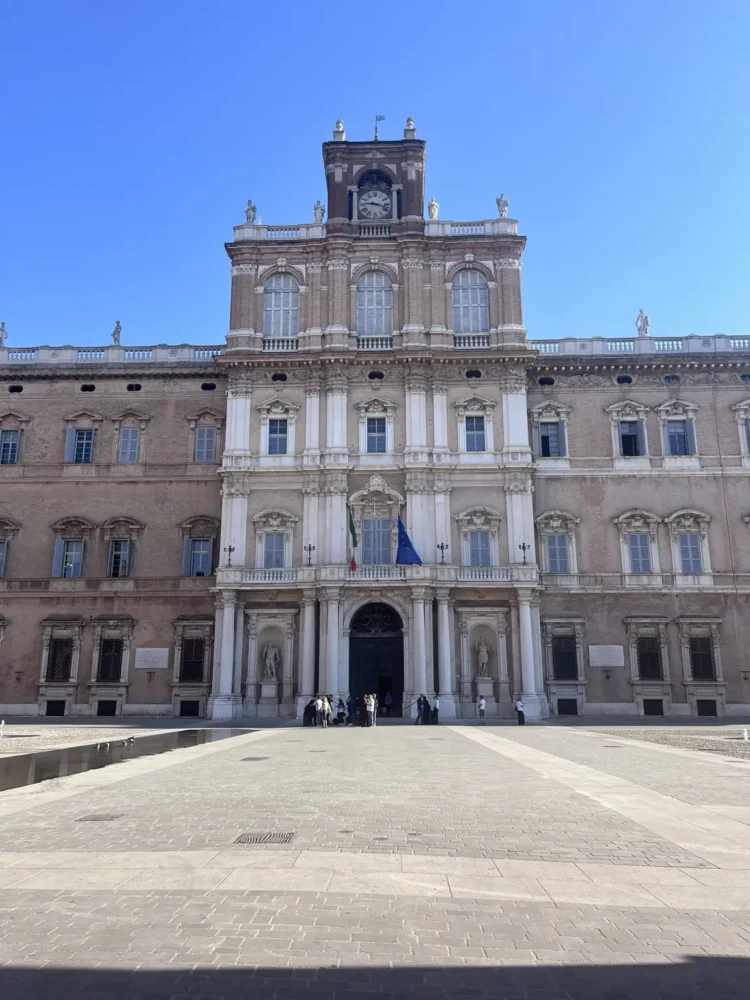
The imposing Palazzo Ducale.
Modena isn’t a big city. And that’s precisely part of its charm.
It’s walkable, elegant without being ostentatious, the kind of Italian city where you constantly feel tempted to sit down for a coffee or a glass of Lambrusco, only to realise that two hours have somehow disappeared.
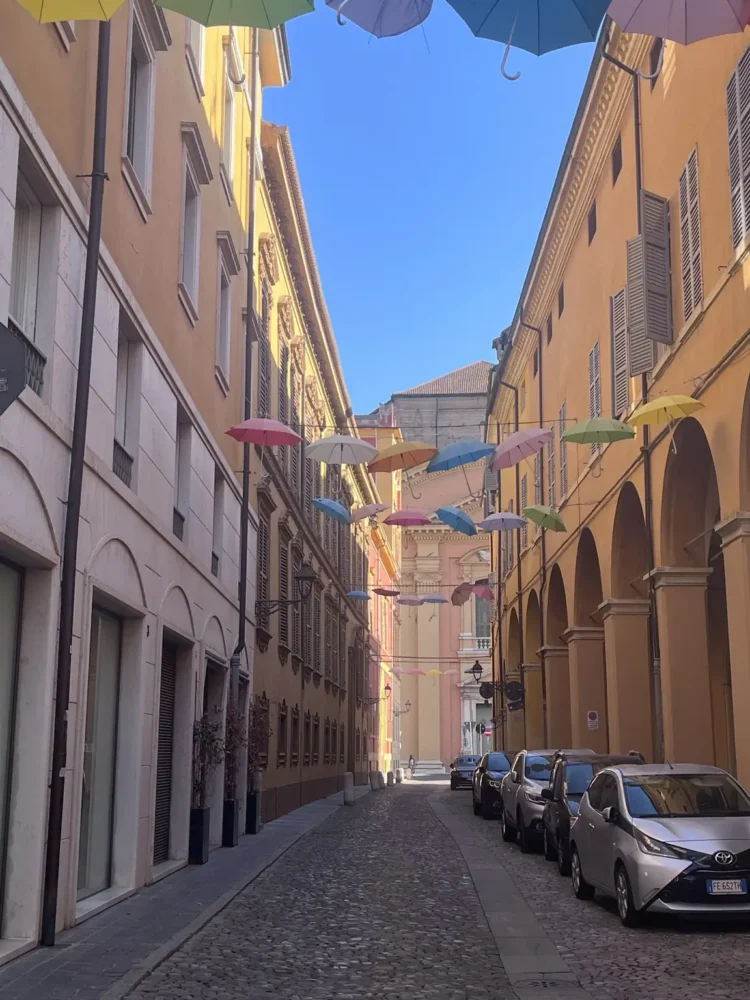
A quiet street in Modena.
During our walking tour, we learnt that the Ducal Palace now houses one of Italy’s most prestigious military academies. On weekends, cadets can be seen strolling through the streets of Modena in their elegant historical uniforms. The elevated passage connecting two academy buildings is jokingly nicknamed the Bridge of Sighs.
But I think I was even more fascinated by the discovery that Modena was once a city of canals.
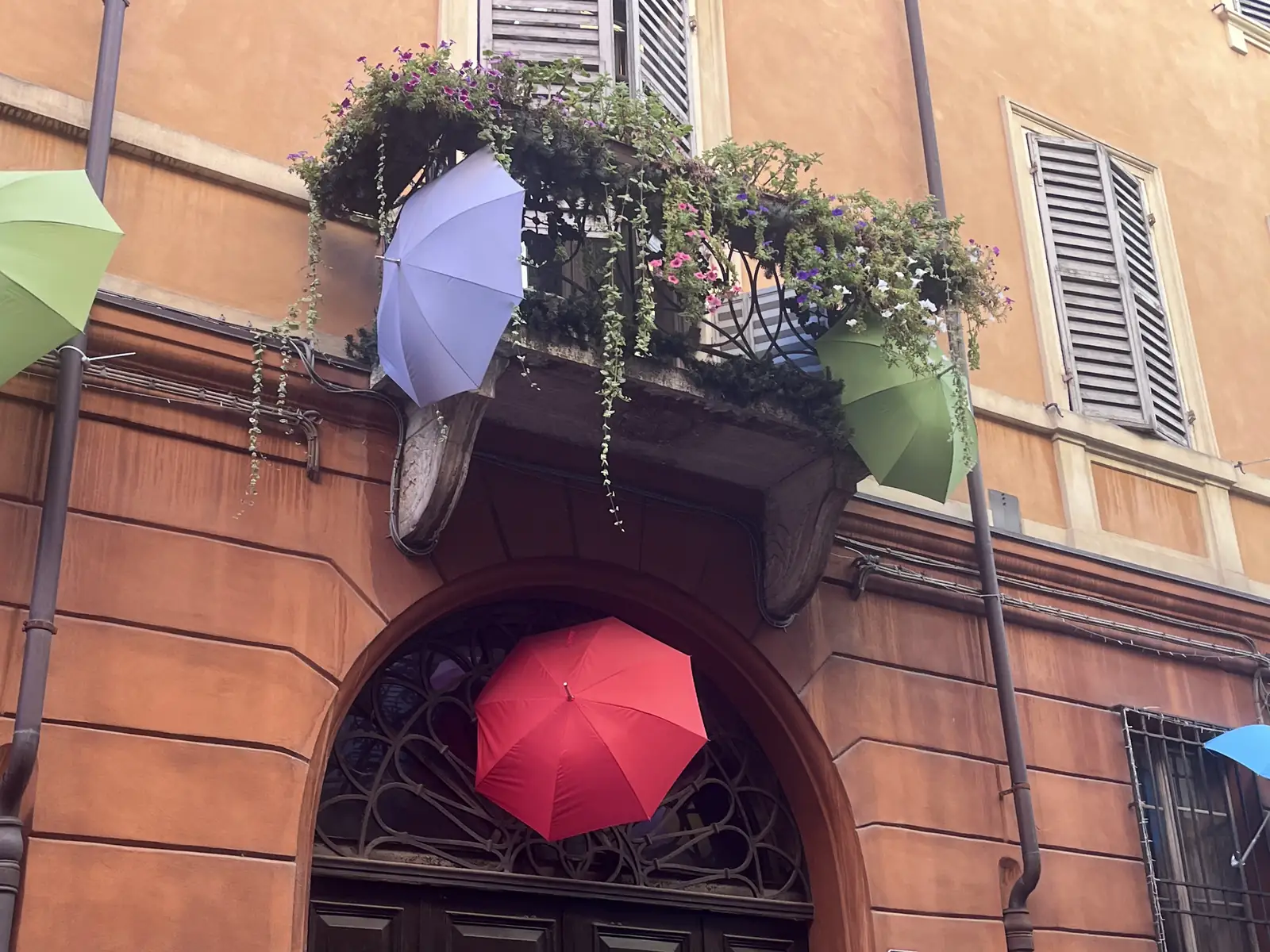
The duke could apparently set off by boat from near his palace and, travelling along the waterways, eventually reach the Adriatic Sea. Today, street names such as Canal Grande, Canal Chiaro and Canalino are among the reminders of that watery past.
And do take a proper look at the Ghirlandina tower. It has a slight curve because it began to lean during construction, and the builders tried to correct its direction as they continued upwards. The locals jokingly compare it to a banana.
Hotel Principe also proved to be a convenient base for exploring. Located on Corso Vittorio Emanuele II, it is close enough to the historic centre to reach the main sights on foot, something I particularly appreciated during such a short, busy trip.
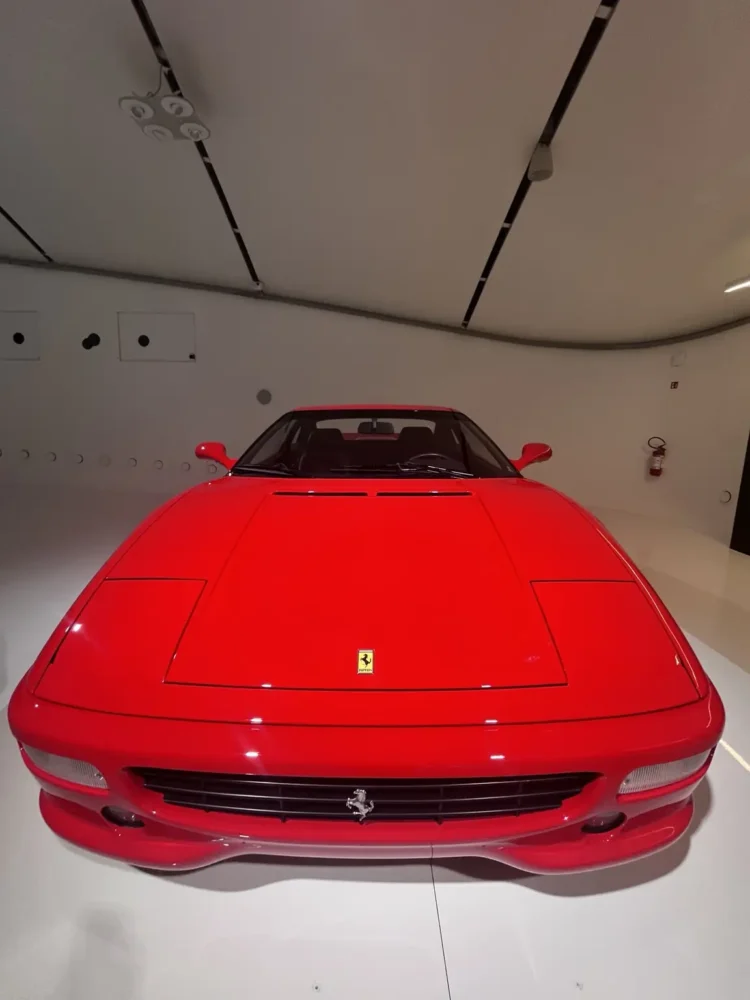
You can’t visit Modena without Ferrari
And then there’s Ferrari.
I have to confess, as a woman, cars don’t particularly interest me. I went to the Museo Enzo Ferrari mainly because, well, if you’re in Modena, it’s one of those must-see places.
What I hadn’t expected was to be so impressed by the museum itself.
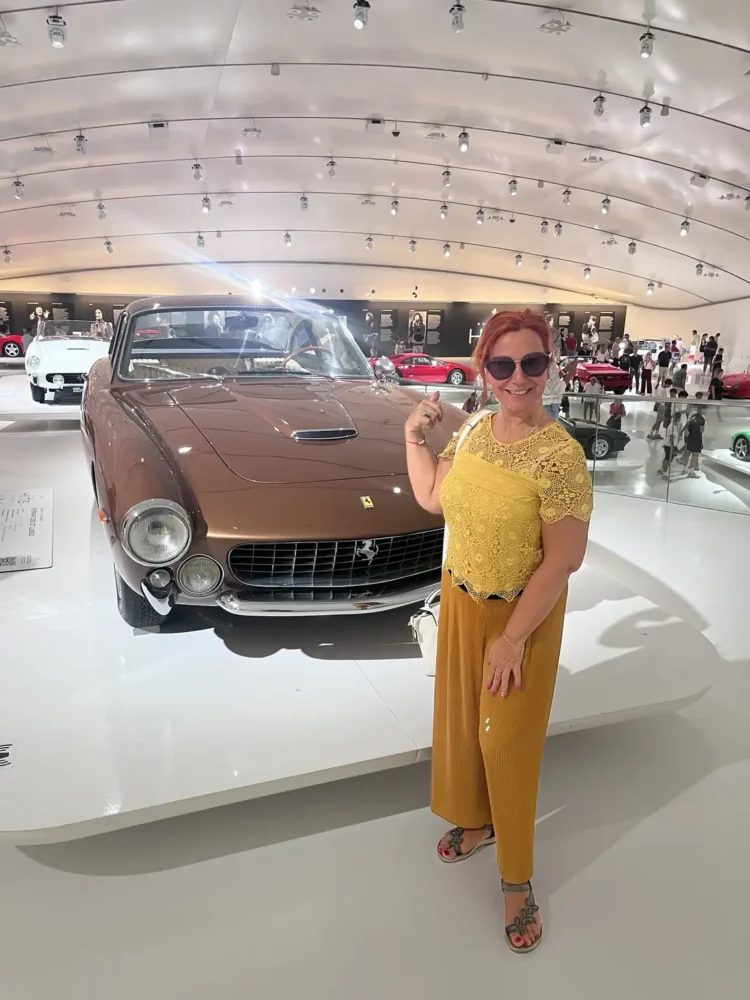
Among the classic cars at Museo Enzo Ferrari.
The interior architecture is simply stunning. The vast, elegant spaces and the beautifully presented exhibition were worth the visit in their own right. I couldn’t quite work up much enthusiasm for the engines, but among the cars I soon discovered a few that were much more my style.
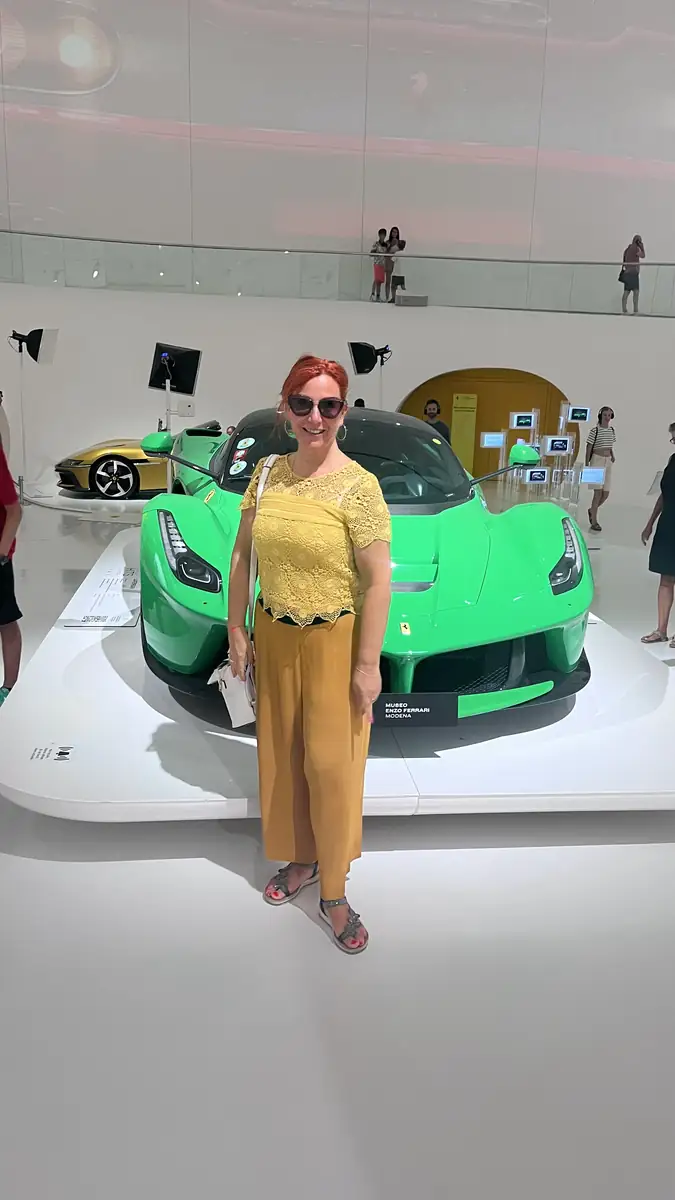
Instead of the classic red Ferrari, I found a gorgeous green one that went perfectly with my hair, followed by a gold one that matched my outfit beautifully.

The spectacular Museo Enzo Ferrari exhibition.
Naturally, we posed for photographs together.
So, in the end, I ticked Ferrari off my Modena list feeling thoroughly satisfied.
Twenty-five years in a bottle
When you return home from Modena, you find yourself looking at bottles of balsamic vinegar rather differently.
At least, I certainly do.
Now I know that behind a genuine, long-aged Modenese balsamic vinegar lie the grapes, the cooked must, the attic, the summer heat and winter cold, the barrels made from different woods and, above all, time.
So much time.
And there are the people, too, who begin something knowing perfectly well that it may be the next generation who finishes it.
I can think of few more beautiful definitions of luxury.
Because in Modena, I learnt that true luxury can sometimes be nothing more than a few precious drops of something you’ve had to wait twenty-five years to taste.

Related Articles


Related Articles