
One minute. That may be all it takes to break in
A masked burglar at the door, a crowbar and a glass-breaking hammer in a dark garden, and a former burglar demonstrating just how easy it can be to get into a house. At Villa Westend in Berlin, Ring hosted a press event that made me look at home security in an entirely different way.
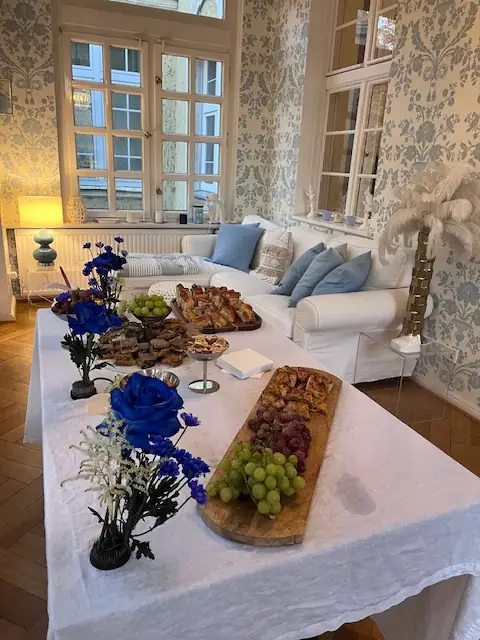
When a press event becomes a real experience
I love unusual, imaginative press events. With so much media noise these days, and countless invitations arriving in editorial inboxes every day, choosing which events to attend is no small matter. An interesting venue, a compelling subject or an unexpected approach can be enough to catch my attention. But the events that really stay with me are those where I don’t just receive information, but get to experience something for myself.
That was why I was particularly pleased to accept Ring’s invitation to Villa Westend, located in one of Berlin’s pleasant, elegant neighbourhoods. The beautiful surroundings were already a wonderful choice, but it soon became clear that this was not going to be a conventional product presentation.
The organisers had decided to approach the subject of home security in a very tangible way, rather than simply talking about it.
And for that, they had invited a rather unusual guest: Hermann Wenning, a former burglar who now shares his experiences as an author.

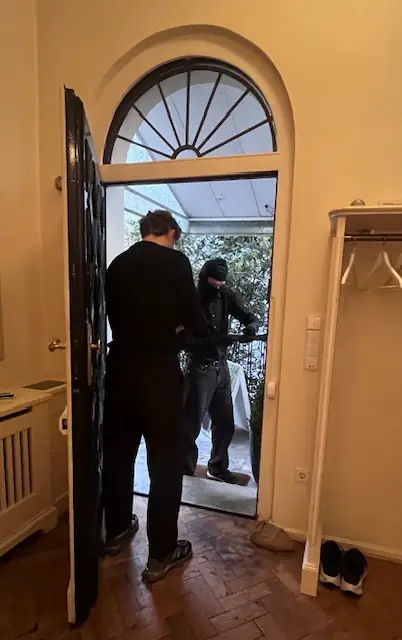
At one point during the event, a masked burglar suddenly appeared in the doorway. There was, of course, no reason to panic. It was all part of a staged scene and photo shoot, in which we journalists also had the chance to take part.
But the real surprise was still to come.
A crowbar and a glass-breaking hammer – in 2026?
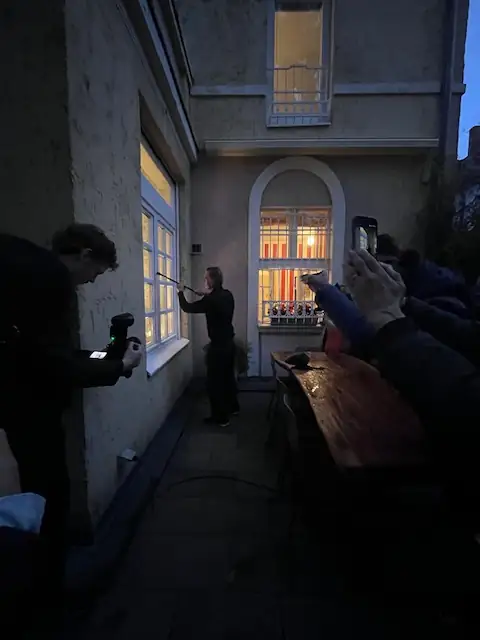
Once darkness had fallen, we were asked to step outside into the villa’s garden. Armed with various burglary tools, Hermann Wenning took us around the house, demonstrating the methods burglars use to gain access to a property.
I have to admit, I was surprised by what I saw.
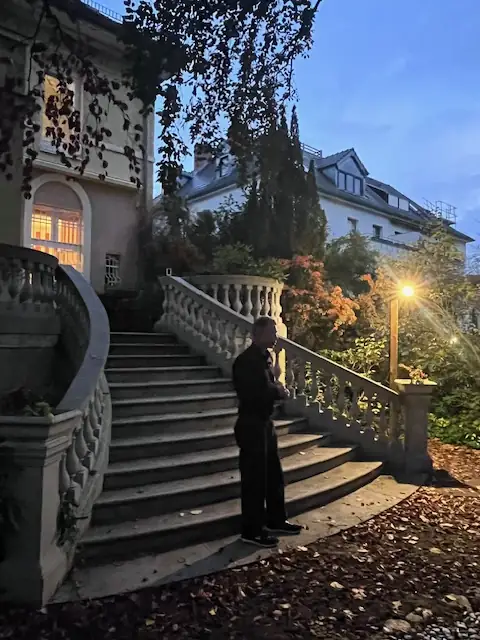
Somehow, in 2026, I hadn’t imagined that burglars would still be using crowbars, or that a small glass-breaking hammer could pose such a serious threat to a window.
Yet these were precisely the ordinary, simple tools Hermann showed us. He wasn’t talking about sophisticated technology or elaborate techniques straight out of a movie. Instead, he demonstrated just how little can sometimes stand between a burglar and the inside of someone’s home.
And that was exactly what made the demonstration so interesting. Something we might simply acknowledge when presented with a few statistics in a conference room takes on an entirely different meaning when we are standing in a dark garden beside a real house.
Hats off to on time PR, who organised the event! It is rare to see a brand’s message combined so successfully with first-hand experience. They didn’t just tell us why home security matters. They showed us. And that is far more convincing than any presentation.
We feel safe at home. But are we really?
In October 2026, the market research institute YouGov conducted a representative survey in Germany on behalf of Ring, involving 2,017 adults.
The results offer a rather interesting picture of how we think about the security of our homes.
According to the survey, 82 percent of respondents feel safe or very safe at home during the autumn and winter months. Yet only 8.5 percent say they have taken sufficient precautions against burglary.
In other words, while almost everyone goes to bed feeling secure, only one in twelve believes they are genuinely well prepared for a possible break-in.
Some 63 percent of respondents had taken no specific steps to improve their home’s security during the previous twelve months. Only 18 percent reported having done so, while another 14 percent were planning to.
I found the answers to the question of why people don’t pay more attention to burglary prevention particularly interesting.
Some 23 percent of respondents believe there is nothing worth stealing in their homes. Another 21 percent simply don’t think about the issue very often, while 9 percent rely on their neighbours.
Sounds familiar, doesn’t it?
Yet, as Dave Ward, Ring’s Managing Director International, pointed out, many people mistakenly believe their homes are simply not interesting enough to attract burglars.
In reality, burglars rarely select a particular property in advance. They are much more likely to look for easy targets with as few obstacles as possible.
One minute? Sometimes even that is too long
Perhaps the most startling finding of the survey concerns the speed at which burglars can operate.
When asked how long it takes a burglar to enter a house, only 22 percent of respondents estimated less than one minute.
Some 44 percent thought it would take between one and three minutes, 17 percent estimated four to six minutes, and 7 percent believed it would take more than six minutes.
Younger people are particularly likely to underestimate how quickly a break-in can happen. Among 18- to 24-year-olds, only 8 percent believe someone could enter a property in less than a minute, compared with 31 percent of those aged 45 to 54.
According to Hermann Wenning’s experience, however, even one minute is a very long time.
The former burglar explained that he could often get through a poorly secured window or a simple door in just a few seconds.
He also pointed out that most people imagine a burglary as a noisy, time-consuming operation. In reality, a single unguarded moment can sometimes be enough.
After the demonstration in the dark garden, I found that much easier to imagine.
Sometimes the best deterrent is simply being seen
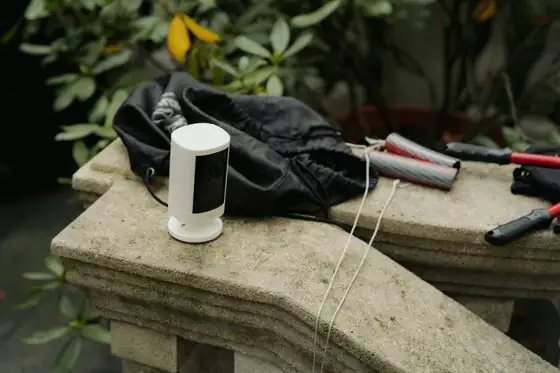
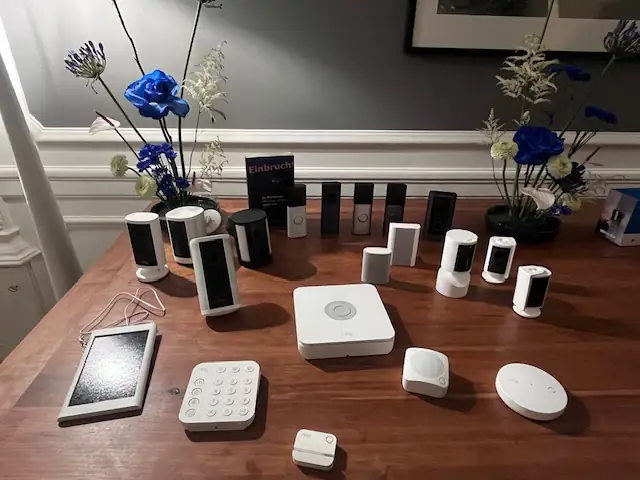
During Ring’s presentation, we also had the opportunity to explore modern home security devices. Cameras, video doorbells, motion sensors, smart lighting and alarm systems – today, there are numerous solutions that can be controlled directly from our phones.
I was particularly interested in the video doorbell.
I find the idea of being able to see who is standing outside my door, even when I’m not at home, extremely practical. And not only can I see the visitor, I can also speak to them. That could be especially useful when a delivery driver arrives, for example.
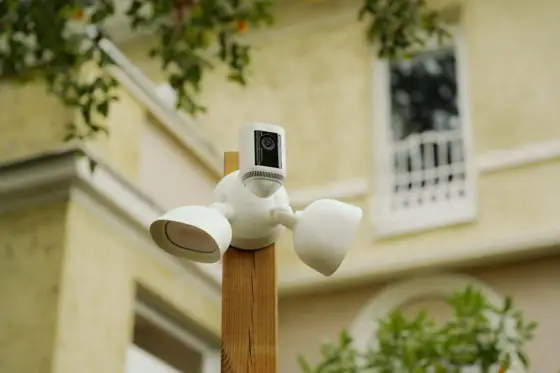
Another advantage of this technology is that the visible presence of security devices can itself act as a deterrent.
According to the YouGov survey, only 10 percent of respondents believe that cameras, video doorbells or floodlights do little or nothing to discourage burglars.
Some 22 percent already own a smart camera or video doorbell, while another 16 percent are planning to buy one.
For Hermann Wenning, the explanation is simple: burglars don’t want to attract attention.
A clearly visible camera, a light that suddenly switches on, or even the possibility that someone is monitoring the property may be enough to make them look for another target.
Of course, these devices cannot guarantee complete security on their own, but they can reduce the likelihood of a house appearing to be an easy target.
Four small things that can make a difference
According to security experts, making our homes safer doesn’t necessarily require a major investment.
A few simple habits can already help.
Lighting: Motion-activated outdoor lights or timed lighting can create the impression that someone is at home.
Doors and windows: A window left tilted open is not a securely closed window. It is worth checking every door and window before leaving.
Signs of absence: An overflowing letterbox, parcels piling up outside or shutters left closed for days can easily reveal that nobody is home.
Visible security: A camera or video doorbell can send a clear message that the property is not entirely unattended.
Security doesn’t have to be about fear
During the presentation, Dave Ward, Ring’s Managing Director International, also emphasised that modern home security is not about living in constant fear. It is about being able to keep an eye on our homes even when we are away.
I like that idea.
I don’t want to spend my time worrying about what might be happening in my apartment while I’m travelling. But knowing that I could check on things with a single tap on my phone, if necessary, is certainly reassuring.
In the end, the Berlin press event gave me much more than another introduction to new technology.
On the one hand, I discovered some genuinely practical solutions. On the other, Hermann Wenning allowed me to see home security from a perspective I had hardly considered before.
And once again, I was reminded of just how effective a well-conceived, creative press event can be.
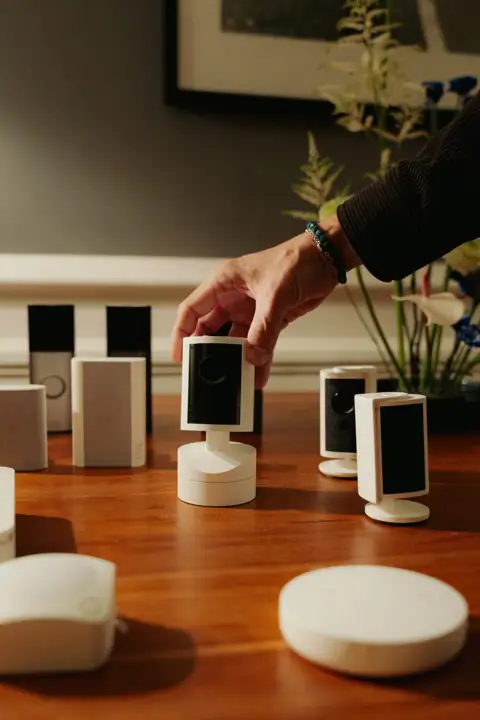
We read the statistics, listen to the presentations and take the press materials home. But standing in a dark Berlin garden with a former burglar, realising just how vulnerable a home can be, is a very different experience.
And probably one that stays with us much longer.
Research data cited in this article: Representative survey conducted by the market research institute YouGov on behalf of Ring, involving 2,017 respondents in Germany between 5 and 7 October 2026.
Venue: Villa Westend, Berlin. Event organised by on time PR.
(Photo: Max Iwert / Ring and Annamária Veszeli)

Related Articles


Related Articles